Federal agencies are moving past AI pilots.
The harder work now is making AI useful in mission-critical workflows where content is fragmented, sensitive, and subject to strict compliance requirements. Success in government hinges on building a secure, governed content foundation that agencies can trust.
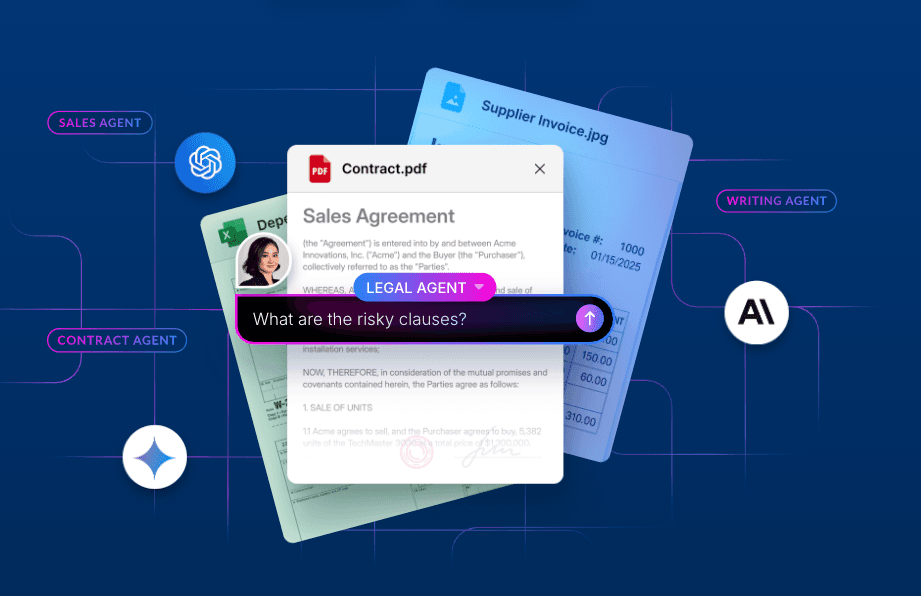
At both the AIScoop’s AITalks and Box Federal Summit, leaders emphasized new ways to reduce fragmentation, improve compliance, support human oversight, and power real-world use cases. Federal agencies hope use AI to automate critical processes like document intake, proposal review, workflow automation, and knowledge sharing.
Read on for key themes from both events, and explore how Box helps agencies turn content into operational impact with AI.
Key takeaways:
- The role of AI in federal agencies has shifted from novel experiment to mission-critical tool
- Secure, governed content is now a prerequisite for reliable AI in government — agencies need interoperability, auditability, access controls, and human oversight to scale AI responsibly
- Box helps agencies modernize content operations while maintaining security, compliance, and governance
Content is now central to federal modernization
Across government, the conversation around AI has shifted. No longer just a novelty, AI now plays a key role in improving mission delivery, accelerating decisions, reducing manual work, and helping agencies make better use of their data.
But AI is only as effective as the content foundation beneath it, so for many agencies, that means first upgrading from legacy content management platforms and fragmented storage of unstructured data.
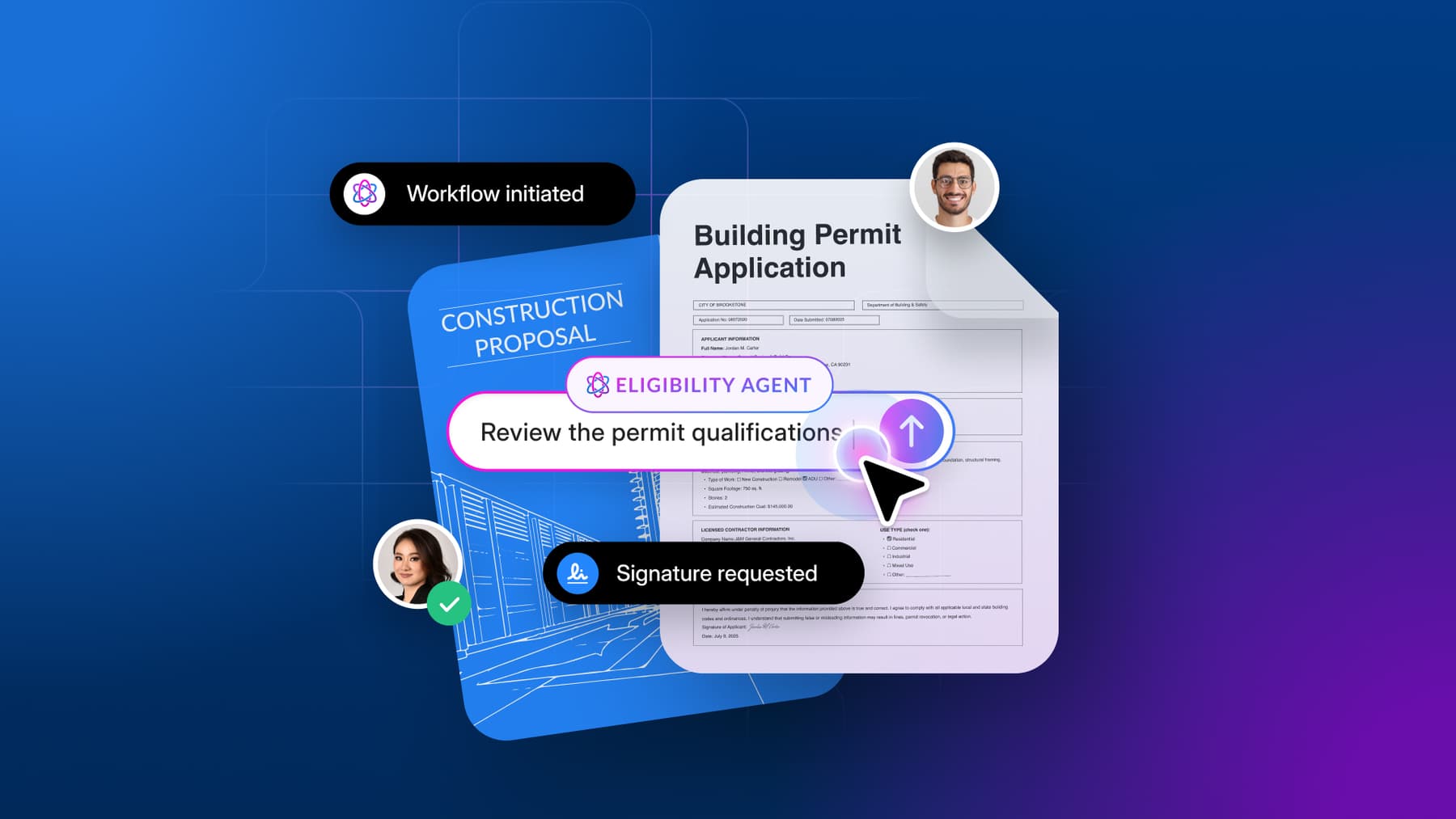
Many agencies still manage information across legacy enterprise content management (ECM) platforms, shared drives, email, paper-based processes, productivity tools, and disconnected line-of-business systems. In addition to limiting AI readiness because content is not centralized, structured, or governed, this content sprawl creates real barriers to modernization:
- Manual, time-consuming processes that slow case handling, reviews, and service delivery
- Difficulty finding and trusting authoritative content across multiple systems
- Higher security and compliance risk when sensitive information is spread across disconnected repositories
- Operational strain on already constrained teams facing workforce pressure and budget scrutiny
- Procurement and integration complexity that makes transformation harder than it should be
For federal leaders, this goes beyond being an IT problem to a true mission problem.
Intelligent Content Management enables agencies to reduce friction across workflows, improve auditability, support records and retention requirements, and create the secure foundation needed for responsible AI adoption.
AITalks and the future of mission-driven AI
At AIScoop’s AITalks event, Jason Gray, Box Managing Director, Global Federal Government, spoke on harnessing the power of unstructured data with an AI-agnostic strategy. He noted, “The path forward is not bigger experimentation for its own sake, but practical modernization built on secure, governed, and connected content.”
The path forward is not bigger experimentation for its own sake, but practical modernization built on secure, governed, and connected content.
Government is at an inflection point with AI, and agencies are eager to move from AI theory to AI practice, but success depends on getting the content foundation right. When files are spread across numerous systems, AI pilots struggle to deliver reliable results. Content sprawl leads to inconsistency, weak trust, and unnecessary friction. If agencies can’t identify the right source content, govern access appropriately, and connect information across workflows, AI will underperform.
Building on a unified, service, model-agnostic content foundation is table stakes to federal AI success.
A human-centered approach to AI in government
The most effective agencies will start with focused, high-value use cases and build from there, creating repeatable patterns that can scale across teams and workflows.
The path forward presented at AITalks:
- Start with real use cases rather than abstract AI ambitions
- Focus on achievable modernization efforts that solve immediate problems
- Treat change management as essential to success, not as an afterthought
- Keep humans in the loop for important decisions
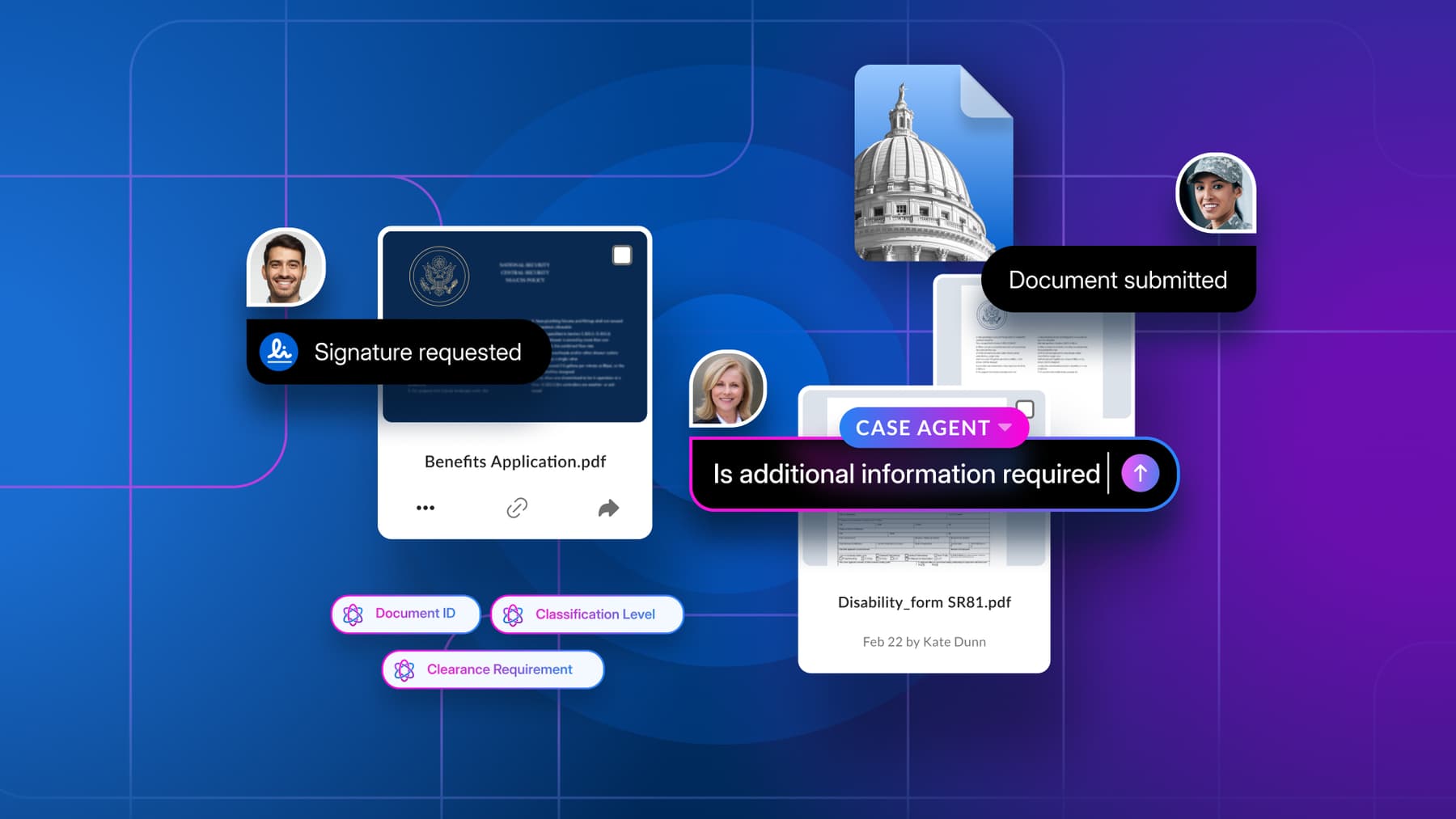
This approach aligns closely with how Box works with government organizations. Rather than asking agencies to boil the ocean, Box helps teams begin with high-value use cases such as forms validation, metadata extraction, sensitive content identification, document summarization, and workflow acceleration. These focused wins can build momentum for broader transformation.
Just as importantly, the event reinforced a human-centered view of AI. The purpose is not to replace public servants but to remove repetitive administrative work so they can spend more time on the mission and on the people they serve.
Takeaways from Box Federal Summit
At the Box Federal Summit, the conversation spanned from AI’s potential to its operational reality. Speakers highlighted how agencies use AI to improve efficiency, analyze large datasets, accelerate workflows, and support better public outcomes.
A key theme was the rapid growth of AI adoption across government. Federal use cases are increasing, and agencies are applying AI to everything from fraud detection and scientific analysis to declassification review and regulatory response. The message remains clear: AI has become core to mainstream government modernization.
The Summit also underscored several areas where secure Intelligent Content Management is essential.
A connected ecosystem matters
Interoperability was a major theme. Federal agencies don’t want more disconnected tools. They want secure, best-of-breed technologies that work together. One of Box’s roles in that ecosystem is to provide the content layer that helps agencies connect workflows, surface the right files and metadata, and reduce fragmentation.
Security and governance must extend to AI
As AI agents and automated workflows become more common, agencies need the same discipline around identity, access, and auditability that they apply to human users. The summit highlighted the importance of role-based permissions, purpose-based access, and strong records of how decisions and actions occur across systems.
Real-world federal use cases are already delivering value
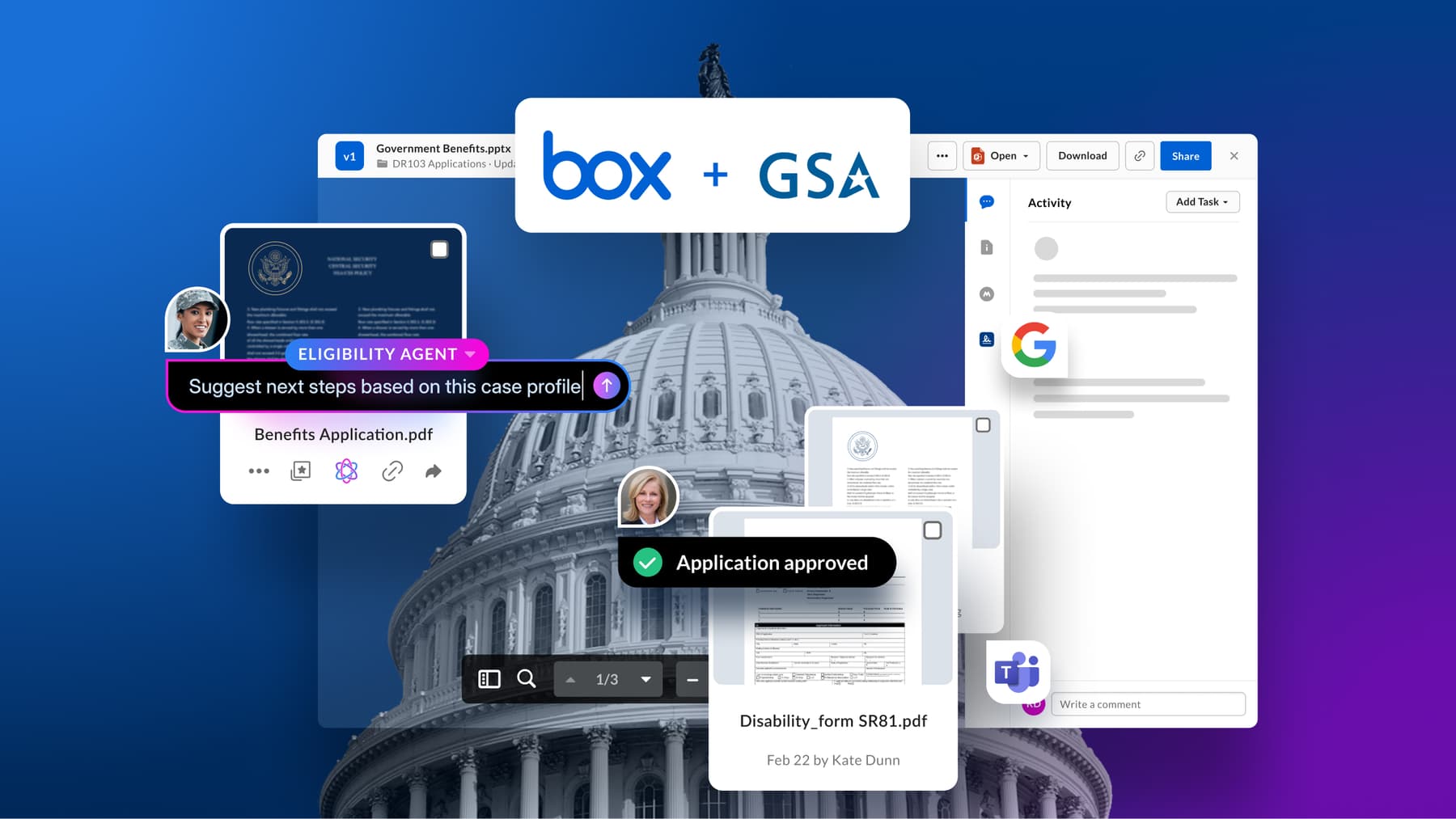
The event also showcased practical examples of Box in action. One Department of the Air Force use case demonstrated how Box AI supports proposal review and contract management, helping reduce engineer review time by several days per solicitation while maintaining human oversight. The same environment improved secure external collaboration with vendor teams and gave the organization stronger control over sensitive information.


Another session highlighted how agencies are thinking about AI workforce enablement, prompt libraries, workflow automation, and secure access to content. The discussion reinforced that successful adoption requires more than technology alone. It requires usable tools, clear guardrails, and support for how people actually work.
Argonne National Laboratory’s teams used Box to consolidate files, support records management requirements, enable secure knowledge sharing, and explore AI-powered use cases like natural language querying, chatbot experiences, and automated publishing workflows. The takeaway was that when content is governed well, users can innovate faster and more safely.
“Before Box, if someone needed to search through 100 technical reports, and find the five that were relevant, we were talking about three or four days of work. Now, we can do that job in 30 minutes.”
— Library and Information Management Manager Jesse Henning
Box as a trusted partner for secure Intelligent Content Management
Box helps federal agencies unify content, automate work, and apply AI securely to the information that drives mission outcomes. Rather than forcing agencies to bolt together separate tools for storage, collaboration, workflow, e-signature, governance, and AI, Box brings these capabilities together in one Intelligent Content Management platform.
For federal organizations, trust starts with security and compliance. Box supports government requirements by providing:
- FedRAMP High authorization
- IL4 support
- Zero-trust architecture
- End-to-end encryption
- Role-based access controls
- Governance, retention, and auditability built into the content lifecycle
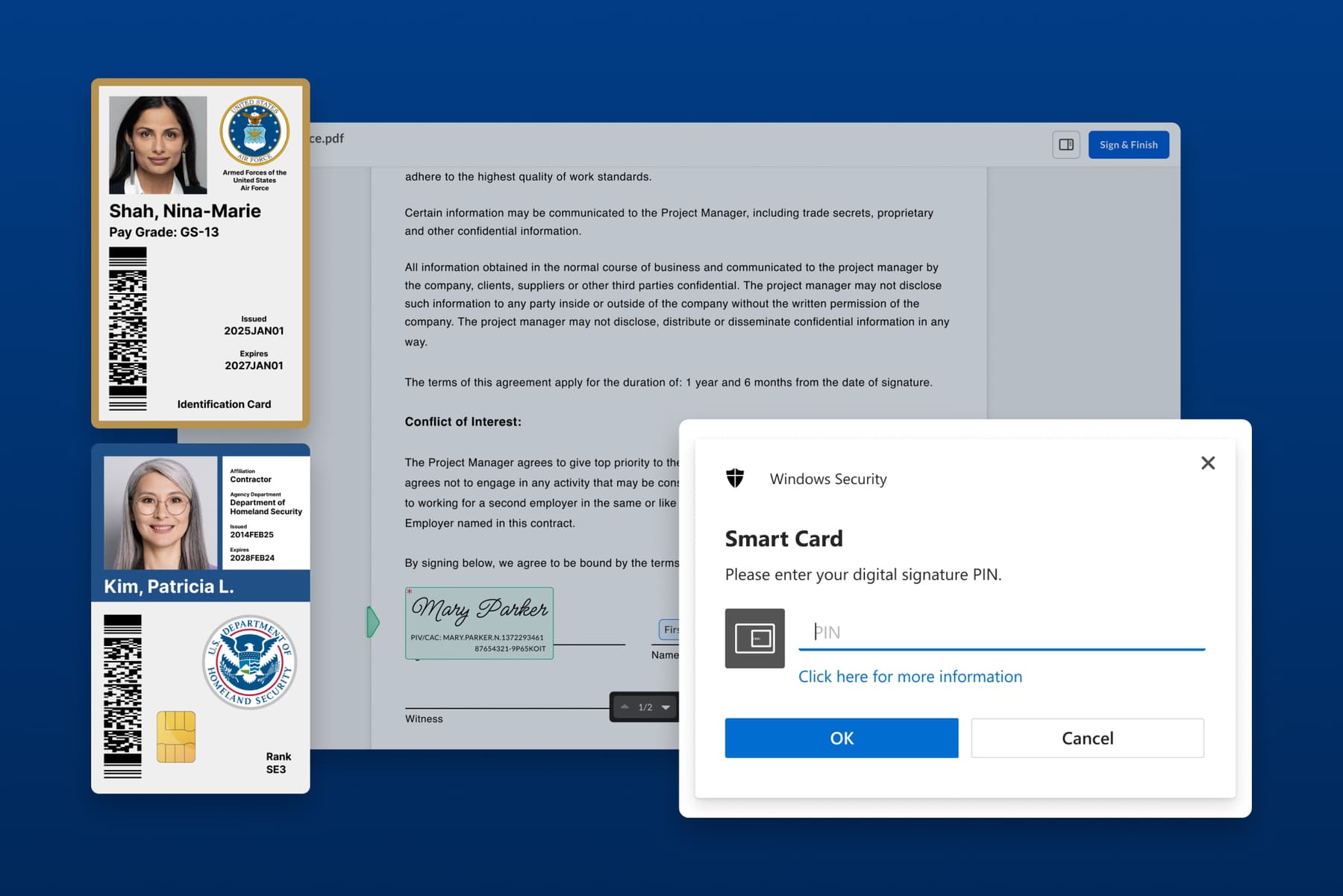
- Support for secure collaboration and CAC/PIV-enabled signing workflows
Just as important, Box helps agencies adopt AI in a way that’s explainable and governable. Box AI outputs can include provenance and context, helping users and auditors understand how results were generated. That matters in environments where transparency, accountability, and policy alignment are essential.
Box also gives agencies flexibility. As federal organizations evaluate different models and AI strategies, they need a platform that supports choice across tools and apps. Box enables a model-agnostic approach so agencies can flexibly evolve their AI posture while keeping content secure and governed.
The path forward for federal agencies
Deploying more tools will not solve federal AI readiness on its own. The agencies that gain the most from AI will be the ones that build the strongest foundation for secure, governed, and accessible content.
If your organization is working to modernize records, streamline content-heavy workflows, improve secure collaboration, or prepare for responsible AI adoption, now’s the time to rethink the role of content in mission delivery.
Box is a category leader because it brings these priorities together. Our AI-powered platform helps agencies modernize content operations while maintaining the security, compliance, and transparency federal environments demand.
Learn more about how Box can help solve federal content management challenges and support secure, AI-ready modernization across your agency.
Box for federal agencies FAQs
What is a secure cloud platform for federal agencies, and why does it matter?
A secure cloud for federal agencies is a FedRAMP-authorized, cloud-native platform that centralizes federal content, enforces Zero Trust security controls, and enables compliant collaboration across agency programs. Federal agencies manage vast volumes of unstructured data — case files, grants, contracts, identity documents, and more — that are often trapped in legacy systems and siloed repositories, creating operational risk and blocking modernization.
Without a purpose-built, compliant content platform, agencies can't automate workflows, meet audit requirements, or safely apply AI to mission-critical information. A secure cloud platform eliminates content fragmentation and provides the governance foundation agencies need to operate efficiently and securely.
What does FedRAMP High authorization mean for federal content management?
FedRAMP High authorization is the federal government's most rigorous cloud security certification, required for systems that process the most sensitive, unclassified federal data. It validates that a platform meets the full NIST 800-53 control baseline and has undergone independent third-party assessment and continuous monitoring.
Box is a FedRAMP High authorized cloud, meaning federal agencies can deploy it for high-impact workloads — including those involving personally identifiable information (PII), law enforcement data, and sensitive program records — with confidence that the platform meets federal data compliance requirements. Agencies that select FedRAMP High authorized solutions reduce their ATO burden and inherit a validated security posture rather than building one from scratch.
How does Box support federal data compliance requirements, including NIST 800-53, HIPAA, and ITAR?
Box is built to meet the compliance requirements that federal agencies can't compromise on, including FedRAMP High, DoD IL4, ITAR, HIPAA, and the full NIST 800-53 control set. Compliance is embedded in the platform architecture — not bolted on — through end-to-end encryption, role-based access controls, immutable audit trails, and automated retention policies managed by Box Governance.
Box Shield provides automated content classification, data loss prevention (DLP), and anomaly detection to enforce policy continuously. This integrated approach reduces compliance incidents, supports audit readiness, and enables agencies to demonstrate responsible stewardship of federal content without relying on manual processes.
What is a federal Zero Trust content architecture, and how does Box implement it?
A federal Zero Trust content architecture applies the principle of "never trust, always verify" to every interaction with federal content — requiring continuous identity verification, least-privilege access, and full auditability for every user, agent, and application that touches agency data.
Box implements Zero Trust through native support for CAC/PIV smart card authentication, multi-factor authentication (MFA), device trust enforcement, granular permission controls, and session-level audit logging. Box Shield extends this posture with real-time threat detection, insider threat monitoring, and automated access controls that respond to anomalous behavior. Agencies implementing Zero Trust mandates under Executive Order 14028 can use Box as a compliant content layer that enforces Zero Trust principles across all federal content workflows.
How can federal agencies manage unstructured data at scale?
Unstructured data management for federal agencies requires a platform that can ingest, classify, index, and govern high volumes of diverse content — documents, PDFs, videos, audio files, spreadsheets, and more — across programs and offices. Box serves as a unified Intelligent Content Management platform that centralizes federal content in a single, secure repository, eliminating the siloed file shares, legacy ECM systems, and paper processes that create content chaos.
Box AI automatically extracts metadata, classifies documents, and surfaces insights from unstructured content, making it searchable and actionable without manual tagging. This approach enables agencies to reduce total cost of ownership, improve AI readiness, and meet the performance demands of modern mission workflows.
How does Box support federal records management and NARA compliance?
Box supports federal records management through Box Governance, which provides automated retention scheduling, event-based retention triggers, legal hold, defensible disposition, and immutable audit trails aligned to NARA requirements. Records policies are enforced at the platform level — staff don't need to manually classify or tag records for retention rules to apply, reducing non-compliance caused by human error.
Box Shield further automates content classification, ensuring that records are identified, labeled, and governed consistently across the agency's content lifecycle. Agencies using Box for federal records management can demonstrate audit readiness, pass NARA inspections, and reduce the risk of IG findings related to inadequate records controls.
How does Box enable FOIA content management and reduce response backlogs?
Box accelerates FOIA content management by enabling agencies to search across all centralized federal content instantly, rather than conducting manual, multi-system searches that consume staff time and delay statutory deadlines. Box AI can summarize large document sets, identify responsive records, and flag content containing PII or CUI that requires redaction review — reducing the manual burden on FOIA officers. Box Governance maintains complete audit trails for every document accessed, reviewed, and released, providing defensible documentation of the FOIA process.
In one documented example, an agency managing 500 open FOIA requests with a 90-day average response time used Box to search across all content and cut response time to 20 days — demonstrating the platform's potential to help agencies approach the 20-day statutory window.
How can federal agencies safely use AI on sensitive federal content?
Federal agencies can safely apply AI to sensitive federal content when that content is centralized on a FedRAMP High authorized platform with granular access controls, provenance tracking, and explainable outputs. Box AI operates within the existing Box permissions framework, ensuring that AI-generated responses are based only on content that the requesting user or agent is authorized to access — preventing unauthorized data exposure and shadow AI.
Box AI Studio lets agencies build and deploy tailored AI agents with scoped knowledge sources, model choice, and governed controls, while Box MCP Server enables AI agents to access federal content in real time using standardized protocols without complex integrations. This approach enables agencies to meet OMB Memorandum M-25-21 requirements for responsible AI governance while realizing measurable productivity gains.
What government workflow automation capabilities does Box provide for federal agencies?
Box delivers government workflow automation through Box Relay, a no-code workflow engine that automates end-to-end content processes such as document review and approval, intake routing, and compliance workflows — without requiring custom development.
Box Automate extends automation further with low-code, branching workflow capabilities that orchestrate content workflows across business-critical systems by combining AI agents, workflow logic, and human reviews. Box AI Extract automates metadata extraction and document classification, feeding structured data into downstream workflows and case management systems.
Together, these capabilities allow agencies operating with reduced staff and constrained budgets to process higher volumes of work — grants, FOIA requests, HR actions, contract reviews — with greater speed and accuracy.
How does Box support secure collaboration for federal government, including cross-agency and contractor environments?
Box enables secure collaboration for federal government by providing granular, role-based access controls, time-limited sharing, and full audit trails that meet NIST 800-53 requirements for information sharing across organizational boundaries. Agencies can create governed collaboration spaces — including Box Hubs — for cross-agency programs, contractor teams, and external partners, with each participant accessing only the content they're authorized to see.
Box Sign supports CAC/PIV smart card-based electronic signatures, enabling legally binding, identity-verified document execution without leaving the secure Box environment. High-to-High integrations, including GCC High compatibility, ensure that collaboration workflows meet the security requirements of sensitive federal programs, including those operating at DoD IL4 classification levels.
How does Box help federal agencies modernize legacy content systems and reduce total cost of ownership?
Box replaces fragmented legacy ECM systems — including on-premises platforms such as IBM FileNet, Hyland OnBase, and OpenText Documentum — with a single, cloud-native Intelligent Content Management platform that consolidates storage, collaboration, e-signatures, workflow automation, and AI in one environment.
Agencies eliminate the cost and complexity of maintaining disconnected systems, reduce per-transaction fees, and avoid the hidden upgrade and licensing costs associated with legacy architectures. Box Shuttle provides structured content migration capabilities, and Box integrations — more than 1,500 connections including Microsoft 365, ServiceNow, and Salesforce — ensure that modernization doesn't require rearchitecting existing workflows. The result is a measurable reduction in total cost of ownership that agencies can use to justify modernization funding through TMF, GSA schedules, and other federal procurement vehicles.
How do federal agencies procure Box, and what certifications support the acquisition process?
Box is available to federal agencies through GSA Schedule and other federal procurement vehicles, providing a streamlined acquisition path that reduces contracting complexity and supports agency budget cycles. Box's FedRAMP High authorization, DoD IL4 certification, ITAR compliance, HIPAA compliance, and NIST 800-53 alignment provide the compliance documentation agencies need to support Authority to Operate (ATO) processes and reduce the burden of independent security assessments.
Box Consulting, Customer Success, and a mature system integrator partner ecosystem provide change management, migration support, and agency-specific implementation services to accelerate time-to-value. Agencies can begin with high-priority use cases — such as FOIA content management, federal records management, or secure collaboration — and expand the platform across programs as adoption matures.
Ready to see Box in action?
Request a demo or explore our FedRAMP documentation to get started.