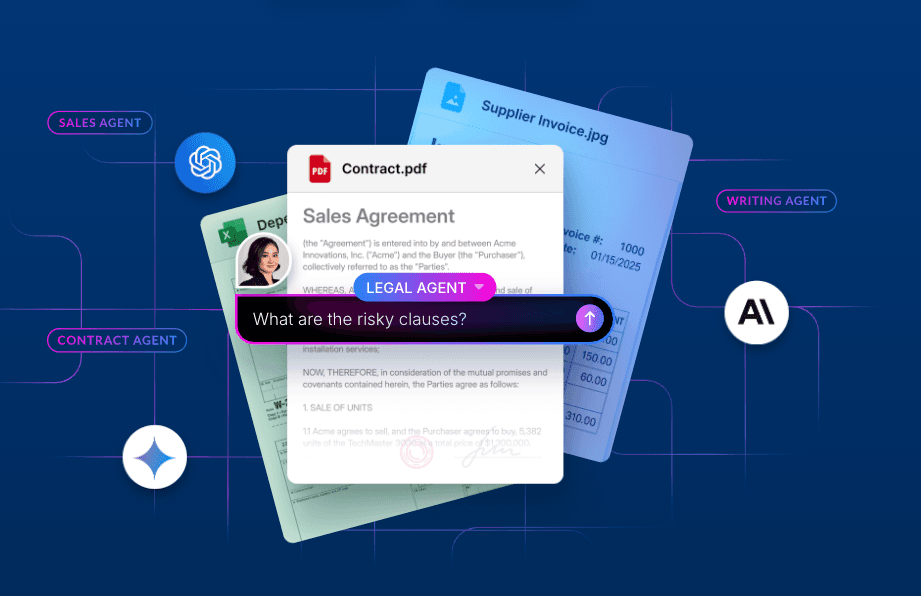
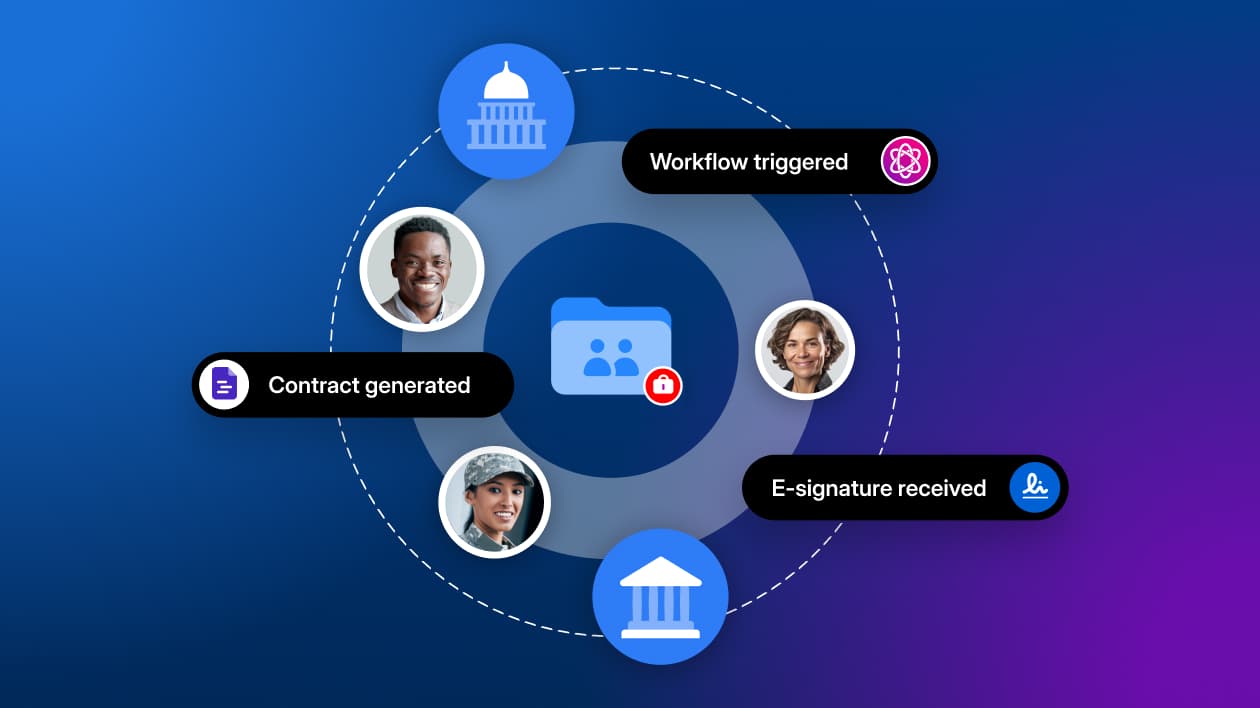
Argonne National Laboratory is using Box Hubs and Box AI to transform how its scientists access and synthesize complex research documentation, cutting literature review tasks from 30 hours to 30 minutes and achieving significant case deflection for internal support queries.
This U.S. Department of Energy multidisciplinary science and engineering research center tackles some of humanity’s toughest challenges, from reliable, affordable energy to emerging security threats.
In the course of work, Argonne’s researchers must be able to quickly access and synthesize information from policy manuals, technical documentation, historical research findings, and other types of unstructured data. Such complex content can be quite difficult to search and compare quickly at scale for scientific staff, visiting researchers, and hundreds of seasonal student researchers.
Before implementing Box, staff spent a lot of time sifting through dense documentation, including scattered PDFs and email threads, creating bottlenecks that slowed down critical scientific work and consuming hours of high-value time. Everyone from travel administrators to researchers expressed trouble finding quick answers. This slowed document triage, created operational friction, and delayed scientific progress.
For Library and Information Management Manager Jesse Henning and his team, who support the lab’s research functions, the challenge was clear: They needed a way to put the right information in the hands of their scientists instantly. The solution had to be powerful enough to parse hundreds of complex documents, yet simple enough for anyone to use without needing a developer.
With Box AI and Box Hubs, Argonne has been able to drastically improve its use of content and condense hours spent on searching down to minutes, saving employees valuable time so they can focus on the research itself — and better supporting the mission of the lab.
Argonne’s Intelligent Content Management transformation:
- A prototype Travel Hub available to 4,800 Box users reduces the support load for the travel office
- Increased case deflection for global travel inquiries
- Scientific literature reviews cut from ~30 hours to ~30 minutes
From 30 hours to 30 minutes with Box Hubs and Box AI
Argonne researchers had a scaling problem: Hundreds of technical reports (many 100+ pages) made literature reviews time consuming and costly for researchers. This often required subject-matter experts in a particular arena to read and triage dozens of documents over many hours. Researchers were drowning in documentation from national laboratories and other sources, unable to efficiently extract relevant insights from thousands of pages.
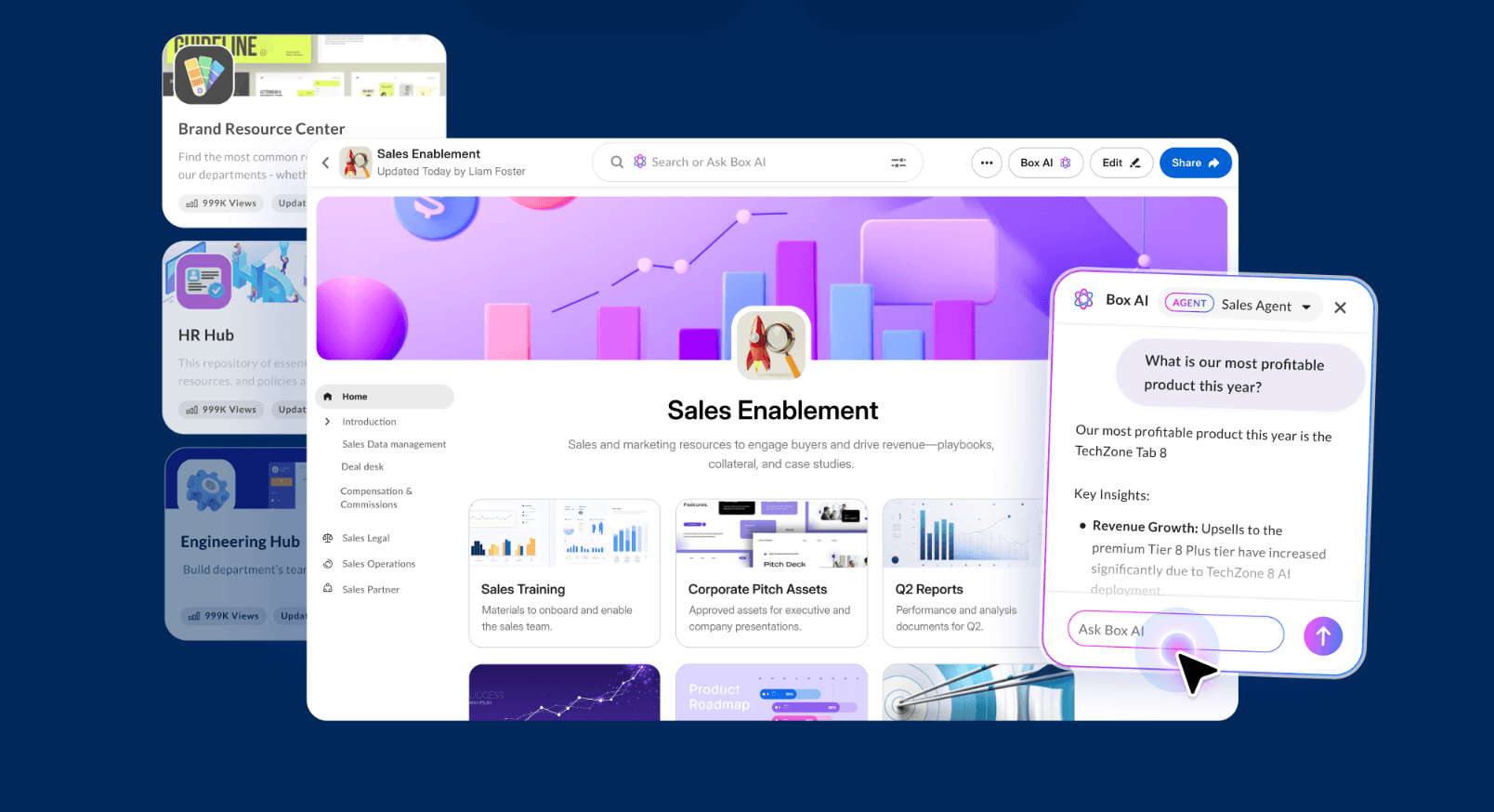
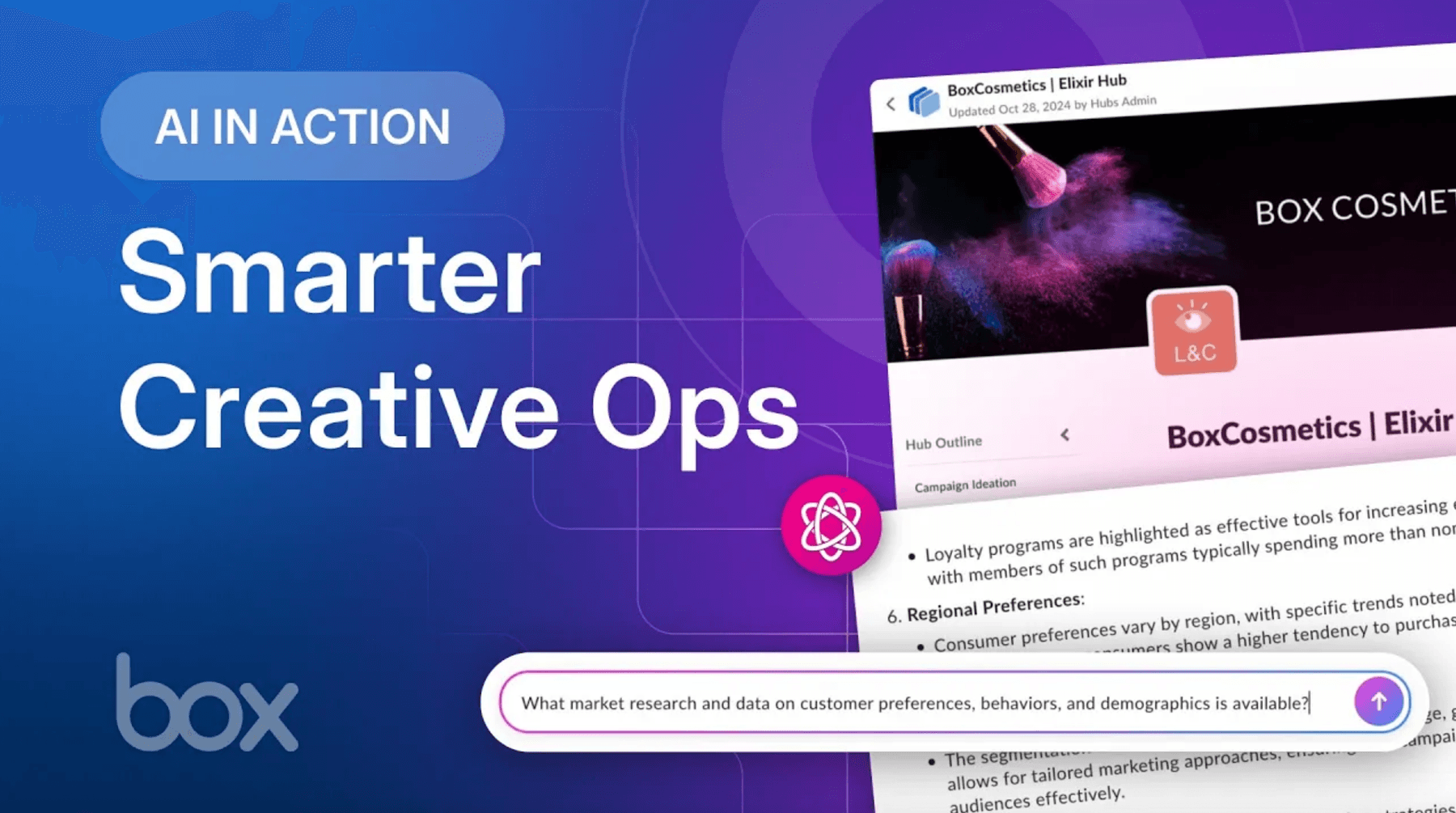
With Box Hubs, the team was able to create a self-service, AI-powered research experience. Scientists can now upload entire document collections and perform natural language queries across hundreds of files simultaneously (a capability traditional AI GPT models lack). By understanding context across a set of documents, the semantic layer uncovers insights that simple keyword searches overlook.
The productivity gains are substantial. Tasks that once took research librarians 20 to 30 hours now take 30 minutes. As Henning puts it, “Before Box, if someone needed to search through 100 technical reports, and find the five that were relevant, we were talking about three or four days of work. Now, we can do that job in thirty minutes” — a shift that’s freeing researchers to focus on discovery rather than document triage. By automating the most time-consuming aspects of information retrieval, Box AI directly contributes to accelerating Argonne’s research mission.
Adoption has been easy. Scientists need only 10 to 15 minutes of training to start using Box Hubs independently. The fact that users can spin up or take down Hubs at will, without cost or consequence, encourages widespread experimentation. “It’s a very low-risk way of leveraging AI at the lab,” shares Henning, “because it’s not going to break anything or hurt anything. It takes ten seconds, and the value-add of being able to find what you’re looking for is amazing.”
The solution also helps generalist librarians assist with highly technical queries while maintaining security for sensitive federal contractor information.
Hundreds of pages, thousands of questions
Another big content challenge Argonne faced had to do with a very specific scenario: how to streamline support queries related to employee travel.
Because the lab is government funded and run, there are a lot of rules around traveling and billing for travel. The manual that describes these policies is hundreds of pages long, accompanied by a myriad of videos, user guides, and other materials. This information is all readily available to employees, but the sheer amount of content made it hard to actually search for specific details in an obvious, efficient way. The traditional enterprise search tool employees used wouldn’t excavate any information past the first ten pages.
In addition, Henning explains, “While the majority of questions were answered in the travel policy, it was the outliers — the more nuanced questions — that didn’t directly appear in the text of any policies and procedures.” For instance, if an employee was wondering whether “an Aperol spritz is reimbursable,” (read: it isn’t!) that exact phrase wouldn’t appear in the document, so the search tool wouldn’t find it.
Such routine but detailed questions, via email, created backlogs and repetitive work for administrators. As Henning says, “A large portion of these questions could be answered through an AI chatbot trained on our thorough documentation.”


Organized, searchable content with Box AI on Box Hubs
To remedy this chronic problem, Henning’s team organized policy and research content into a series of Box Hubs, curating and referencing documents in context so teams could centralize content without moving files. Using Box Hubs, Argonne enabled natural-language queries across hundreds of documents — no custom development required.
With the conversational semantic layer that comes with Box AI, it’s much easier to answer nuanced or strangely worded questions. Argonne employees gain fast, self‑service access to the information they need, while IT retains strict permission controls and avoids building custom tools. All of this is achieved by combining Box Hubs with Box AI for conversational document querying.
In the near future, Henning’s team plans to use Box Skills to transcribe in-house training videos and apply metadata to every transcription. Box Skills is a tool Box Admins can leverage to process content in Box with image recognition, speech-to-text transcription, facial detection, and more. This enables Admins to automatically add rich metadata to large amounts of unstructured data. These are steps that will vastly improve searchability and improve work for support employees.
Box Skills is a tool Box Admins can leverage to process content in Box with image recognition, speech-to-text transcription, facial detection, and more.
In addition, the IT team can now track usage statistics to track the types of questions being answered and the team members using the tool. “We can see how many people are using Box Hubs every month,” says Henning. “And we’re working to track the true case deflection from people using the Hub.”
Adoption of the Travel Hub started strong: Early reporting points to measurable case deflection and reduced support load for the travel office. Beyond time savings, Intelligent Content Management from Box has reduced repetitive administrative work and accelerated researcher productivity, creating a clear path to sustained ROI as adoption expands and month-to-month reporting captures time saved.
Turn your complex content into easy answers
As adoption grows and usage data accumulates, Argonne is building a repeatable model — one that proves Intelligent Content Management isn’t just an efficiency play, but a mission-critical advantage for research-intensive organizations navigating complex compliance, and knowledge management challenges.
Ready to turn your complex content into easy answers? Learn how Box Hubs and Box AI can help your organization reduce support burden, accelerate research, and unlock the value hidden in your documents. Or read more customer stories of government agencies using Box.