Enterprise AI has spent the last few years in the spotlight for what it can say: summaries, drafts, answers, code snippets.
That progress is real. It is also incomplete.
The work that defines most organizations is not a chat thread. It is a chain of obligations: intake, validation, routing, approval, exception handling, documentation, audit, and retention. In other words, work is a workflow, and workflows are where value is created—and where AI initiatives quietly stall.
The limiting factor is rarely that the model is not smart enough. It is whether the enterprise can move the right information to the right step, every time, with governance intact when the world is messy: inconsistent filenames, scanned attachments, partial data, parallel reviewers, changing policies, and multi-party files that cannot be treated like disposable payloads.
That is why I believe the next chapter of enterprise AI will be written in workflows, not models.
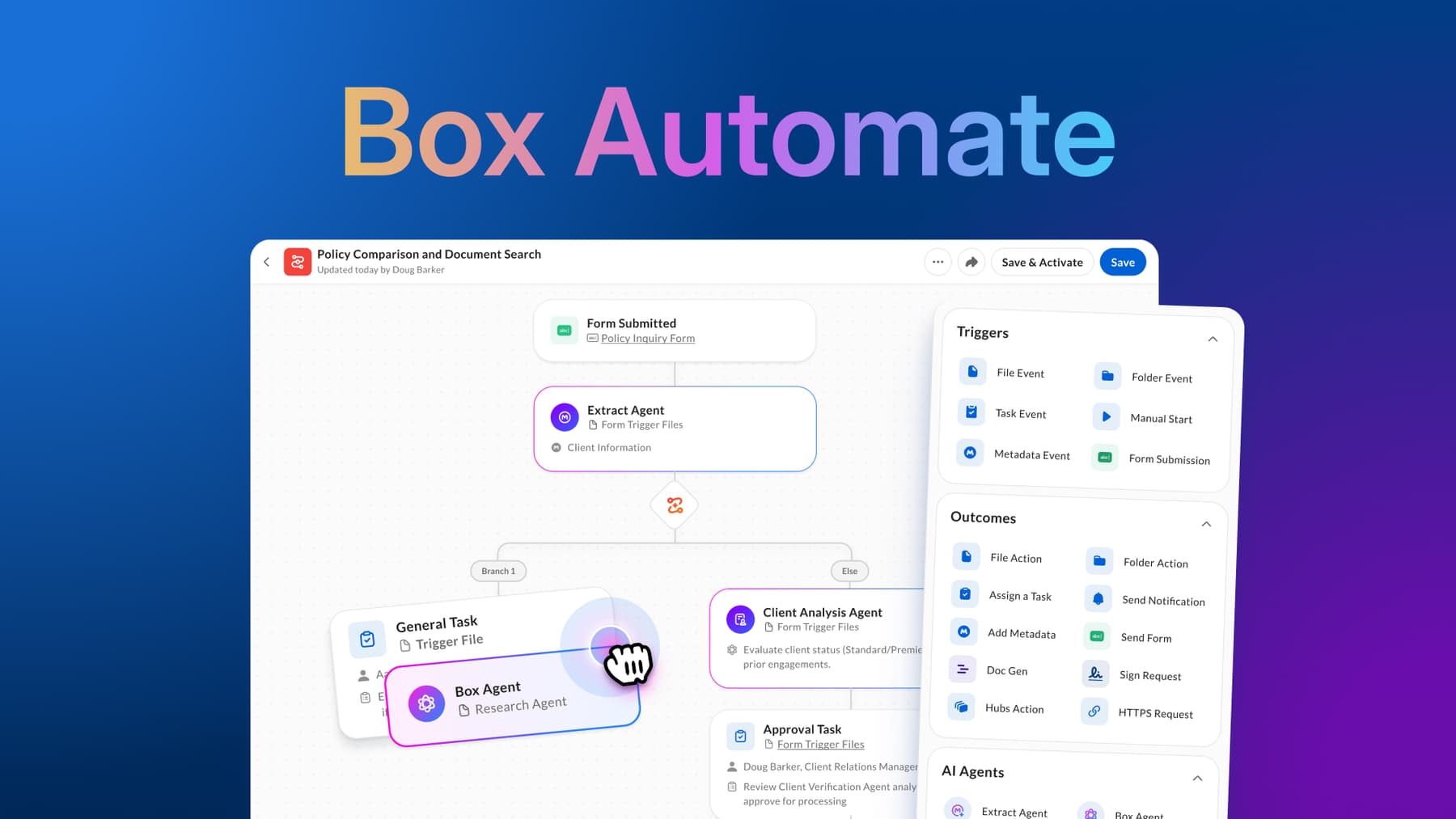
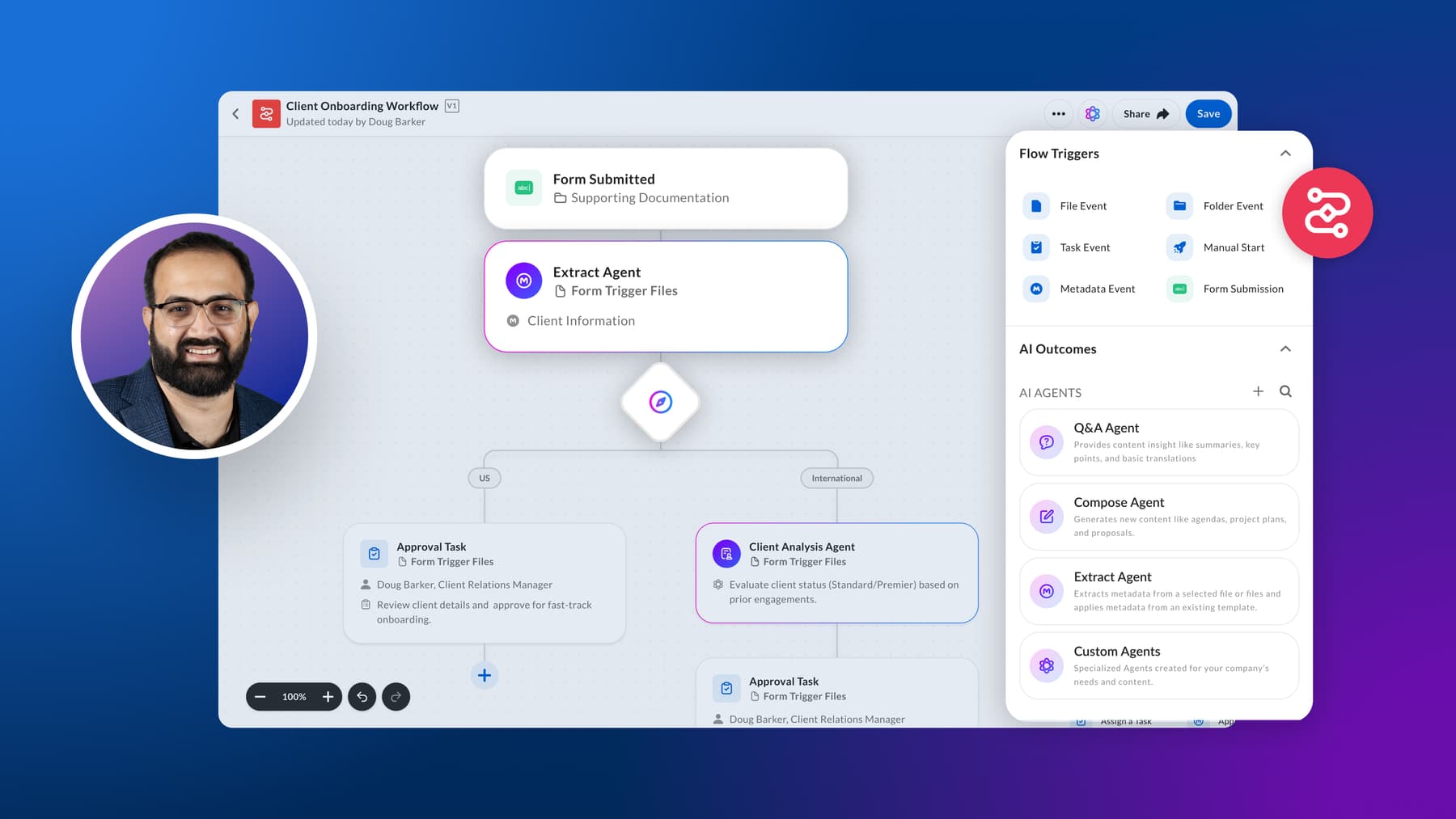
And it is why Box is investing in the intersection of governed content and reliable orchestration through Box Automate.
Intelligence is necessary; reliability is sufficient
A model can be impressive in isolation and still fail in production if the surrounding system cannot answer basic operational questions.
What file is the system of record? Who is allowed to see it at this step? What metadata was extracted, with what confidence, and what happens if confidence is low? Who approved what, when, and why? What is retained, where, and under which policy?
When those questions are answered as afterthoughts—through ad hoc integrations, duplicated permissions, or manual reconstruction of context at every handoff—teams get speed in demos and friction in operations.
Reliable enterprise automation requires a different center of gravity: the content layer.
Files are not attachments to a process. In regulated and mission-critical work, they are the process evidence. Contracts, claims packages, loan files, onboarding documents, controlled SOPs, inspection reports, and financial records carry meaning that must persist across steps and across time.
“Operations” without the content layer is incomplete
Recent moves in the market around agentic operations and workflow orchestration validate something important: enterprises want repeatable, governable execution around AI.
That much is true.
But there is a difference between orchestrating work around business objects and orchestrating work around governed content.
Salesforce is optimizing for a different system of record and a different primary object model than Box. That is not a criticism; it is an architectural distinction that matters.
Box’s differentiation is that content is the system of record, and orchestration happens natively on top of that content.
Box’s differentiation is that content is the system of record, and orchestration happens natively on top of that content.
Enterprise AI usually fails at the seams: permissions, versions, metadata, evidence trails, retention, and multi-party files. The ambiguity is rarely in the CRM record. It lives in the PDF, the scan, the contract, the submission packet, the supporting document set.
If orchestration is not native to that layer, teams end up rebuilding context and re-implementing governance at every integration hop.
That is where a lot of “agentic operations” becomes integration theater.
Automate the step—or redesign how work moves
There are two common failure modes in enterprise AI programs.
The first is local optimization: AI accelerates one task while the surrounding workflow remains slow, manual, and opaque. You get a faster paragraph, not a faster business outcome.
The second is integration theater: automation exists, but content is copied between systems, permissions diverge, metadata is rebuilt repeatedly, and auditability becomes a project of its own.
The alternative is workflow redesign.
That means making context travel with the content so each step builds on the last—enrichment, routing, validation, generation, signature, filing—without forcing humans to become human routers.
This is the shift from brittle if-this-then-that routing to governed decisioning on real inputs: read the document, decide the path, escalate exceptions, and keep humans in the loop where judgment is required.
Why content-native is a strategy—not a slogan
Most organizations do not lack access to AI. They lack a place where AI can operate with enterprise-grade context and controls by default.
When orchestration is not native to the content platform, every workflow step pays a tax: fetch the file, re-check permissions, re-parse meaning, re-map fields, reconcile versions, and hope nothing sensitive leaked along the way.
Each hop introduces latency, drift, and operational risk.
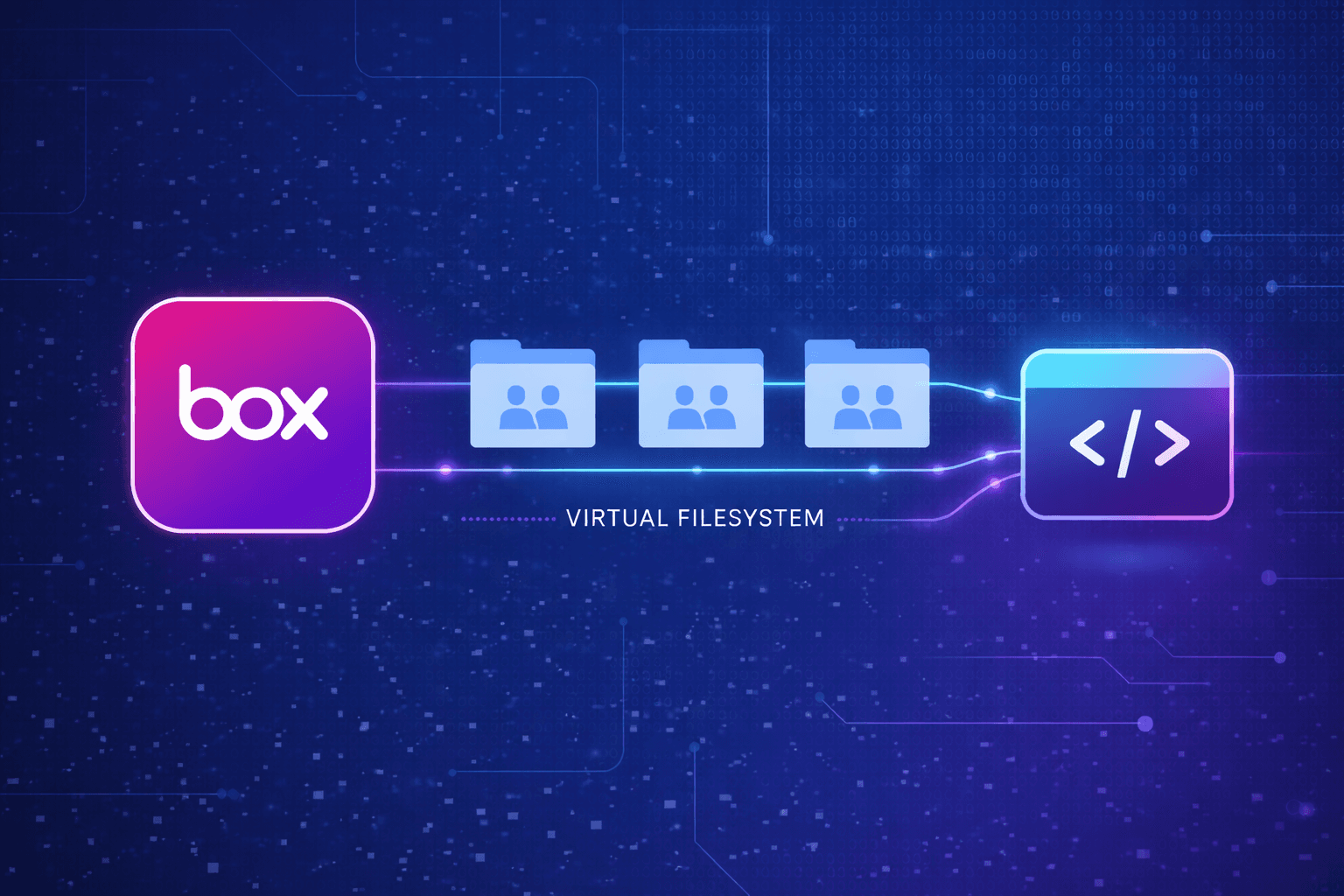
When orchestration is native, the workflow inherits what the content platform already enforces: permissions, classification, retention, collaboration history, and audit.
That is the architectural idea behind Box Automate.
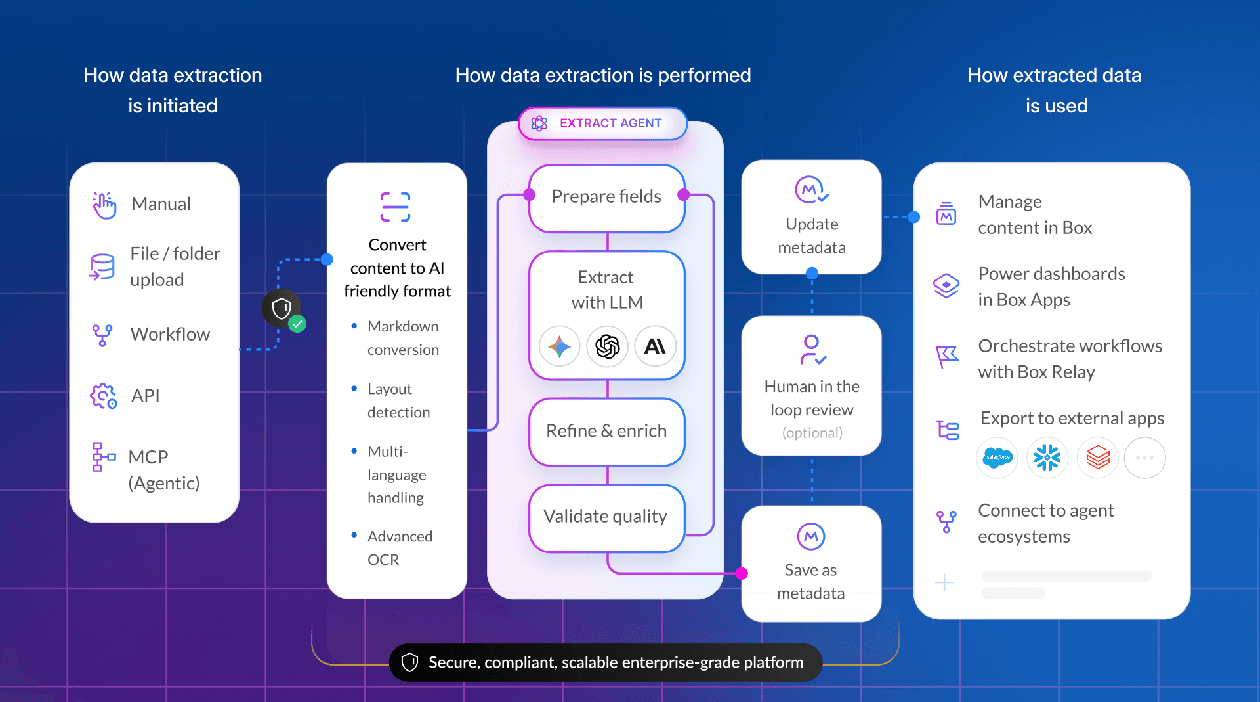

Automate is not merely a workflow tool that connects to content. It is workflow automation built natively on the content platform.
Agents are first-class participants in the workflow—not a bolt-on API call the engine cannot reason about—so the system can manage context assembly, confidence, and fallback when automation should not proceed silently.
Metadata extracted through Box Extract becomes connective tissue that powers downstream steps, applications, and reporting without rebuilding a parallel agent knowledge base for every use case.
This is the architectural answer to reliability: fewer systems reconciling the same file, fewer duplicated permission models, and fewer places for context to get lost.
The reliability layer for agentic work
The strongest proof points for this approach are architectural, not rhetorical.
Inherited trust matters. Permissions, audit, classification, and policy stay attached to the file instead of being reconstructed in downstream systems.
Agents as first-class workflow participants matter. If the workflow engine understands what the agent is doing, it can manage context, confidence, and escalation as part of the process itself.
If the workflow engine understands what the agent is doing, it can manage context, confidence, and escalation as part of the process itself.
Confidence and fallback matter. Non-determinism at the step level should not become chaos at the process level. A workflow should still complete in a reliable, auditable way even when an agent encounters ambiguity.
And the end-to-end pipeline matters.
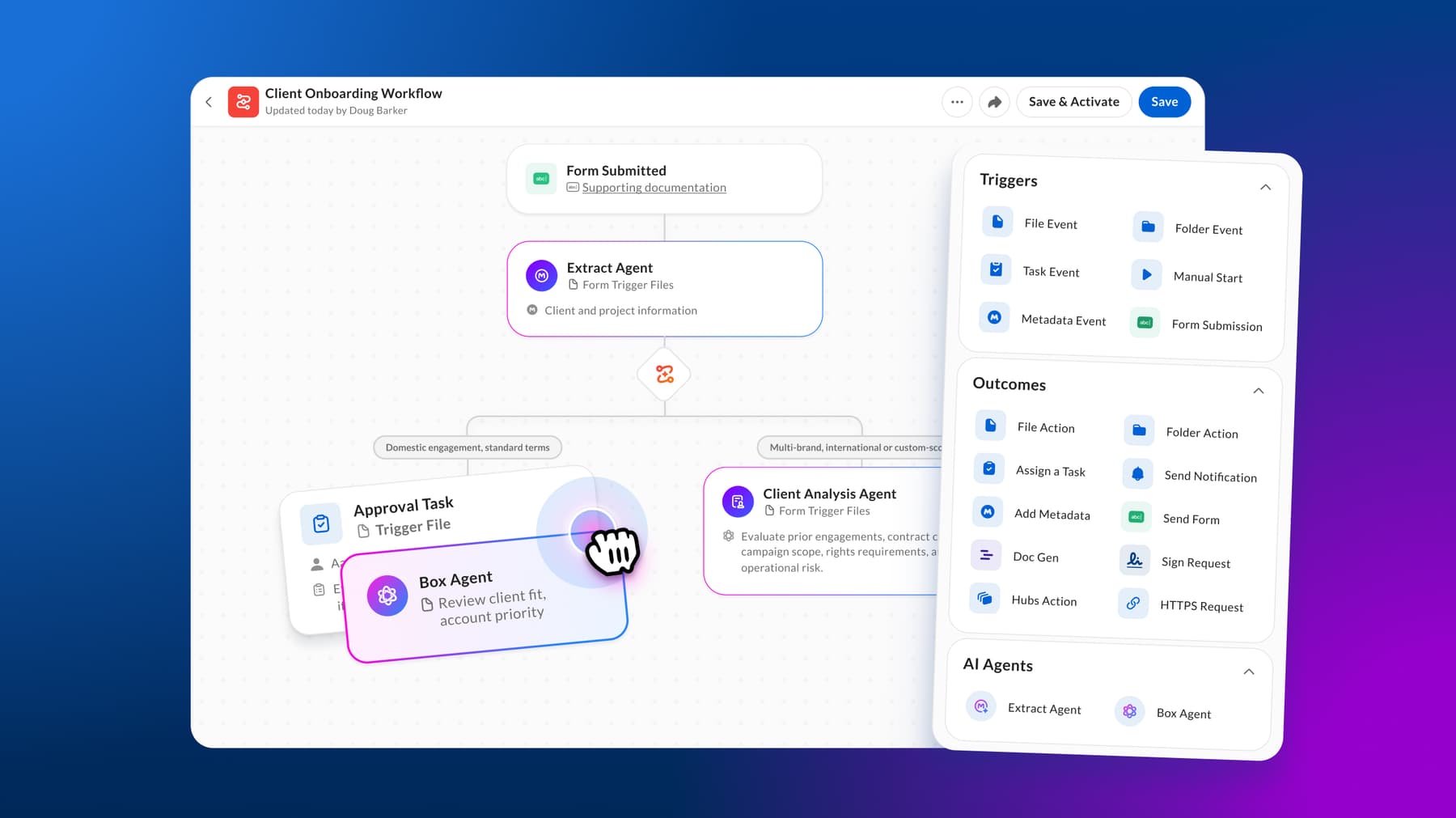
Forms to collect information. Extract to capture structured signals from unstructured content. Automate to route and decide. Doc Gen to produce downstream artifacts. Sign to execute. All as one governed pipeline.
That is hard for generic orchestration to replicate without turning into a bespoke integration project.
What good looks like in production
Across customer and partner engagements, the highest-impact patterns tend to cluster where unstructured content meets multi-step judgment: invoice and loan operations, contract lifecycle, vendor risk, onboarding and validation, controlled document workflows, inspection and case management, and high-volume media operations.
These are not use cases where enterprises need more AI theater. They are use cases where they need less operational ambiguity.
What good looks like in production is not an impressive demo. It is a workflow that can ingest documents from upstream systems, extract the right metadata, route work based on those signals, generate downstream documents, trigger assignments, and preserve auditability throughout.
The point is not AI for its own sake. The point is workflow redesign where content carries context forward.

Consolidation without compromising the stack
Many enterprises will continue to run Salesforce or similar platforms for CRM and service objects while using Box for content workflows.
That is the practical reality, and Box should embrace it.
The goal is not to replace every system of record. The goal is to own the document workflow wedge that CRM-centric workflow tools handle poorly: unstructured intake, evidence packets, contract workflows, controlled documents, multi-party review, and regulated retention.
This is why the right posture is complement, not replacement.
Trigger from Salesforce. Execute on governed content in Box. Write back structured outcomes.
That positions Box Automate as specialized where general-purpose workflow platforms are generalized.
It also helps enterprises reduce operational debt: fewer duplicated connectors, fewer inconsistent governance models, and fewer places where content and policy diverge.
What customers should expect next
Enterprises will keep investing in agentic capabilities.
They will also keep asking the adult question: can we run this in production without turning our content estate into a science project?
I think that is the right question.
The durable advantage in enterprise AI is not which model tops the next benchmark. It is whether teams can design, test, observe, debug, and govern content-driven workflows at scale—where sensitive files already live, with controls that do not need to be reinvented for every new agent.
That is the standard we are building toward with Box Automate: agentic automation that respects how enterprises actually work—through documents, decisions, approvals, and evidence—not around them.
The market will keep elevating model benchmarks. Enterprises will keep winning or losing on whether AI-powered work is observable, accountable, and aligned to how sensitive content must move.
Box’s answer is unambiguous: reliability in the workflow layer is the product.
Intelligence amplifies value only when routing, metadata, permissions, human oversight, and audit are treated as first-class requirements—not afterthoughts wrapped around a chat window.
That is why I believe the next chapter of enterprise AI will be written in workflows, not just models.
Watch our latest deep dive to learn how to supercharge your content workflows with AI agents.
