Most organizations are asking the wrong question about enterprise AI.
The one I hear most often from enterprise leaders — "How do we use AI to make our existing processes faster?" — sounds reasonable. It sounds pragmatic. But I believe it’s precisely the wrong question, and it’s costing organizations the transformational ROI they’re chasing.
Here’s a reality check. AI spending is expected to hit approximately $644 billion globally. But 73% of AI deployments aren’t delivering the expected return on that investment, and roughly half of U.S. enterprises haven’t seen AI reduce costs or improve productivity over the past 12 months. The instinct is to blame the technology, to say we’re too early, the models aren't ready, the infrastructure isn't there.
But what the data really shows is that 77% of AI deployment failures are caused by organizational challenges, not technology. The models are extraordinary. The architecture exists. But organizational challenges persist.

Root causes of AI failure, and steps toward AI success
In speaking with numerous customers across verticals and company sizes, I’ve seen the same two failure patterns emerge again and again.
First: AI has no operational home. It gets technically deployed across the enterprise, but nobody actually adopts it. It exists in a pilot, in a proof of concept, in a slide deck, but not in the daily rhythm of how work gets done.
Second: AI is being bolted onto existing processes without asking what those processes are actually supposed to accomplish. Organizations are adding AI to their workflows without first understanding what transformation they need. The result is a faster version of a broken process. It’s still a broken process.
This is why the question, "How do I use AI to make our existing processes faster?" leads you astray. The question that unlocks real transformation is, "What processes do we actually need in an AI-first world?"
When our team was building Box Automate, we honed in on four important concepts that are key to successfully implementing AI-first processes.
I: The supervised autonomy trap
When most organizations start deploying AI, they reach for what I call procedural guardrails — adding a human approval at every AI output. On the surface, this seems responsible. Add a review step here, an approval gate there. But at scale, the more you automate, the more approval gates you create. You’ve essentially rebuilt your manual workflow with more checkpoints. You haven’t automated work; you’ve automated the suggestion of work, with a human still required to act on every single step.
I call this the supervised autonomy trap: you've rebuilt your manual workflow with an approval gate at every step. You gain marginal improvement, but at added cost and time. And as you deploy more agents, this approach becomes unviable.
The shift that actually works is moving from procedural guardrails to structural guardrails. That means embedding governance at the architecture level, not at the review step. This means designing for permission-aware agents, confidence scoring, and audit trails from the start. Compliance isn’t a checkbox at the end of the workflow; it’s a design property baked into the foundation.
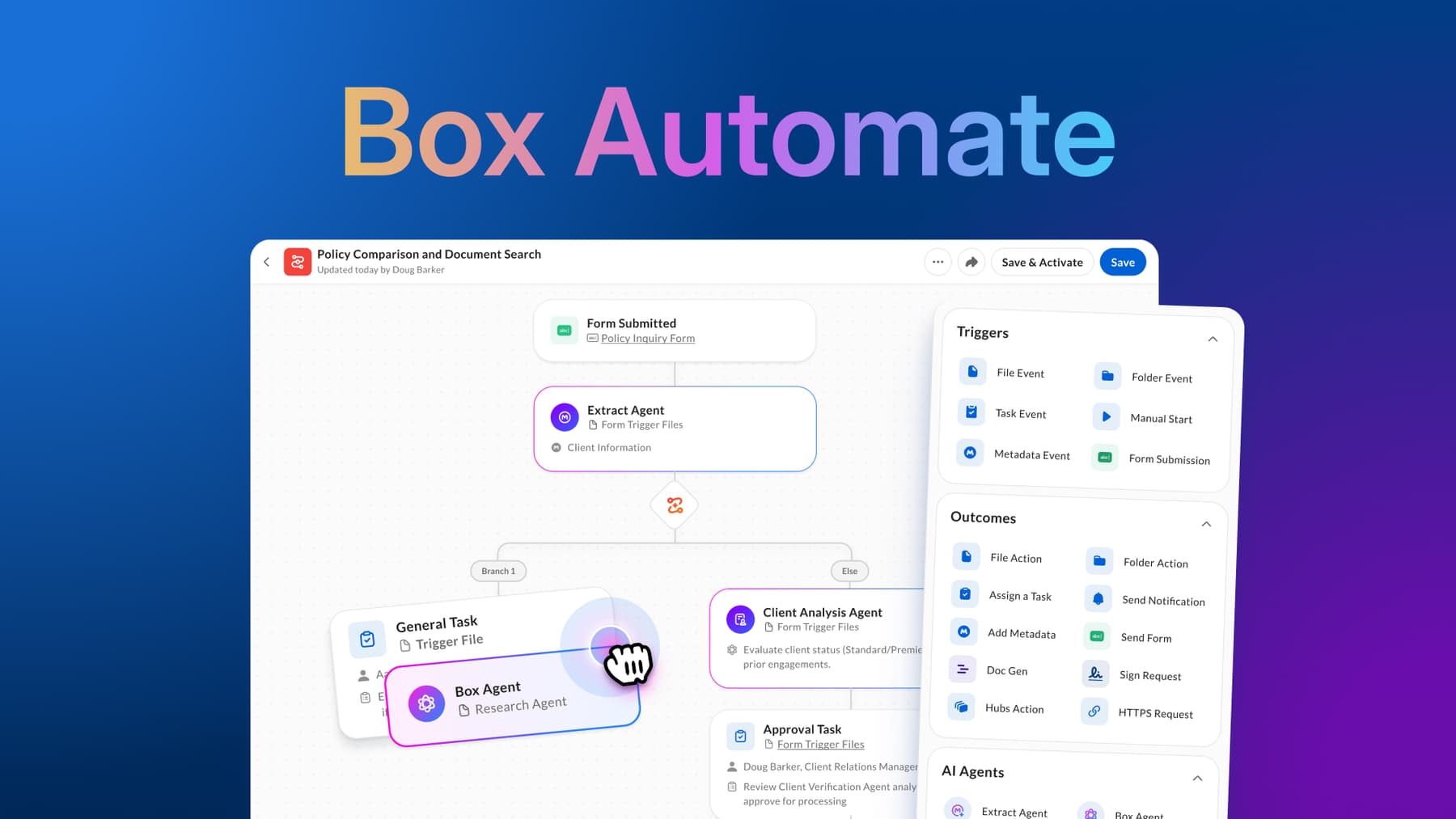
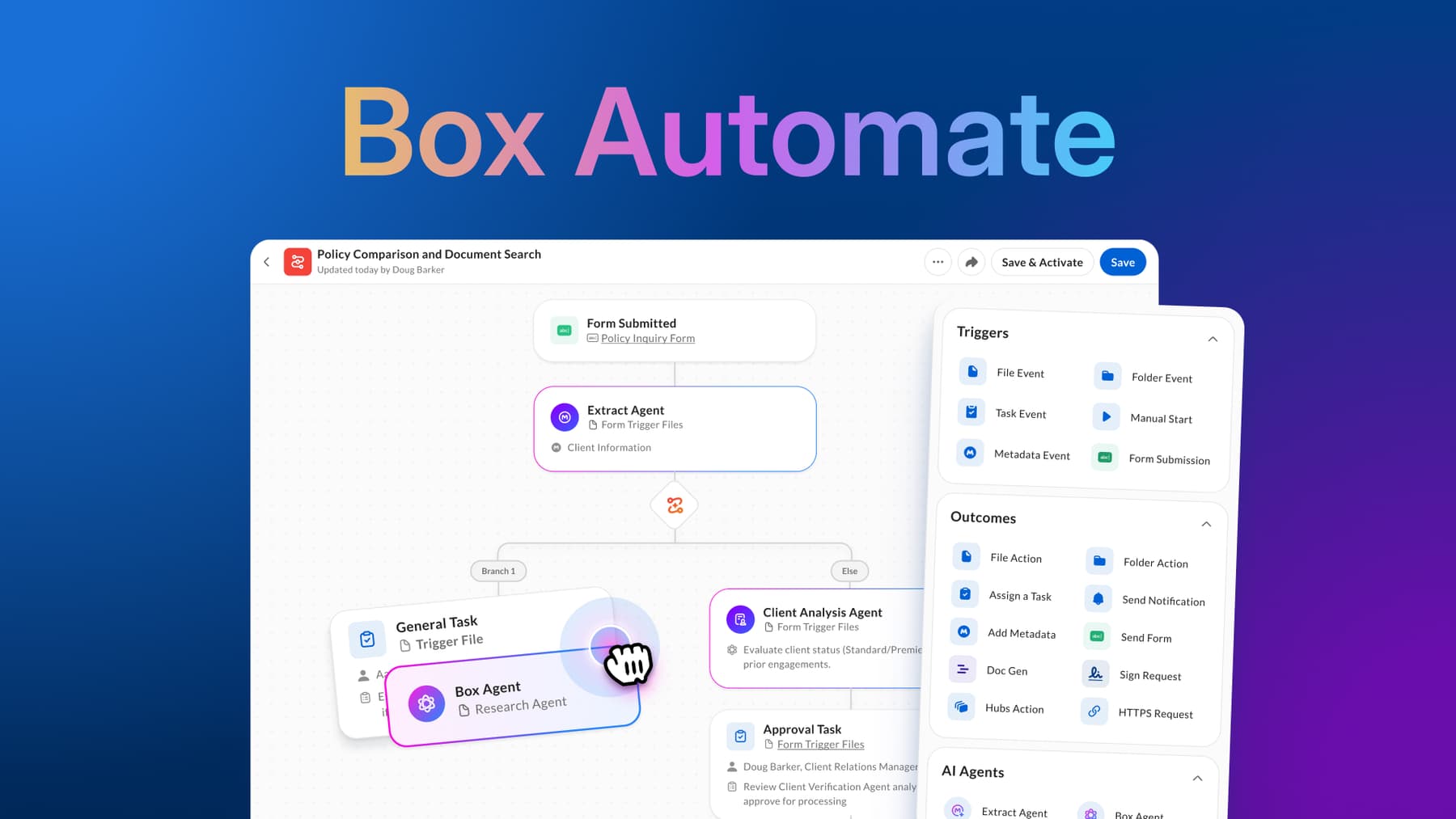
This is the principle behind Box Automate: governance isn't an optional parameter; it's the architecture. If a user can't access data, neither can the automation.

II: AI-native workflows are structurally different
Here’s the insight that separates incremental improvement from genuine transformation: AI-native workflows aren’t accelerated versions of old workflows. They’re structurally different.
The primary bottleneck in most enterprise workflows is the accumulated cost of handoffs between steps, context reconstruction across the process, and manual routing decisions. When you bolt AI onto a single step by, say, adding OCR to a document review, you might get 15% improvement on that step. But the handoffs still exist. The manual routing still exists. The context reconstruction still exists. And those costs multiply exponentially across a ten-step process.
But when you redesign the process itself, you don’t get a ten-step process that runs faster; you get a four-step process that’s fundamentally different. That’s the difference between incremental and transformational.
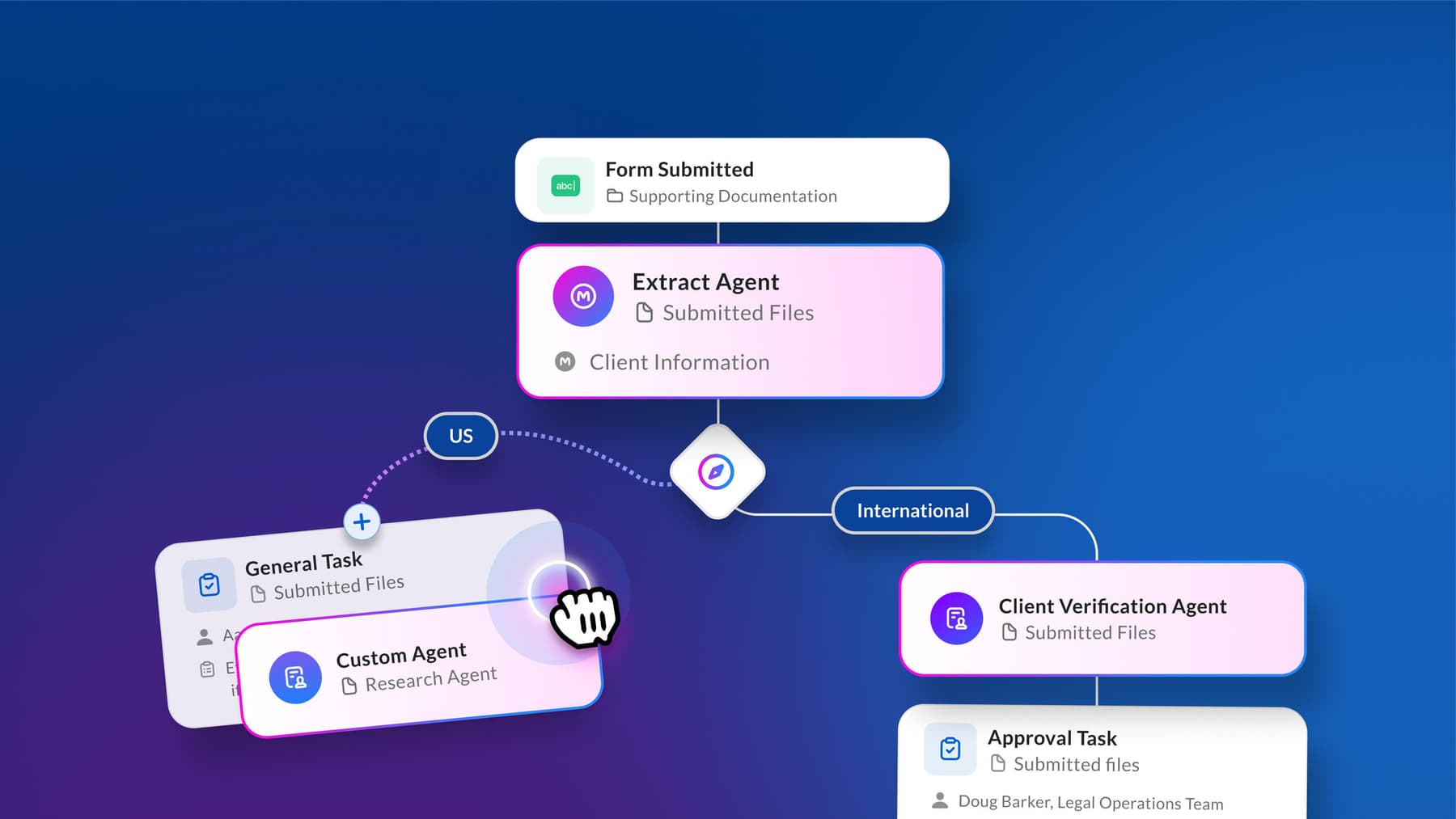
Box Automate operates on a model I describe as "Read This, Decide That", a fundamental shift from the legacy "If This, Then That" automation paradigm. Legacy automation moves tasks and enforces rules. But it can’t interpret content, understand nuance, or make judgment calls. The most important parts of any workflow — reading, deciding, escalating — still fell back to people. Box Automate changes that by unifying content, AI, and process in a single platform, enabling agents to understand work, make decisions, and execute at scale.
III: Redesign roles, not just workflows
Redesigning workflows means changing how people work, what their roles mean, and how you measure success. This is where most AI transformations quietly fail.
The first mistake is measuring AI productivity through activity metrics. Things like buttons clicked, pages submitted, tasks completed. That is the wrong lens entirely. You must measure AI productivity through outcomes: Is AI driving more claims processed? More employees successfully onboarded? More contracts closed? Tie AI to business KPIs, or you’ll never know whether it’s working.
The second mistake is mishandling the human dimension. The fear of job displacement is the number one concern I hear from employees. But here’s the irony: organizations handle this fear by not handling it. If you ask a claims specialist whether they want to process more claims with AI assistance, the answer is almost always yes, if you redefine their role clearly. Show them what the agent does. Show them what they do. Show them what their new role looks like and why it’s better. Once they understand it, they don’t resist. Instead they become advocates.
The third mistake is trying to do everything at once. Start with one or two critical use cases. Deploy them. Learn continuously. Monitor. Then scale. Build organizational trust through successful deployments. Make AI transformation a function, not a one-time project.

IV: The missing competency: trust engineering
The competency that will separate AI leaders from AI laggards is what I call trust engineering, and it’s currently missing from most enterprise organizations.
Trust engineering is the governance framework that enables autonomous agents to act at scale. It means defining permissions clearly. Establishing audit mechanisms. Building escalation protocols. Designing confidence scoring into the workflow so that high-confidence decisions execute automatically while edge cases route to humans. It means understanding agent orchestration, monitoring agent performance, and managing agent-to-workflow handoffs.
This isn’t a technology problem; it’s a design thinking problem. Your organization’s claims managers, operations specialists, loan officers, and other process experts already deeply understand their domain. What they need is a framework to redesign that knowledge for an AI-first world. With Box Automate, those process owners can build, test, and deploy workflows themselves without filing an IT ticket and waiting six weeks.
When you get trust engineering right, something powerful happens. Every successful deployment builds organizational trust, which unlocks the next transformation. Every role you redefine releases more capacity. Every workflow you redesign with agents increases productivity. It becomes a positive flywheel whose benefits compound.
The technology constraint is gone
The models are extraordinary. The architecture exists. Box Automate is here to help enterprises redesign their workflows and drive the ROI they have been promised.
The question is whether your organization is ready to transition from supervised autonomy to trust engineering, from getting a human to approve every decision to designing governance into the system, from a tool rollout to an operating model transformation.
That journey won’t happen overnight. But every step you take on it compounds. And the organizations that start now by asking the right questions, redesigning the right processes, building the right governance, won’t just be faster; they’ll be fundamentally different.
The technology is ready. Are you?
Nirmal Ganesh is Senior Director of Product Management at Box, where he leads the product strategy for Box Automate. To learn more about Box Automate, visit box.com.