Multi-agent orchestration is the coordinated use of multiple specialized AI agents that work together through a governing orchestration layer to complete complex, goal-driven enterprise workflows.
Rather than relying on one general-purpose chatbot or model to handle every task, multi-agent orchestration distributes work across agents with distinct roles, shared context, and governance controls. This article explains the core architecture of multi-agent orchestration, why it matters for enterprise AI, how pragmatic adoption frameworks reduce implementation risk, and how Box supports secure, content-centric agentic workflows.
Key takeaways about multi-agent orchestration
- Multi-agent orchestration coordinates multiple specialized AI agents through an orchestrator that assigns tasks, manages dependencies, monitors progress, and synthesizes results.
- A single AI model handling every business function can become a bottleneck because it concentrates context, latency, and capability limits in one place.
- The four core components of an agentic AI architecture are the orchestrator, specialized agents, shared context, and governance.
- Multi-agent orchestration reduces AI silos by connecting isolated automation tools into coordinated workflows that can span documents, systems, decisions, and human reviews.
- Enterprise use cases such as client onboarding, insurance claims, contract review, compliance screening, and supply chain exception management often require multiple AI agents working in parallel or intelligent sequence.
- Effective agentic AI adoption depends on pragmatic implementation: workflow grounding, measurable business outcomes, human-in-the-loop oversight, observability, and security controls.
- Box supports agentic workflows by providing a secure content layer through Box Content Cloud, Box AI, Box Shield, Box Governance, Box Relay, Box Sign, Box Doc Gen, Box Hubs, and Box Platform APIs.
Why multi-agent orchestration matters for enterprise AI
Enterprise AI often disappoints when intelligence is deployed in isolation. A fraud detection model that cannot communicate with a customer notification system, a document processing tool that hands work to a manual queue, or a chatbot that escalates as soon as a query becomes complex can create local efficiency without transforming the broader process.
Multi-agent orchestration matters because enterprise work is rarely a single-step interaction. Processes such as onboarding a client, processing a claim, reviewing a contract, or managing compliance obligations involve documents, data, approvals, exceptions, and decisions across multiple teams and systems.
Multi-agent orchestration matters because enterprise work is rarely a single-step interaction.
For IT leaders, content stakeholders, security teams, and compliance owners, the value of multi-agent orchestration is not only automation speed. The larger outcome is coordinated execution: agents that can specialize, collaborate, preserve context, escalate appropriately, and operate within policy-defined boundaries.
For knowledge workers, this shift changes AI from a conversational assistant into a workflow participant. Instead of asking one bot to answer a question, teams can use AI agents to analyze content, route tasks, generate outputs, verify information, and keep humans involved where judgment or accountability is required.
Core concepts in multi-agent orchestration
What is multi-agent orchestration?
Multi-agent orchestration, often abbreviated as MAO, is the disciplined coordination of multiple specialized AI agents operating as one goal-driven system. The architecture breaks complex work into subtasks, assigns those subtasks to the right agents, and brings the outputs back together into a coherent result.
A single-model architecture tries to concentrate intelligence in one place. Multi-agent orchestration distributes capability across a network of agents, each built for a specific function or domain.
The orchestration layer is what makes the system coherent. Without orchestration, multiple agents can become disconnected automations; with orchestration, they become a coordinated enterprise workflow.
How the orchestra analogy explains agentic AI
A useful analogy is a live orchestra. Strings, brass, woodwinds, and percussion each bring specialized expertise, but the conductor turns individual performance into a unified outcome.
In multi-agent orchestration:
- The orchestration layer acts as the conductor
- The specialized agents act as the sections of the orchestra
- The enterprise workflow acts as the musical score
- The final business outcome acts as the performance
No single agent is expected to "play every instrument." Each agent contributes its part within a system organized to accomplish outcomes that one general-purpose agent would struggle to complete alone.
Why single-agent AI becomes a bottleneck
Single-agent systems can work for narrow tasks, but they become limited when enterprise workflows require multiple skills, data sources, approvals, and decisions. One model's context window, latency profile, and capability ceiling can constrain the entire process.
As more responsibilities are added to a single AI system, several risks often increase:
- Context overload
- Slower response times
- Higher hallucination risk
- Poor domain precision
- Limited fault tolerance
- Difficulty adding new capabilities without reengineering the whole system
Multi-agent orchestration addresses these constraints by letting organizations add specialized agents rather than expanding one overloaded monolith.
The orchestrator in a multi-agent system
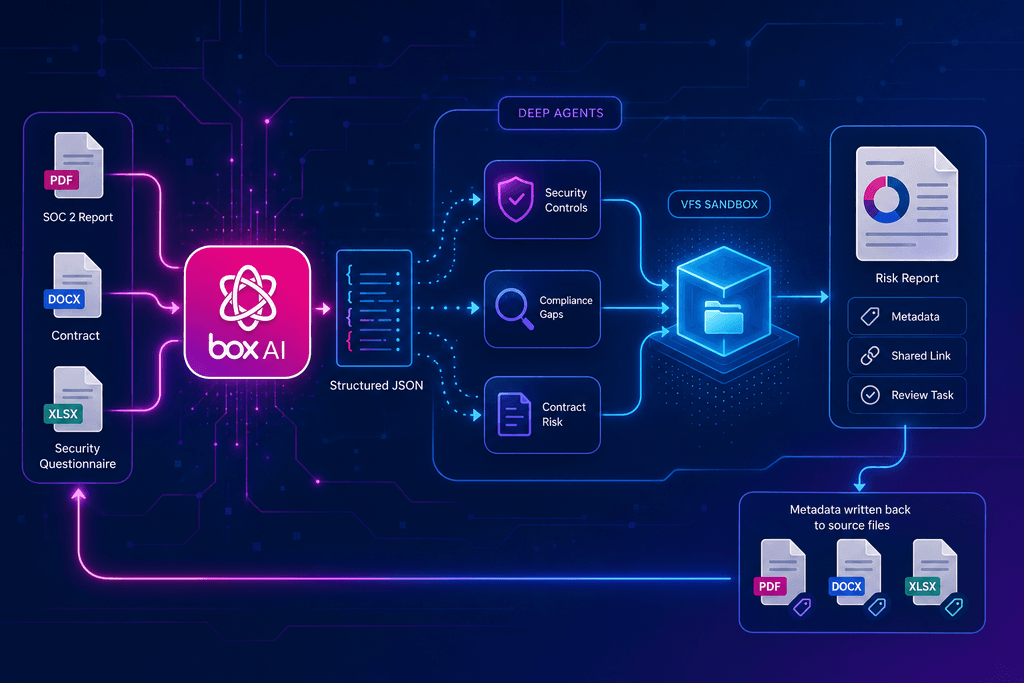
The orchestrator is the central reasoning and coordination layer in a multi-agent system. It decomposes high-level goals into discrete subtasks, routes each task to the most capable available agent, monitors execution state, and assembles the final output.
The orchestrator holds the process map. Individual agents hold domain-specific knowledge or task-specific capability.
In a business workflow, the orchestrator may decide which agent should ingest a document, which should verify policy requirements, which should calculate risk, which should draft a customer response, and when the result should be escalated to a human reviewer.
Specialized AI agents
Specialized agents are modular AI units optimized for specific domains or tasks. Examples include a regulatory compliance agent, financial reconciliation agent, document ingestion agent, risk-scoring agent, contract review agent, or natural language customer response agent.
The advantage of specialization is depth. A generalist model may handle many tasks adequately, while a specialized agent can be tuned for a narrower function with more relevant context, vocabulary, rules, and constraints.
Specialized agents can also be updated, replaced, or augmented without disrupting the entire architecture. This modularity helps enterprises expand AI capabilities over time while preserving prior investments.
Shared context across AI agents
Shared context is the persistent memory and information layer that allows agents to maintain continuity across handoffs. Without shared context, each agent may start from zero, causing fragmentation, duplicated work, or inconsistent outputs.
For example, if a compliance agent passes a document to a risk-scoring agent, the downstream agent may need access to customer records, prior flags, regulatory constraints, and document history. Shared context keeps the work coherent across multiple steps.
Shared context is especially important in content-heavy workflows. Contracts, claims, onboarding packets, policies, customer files, and audit records all contain information that must move accurately between agents.
Governance and guardrails for agentic AI
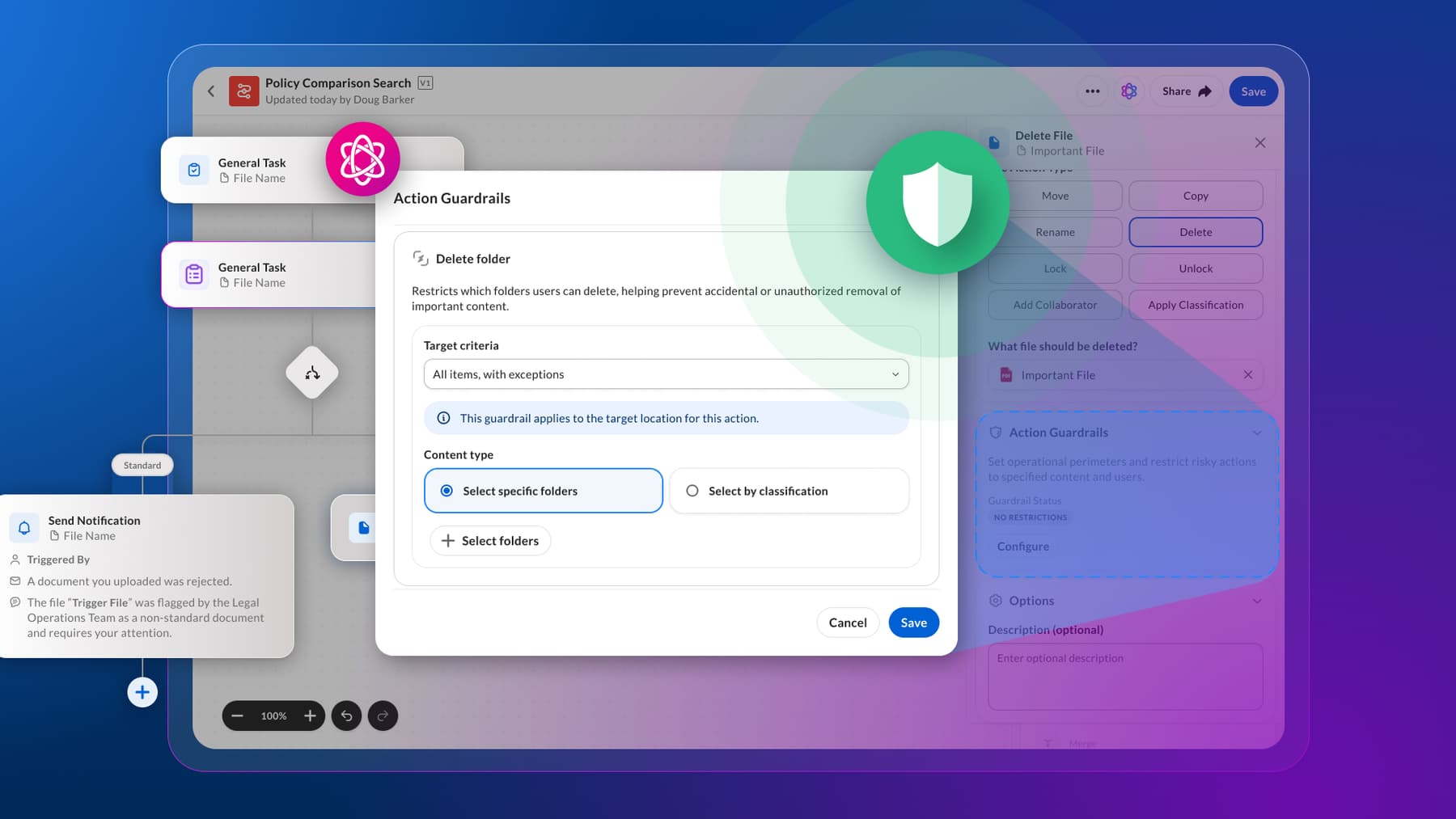
Governance is the policy and control layer that defines what agents can do, under what conditions, and with what level of human oversight. It is essential for enterprise accountability, security, compliance, and auditability.
Effective governance typically includes:
- Role-based access policies for each agent
- Permission limits on systems, data sources, and actions
- Human-in-the-loop escalation for high-risk or low-confidence decisions
- Audit logs that capture agent actions and outputs
- Policy enforcement before outputs move downstream
- Monitoring for anomalies, drift, and unexpected behavior
Governance makes agentic AI manageable in production, not just usable in experiments.
AI silos in enterprise automation
AI silos are isolated pockets of automation that improve a local task but fail to resolve broader workflow complexity. Examples include a chatbot that cannot complete backend tasks, a document processor that hands off to manual review, or a fraud model that does not communicate with customer notification systems.
These are often architectural failures rather than AI failures. The intelligence may work locally, but the workflow remains fragmented.
Multi-agent orchestration is a structural response to AI silos. It connects agents, systems, data, and human decision points into a coordinated operating model.
Scaling AI without overloading one model
In a single-agent system, scaling often means asking one model to handle more responsibilities. That can introduce latency, context overload, and reduced precision.
In a multi-agent system, scaling means adding or improving specialized agents. A new capability can be introduced as a new agent rather than retrofitting an existing model.
This makes scaling more modular. Workflows can expand without degrading every existing process.
Domain-specific AI agents vs. general-purpose models
Enterprise processes often require domain-specific precision. Actuarial modeling, contract review, clinical documentation, financial reconciliation, and regulatory compliance all require specialized language, policies, and decision logic.
Multi-agent orchestration supports domain expertise by allowing agents to be purpose-built for a specific function. These agents can then collaborate under an orchestrator rather than forcing one general-purpose model to perform every role.
This approach reduces the performance ceiling created by broad but shallow generalism.
Resilience in multi-agent AI architecture
In a single-agent system, one model's outage or failure can halt the entire workflow. In an orchestrated agent network, the orchestrator can redistribute tasks, invoke a backup agent, or trigger escalation to a human reviewer.
This makes resilience part of the architecture rather than an afterthought. Fault tolerance is built into the topology of the system.
For enterprise environments, this matters because production AI systems must handle exceptions, outages, incomplete data, and changing infrastructure conditions.
Parallel execution in multi-step business workflows
Many business processes involve multiple steps that do not always need to happen sequentially. Insurance claim processing, for example, may involve document ingestion, fraud signal detection, liability calculation, policy verification, and claimant communication.
In legacy environments, these steps may happen manually and sequentially. Multi-agent orchestration allows distinct operations to execute in parallel or in an intelligent sequence.
The result is a workflow that can move faster while still preserving dependencies, approvals, and oversight.
Pragmatic AI as an enterprise adoption model
Multi-agent orchestration has clear architectural value, but enterprises can struggle when AI strategies prioritize ambition over operational grounding. Common issues include fragmented intelligence across business units, unclear governance accountability, and pilots that produce strong demos but fail in production.
A pragmatic AI approach starts with operational constraints instead of theoretical capabilities. It asks what the business needs AI to deliver reliably, at scale, and with measurable accountability.
AppsTek Corp describes Pragmatic AI as its guiding operational philosophy. In that framing, Pragmatic AI is not a product; it is an approach to deployment that anchors AI initiatives to real workflows, infrastructure, performance thresholds, and sustained ROI.
Agentic process automation, explained
Agentic process automation moves beyond fixed rule-based automation into adaptive workflow execution. Instead of scripting every decision tree in advance, agents can handle variability such as exceptions, conditional logic, and missing data.
This is important because enterprise operations are rarely clean or perfectly predictable. Agentic automation handles the "messy realities" of business processes rather than only the ideal path.
In a multi-agent system, process automation may involve agents that ingest documents, classify requests, validate data, route exceptions, and generate outputs under orchestration.
Progressive governance for AI agents
Progressive governance makes oversight dynamic rather than static. As agents demonstrate reliability in controlled contexts, their operational latitude can expand incrementally.
Human-in-the-loop protocols preserve human authority over high-stakes decisions. Zero-trust security principles can govern agent permissions at every layer.
This approach does not assume agents should be trusted immediately or universally. It ties autonomy to demonstrated performance, policy controls, and risk level.
Intelligent Core and Digital Core for agentic AI
This model uses "Intelligent Core" and "Digital Core" to describe the foundational enterprise architecture required for agentic AI to scale. In this model, AI is not treated as a point solution layered on top of legacy infrastructure.
Instead, foundational systems of record become active participants in agentic workflows. Agents, data, and decisions move within a unified architecture that supports observability and helps leaders understand what the intelligence is doing and why.
This concept matters because AI cannot scale effectively if it is disconnected from the systems, documents, policies, and workflows that run the enterprise.
Observability in multi-agent systems
Observability is the ability to monitor agent behavior, workflow state, outputs, anomalies, and performance in production. It is essential because production AI systems can fail in ways that demos do not reveal.
Agentic observability helps teams identify unusual behavior before it propagates downstream. It also supports governance by making AI behavior visible to technical teams, business owners, and compliance stakeholders.
Ongoing monitoring is also important for model drift, retraining cycles, infrastructure changes, and evolving business requirements.
How multi-agent orchestration connects legacy systems with modern AI
Multi-agent orchestration can help connect legacy on-premises systems with modern AI applications without requiring immediate platform replacement. A connector agent can create a secure abstraction over a legacy ERP or system of record.
Transformation agents can normalize the data by handling schema translation, field mapping, and format conversion. The orchestration layer can then manage the compatibility gap as part of the runtime workflow.
This approach can reduce the need for large rip-and-replace modernization programs when organizations need AI to work across heterogeneous infrastructure.
Business KPIs for multi-agent AI systems
This framework identifies several KPI categories that can improve when agentic systems are implemented effectively:
- Reduced process cycle time through parallel execution
- Higher straight-through processing rates through more precise task routing
- Lower cost per transaction as agent-handled volume scales
- Reduced error rates by minimizing manual handoff variability
- Better governance visibility through audit logs and monitoring
- Clearer alignment between AI performance and business outcomes
A pragmatic implementation should define measurable success criteria before agents are deployed. Business KPIs should matter as much as technical benchmarks.
Example of multi-agent orchestration in financial services onboarding
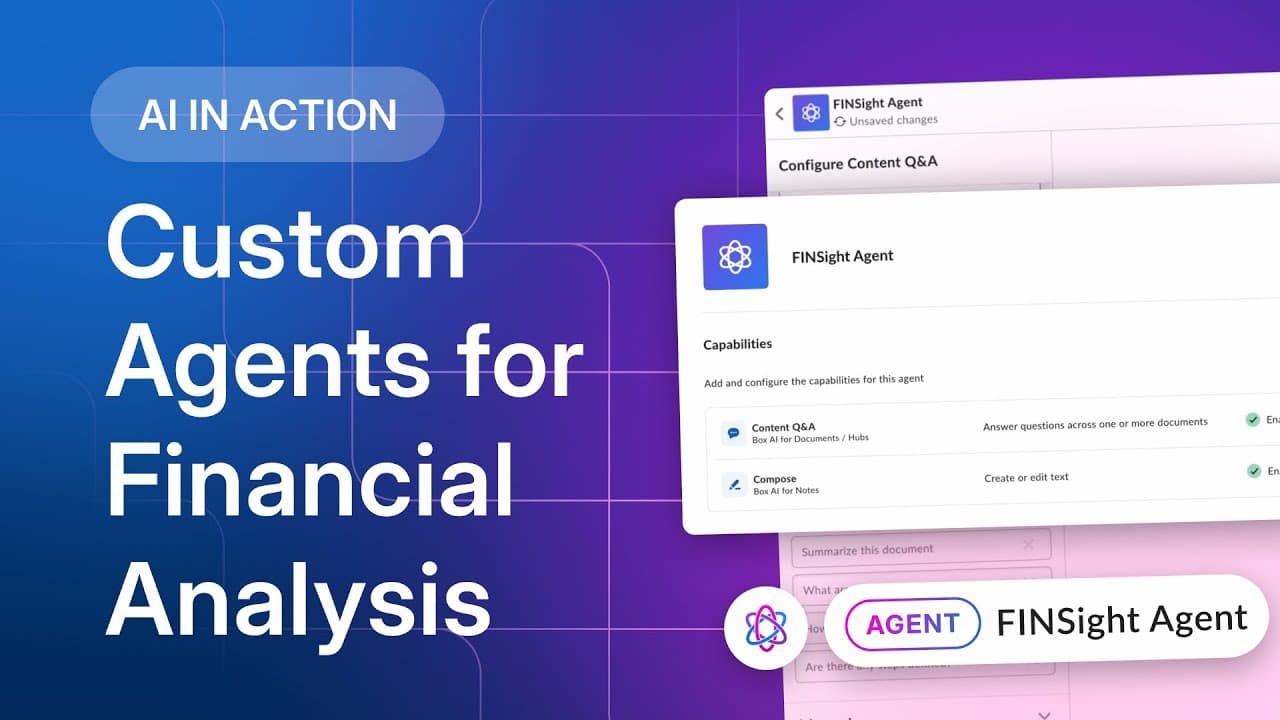
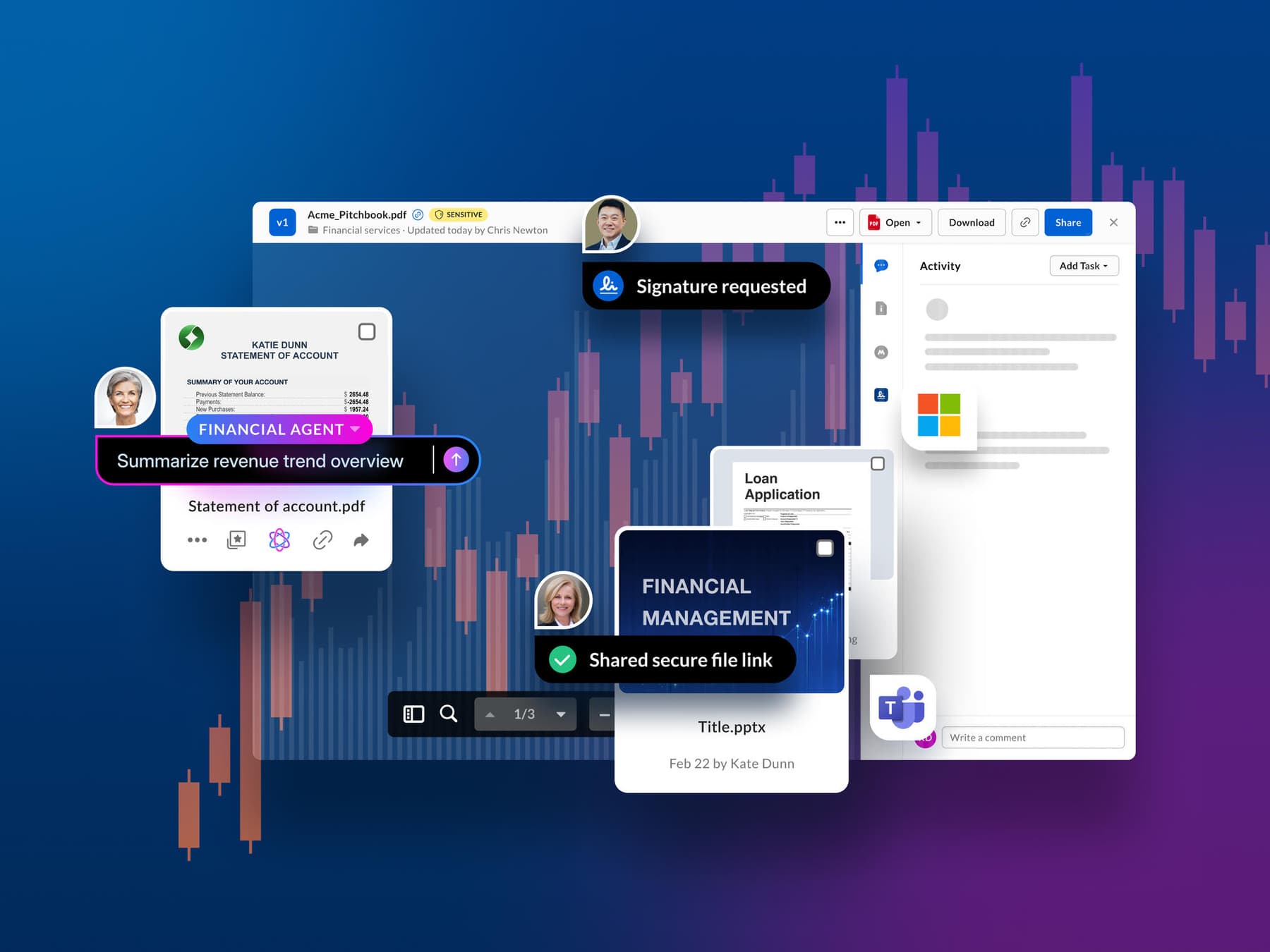
This example describes banking and financial services onboarding as a document-intensive, compliance-constrained, and time-consuming process. Manual KYC verification, disconnected data entry, and sequential review queues can stretch onboarding timelines to weeks.
In the described example, agentic process automation orchestrates document ingestion, identity verification, compliance screening, and account provisioning as a coordinated agent workflow. The process, once measured in weeks, can complete in minutes, with straight-through processing reducing manual bottlenecks and error exposure.
This example illustrates how multi-agent orchestration can combine document work, compliance logic, system updates, and process routing.
Example of specialized AI agents in animal health technology
This example also describes animal health technology as a specialized industry where generic AI can underperform because domain vocabulary, regulatory context, and operational protocols are narrow and specific.
In the described example, agents were calibrated to verification and care protocol workflows, significantly reducing manual intervention while maintaining required precision standards.
This example reinforces a core principle of multi-agent orchestration: agentic systems do not require a simplified domain to deliver value. They can be configured to match complex, specialized operations.
Enterprise implementation timeline for multi-agent orchestration
This framework outlines a three-phase implementation pattern. The initial architecture and piloting phase runs four to eight weeks and focuses on orchestration design, agent roles, and controlled workflow validation.
The expansion phase runs eight to sixteen weeks and extends the agent network to additional use cases while implementing governance controls, monitoring infrastructure, and human escalation protocols.
After deployment, continuous optimization is driven by production telemetry such as agent performance, error rates, throughput metrics, and workflow outcomes. Many organizations can achieve measurable business impact within three to five months of committing to a structured deployment program.
How Box approaches secure multi-agent AI workflows
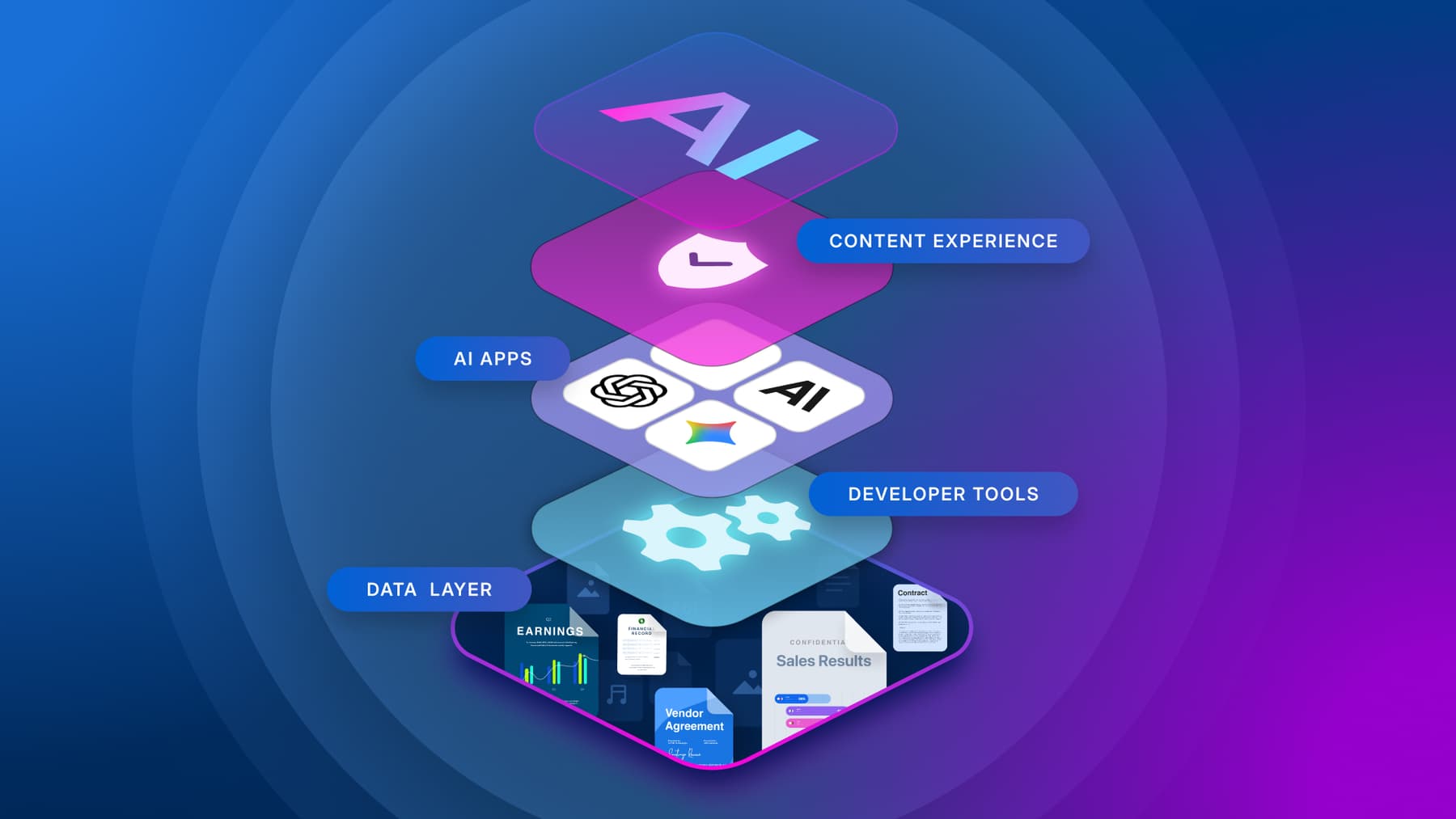
Box approaches multi-agent orchestration from a foundational premise: the vast majority of enterprise context that agents need to act effectively lives in content — contracts, claims, onboarding packets, compliance records, policies, financial documents, and case files. Before agents can specialize, collaborate, and govern themselves appropriately, that content layer must be trusted, structured, and secure. Box Content Cloud is built for that problem.
Box positions itself as the intelligent content layer that connects enterprise content to agents — whether those agents run natively inside Box or across external platforms. The underlying architecture starts with data protection and compliance, covering regulated industries from FINRA to HIPAA to FedRAMP. It then adds content services including metadata management and workflow automation, and exposes an AI platform layer capable of building, customizing, and securing agents directly where the content lives. This layered approach means that when an agent accesses a document in Box, it does so within the same permission model, access controls, and governance policies that govern every person. That becomes critical when agents, as new vectors for data exposure, can find and surface information that misconfigured sharing permissions would otherwise have obscured.
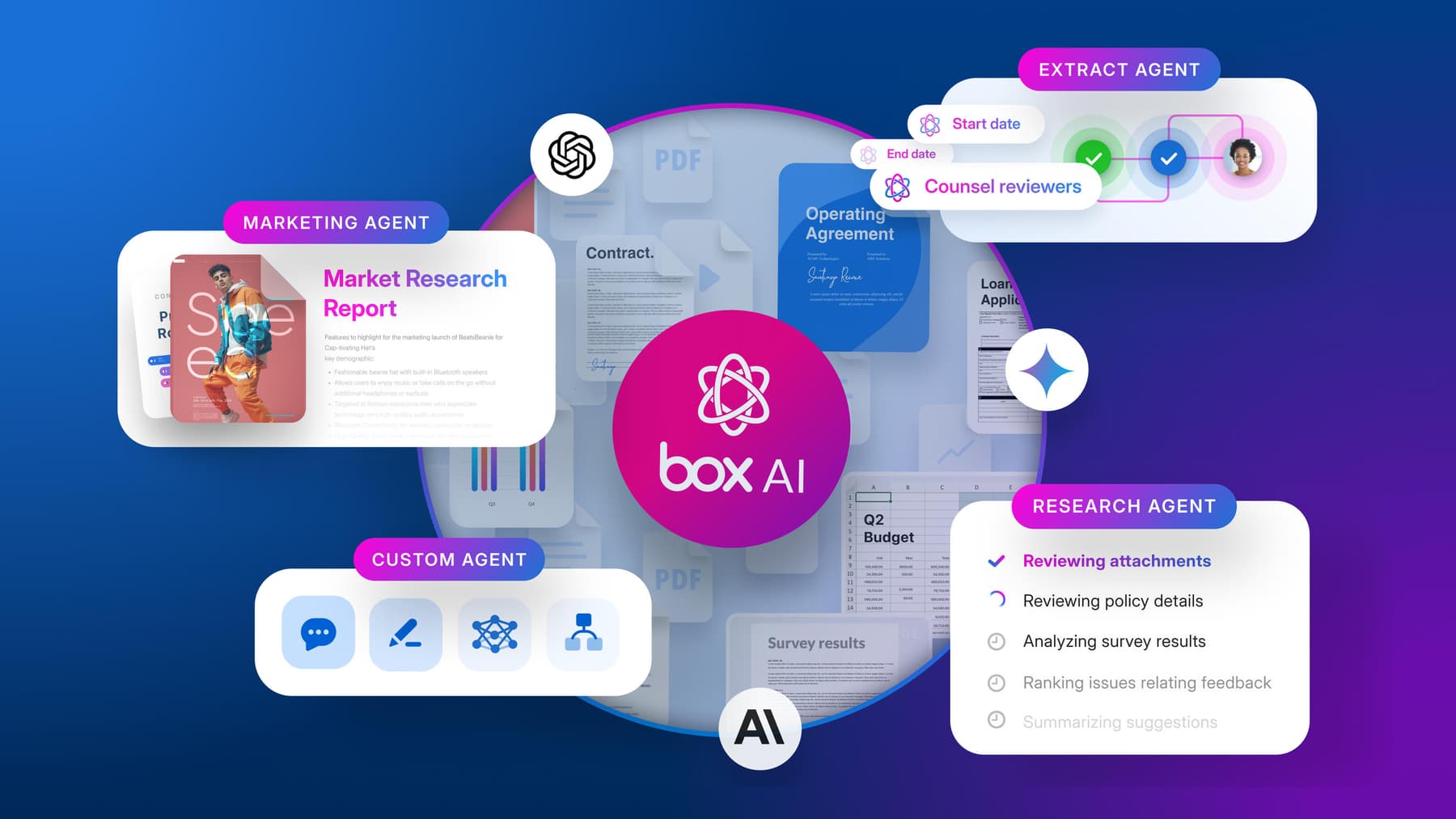
- Box AI maps directly to the specialized-agent concept from the Core Concepts section. Rather than expecting one general-purpose model to handle every content task, Box AI supports domain-specific agents built through AI Studio, each configured with custom knowledge, model selection, and task-specific instructions. A compliance agent can be built to evaluate vendor risk assessments; a contract agent can be tuned to flag outdated liability clauses across hundreds of agreements; a sales agent can be given authority over specific RFP templates and competitive intelligence files. Because each agent draws on content that is continuously updated inside Box, the knowledge these agents carry reflects the actual, current state of the business — not a static snapshot.
- Box Extract addresses the shared context problem at its root. Agents cannot maintain coherent context across handoffs if the underlying content is still unstructured. Box Extract transforms documents — contracts, financial statements, claims forms, shipping receipts — into structured metadata that downstream agents can reason over precisely. In a multi-step loan origination workflow, for example, an extract agent can verify application completeness and surface risk metrics, passing structured outputs to a human reviewer alongside the full application package. The human-in-the-loop step is part of the workflow rather than something added after the fact.
- Box Automate is where the orchestration layer becomes operational. It allows organizations to build end-to-end workflows that combine custom AI agents with content-driven process steps: document verification, risk assessment, approval routing, document generation, and e-signature, without requiring code. Agents created in AI Studio can be inserted at any step of an Automate workflow, and human review gates can be added wherever accountability requires them. This is the practical bridge between AI-generated outputs and business execution that the progressive governance concept depends on: agents operate within defined workflow boundaries, and humans remain in the loop at the points where judgment or policy sensitivity demands it.
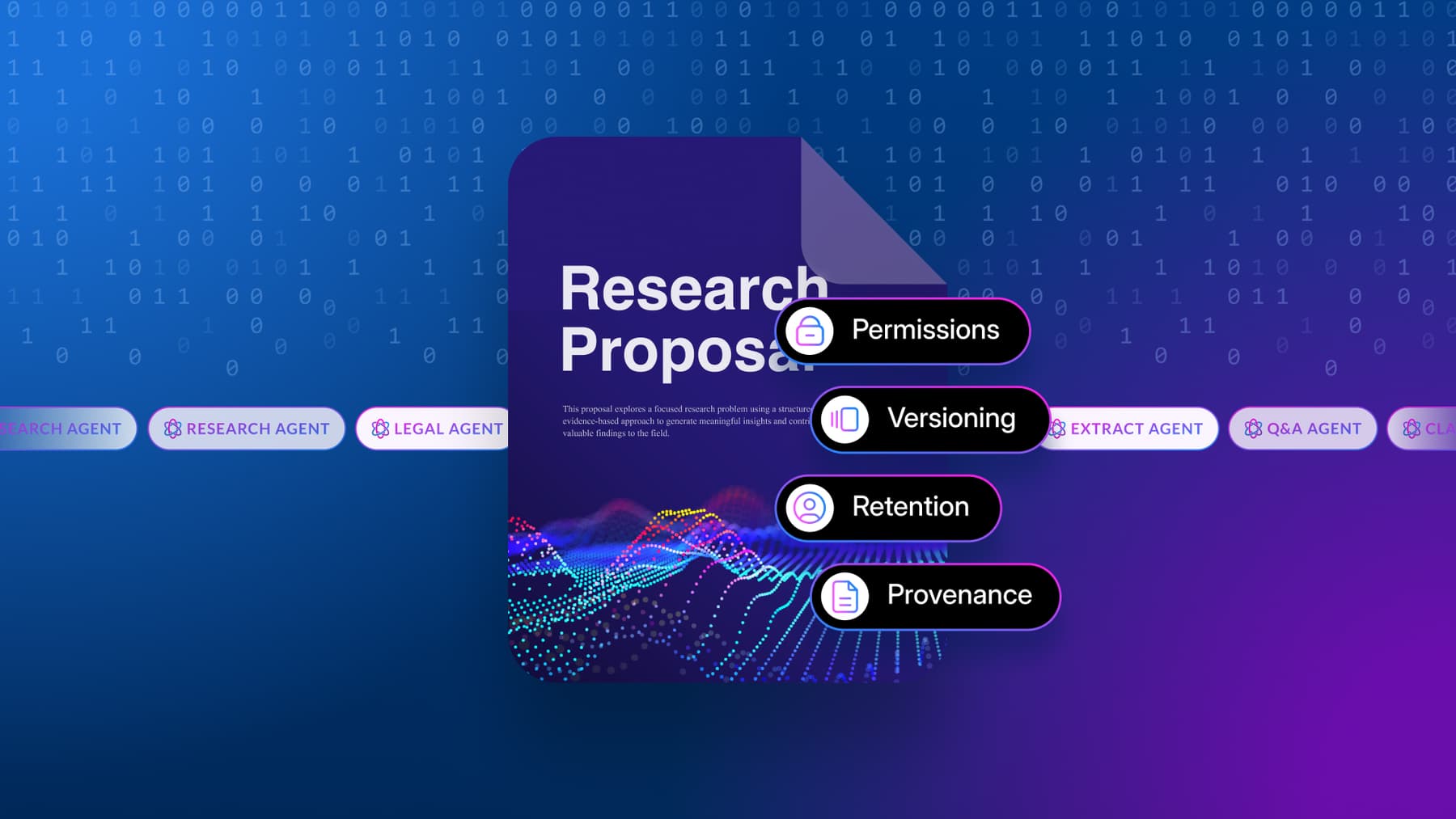
- Box Shield addresses the governance and guardrails layer directly. In an agentic environment, the security surface expands: agents can become vectors for prompt injection, unintended data exposure, or outputs that violate policy. Box Shield provides input safety, action guardrails, and intelligent output controls that block PII or policy-violating content before it reaches people. Critically, an agent operating on behalf of a user in Box cannot access any content that the user themselves could not access. The access control model binds agent identity to user permissions, closing the permissions-drift problem that plagues fragmented content architectures.
- Box Governance supports retention, legal holds, disposition, and compliance-oriented lifecycle management. In multi-agent workflows, this ensures that automated pipelines do not bypass records policies or create uncontrolled content sprawl. The same content policies that apply to human-created files apply to AI-generated outputs, maintaining auditability across the full lifecycle.
- Box Hubs gives teams and agents a structured content destination rather than a fragmented search problem. A Hub organized around a deal, a product launch, or a compliance program provides agents with curated, current, role-appropriate knowledge — the kind of shared context that prevents downstream agents from working from stale or incorrect source material.
- Box Sign and Box Doc Gen close the loop on content-driven workflows. Once agents have analyzed, extracted, and routed, the output often needs to become a document — an agreement, a generated report, an approval record — and then get signed. Box Sign and Box Doc Gen handle those final steps natively within the same content and permission environment, so the workflow completes without requiring a handoff to a disconnected tool.
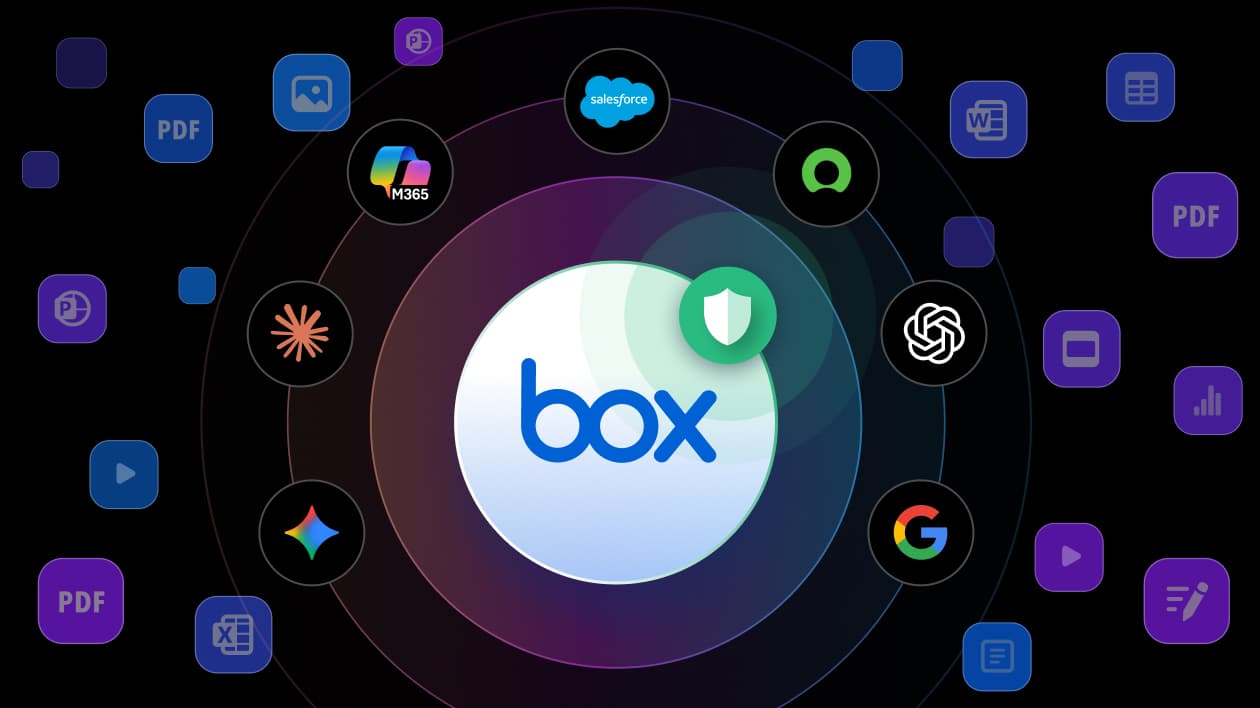
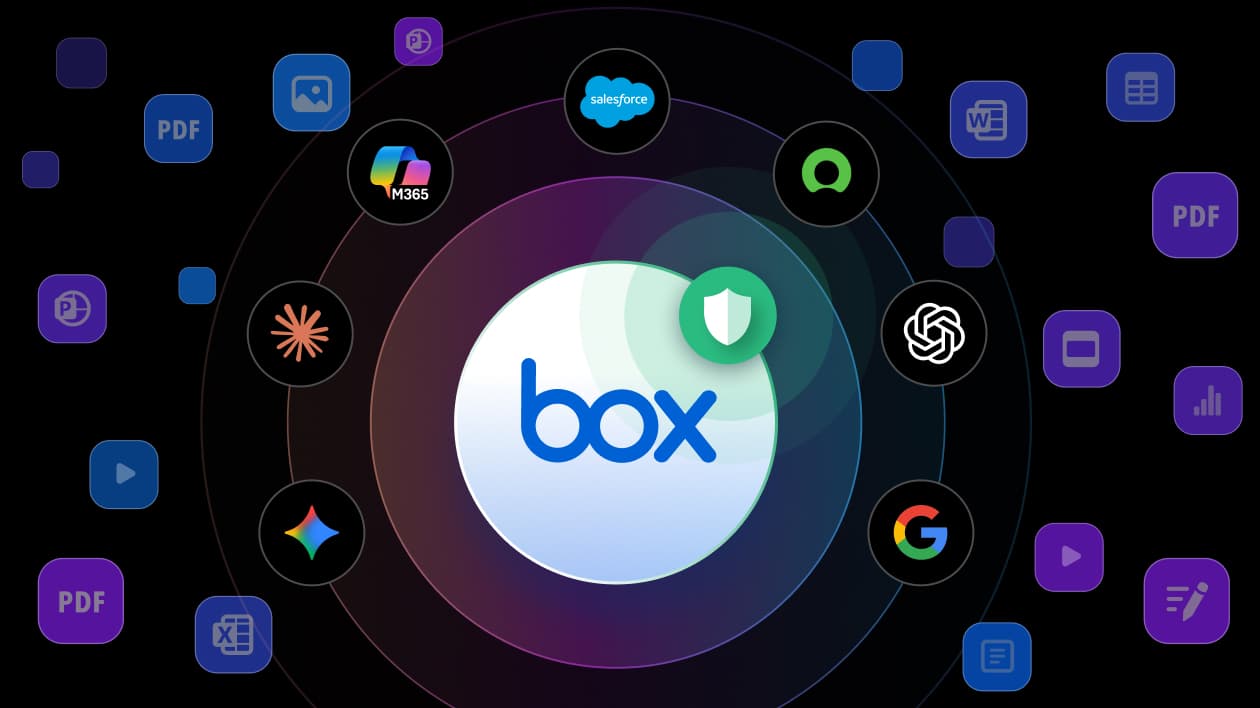
- Box Platform and the Box MCP Server are how Box connects into the broader multi-agent ecosystem. Rather than requiring custom integrations into every orchestration platform, the Box MCP Server — built on the Model Context Protocol open standard — acts as a single, secure, compliance-validated bridge between Box and external AI systems such as Claude, Gemini, and Copilot Studio. An agent running outside Box can query Box content, invoke Box AI, trigger Box workflows, and retrieve Box-signed documents through one connection, while the underlying access controls and governance policies remain intact. For organizations building agentic architectures across heterogeneous infrastructure, this makes Box a neutral content layer — one that supports any model, any orchestration framework, and any enterprise AI platform, without fragmenting the security boundary.

FAQ
What is multi-agent orchestration?
Multi-agent orchestration is the coordination of multiple specialized AI agents through a central orchestration layer. The orchestrator breaks a larger goal into tasks, assigns those tasks to agents, manages dependencies, and synthesizes the results into a coherent output.
How is multi-agent orchestration different from a chatbot?
A chatbot is usually a single conversational interface built to answer questions or perform limited tasks. Multi-agent orchestration is an architecture for coordinating many agents across a workflow, including document analysis, decision support, system updates, approvals, and human escalation.
What are the main components of an agentic AI architecture?
The four core components are the orchestrator, specialized agents, shared context, and governance. The orchestrator coordinates the process, agents perform domain-specific work, shared context preserves continuity, and governance controls permissions, oversight, and auditability.
Why do enterprises need specialized AI agents?
Enterprises need specialized agents because many business processes require domain precision. Tasks such as compliance screening, contract review, financial reconciliation, and clinical documentation often need specific vocabulary, policies, and decision logic that a general-purpose model may not handle with enough reliability.
What are AI silos in enterprise workflows?
AI silos are isolated automation tools or models that improve a local task but do not connect to the broader workflow. A document processor that still requires manual handoff or a fraud model that cannot trigger customer communication may create efficiency in one area while leaving systemic complexity unresolved.
How does governance work in multi-agent orchestration?
Governance defines what each agent can access, what actions it can take, when it must escalate to a human, and how its actions are logged. Strong governance includes role-based permissions, audit logs, human-in-the-loop controls, policy enforcement, and monitoring for anomalous behavior.
Can multi-agent orchestration work with legacy systems?
Yes, multi-agent orchestration can connect legacy systems with modern AI applications through connector agents and transformation agents. Connector agents can expose data through secure abstractions, while transformation agents can handle schema translation, field mapping, and format conversion.
Which business metrics can improve with multi-agent systems?
Common KPI categories include reduced process cycle time, higher straight-through processing rates, lower cost per transaction, fewer manual handoff errors, and better governance visibility. A pragmatic deployment should define these success criteria before agents are implemented.
How does Box support multi-agent AI workflows?
Box supports multi-agent workflows by providing a secure content layer for enterprise documents and processes. Box Content Cloud, Box AI, Box Shield, Box Governance, Box Relay, Box Sign, Box Doc Gen, Box Hubs, and Box Platform APIs help organizations manage content, automate workflows, enforce controls, and connect AI experiences to governed enterprise information.
Is multi-agent orchestration fully autonomous?
Multi-agent orchestration does not have to be fully autonomous. Many enterprise architectures use human-in-the-loop escalation so that domain experts review high-risk, low-confidence, or policy-sensitive decisions before downstream actions occur.