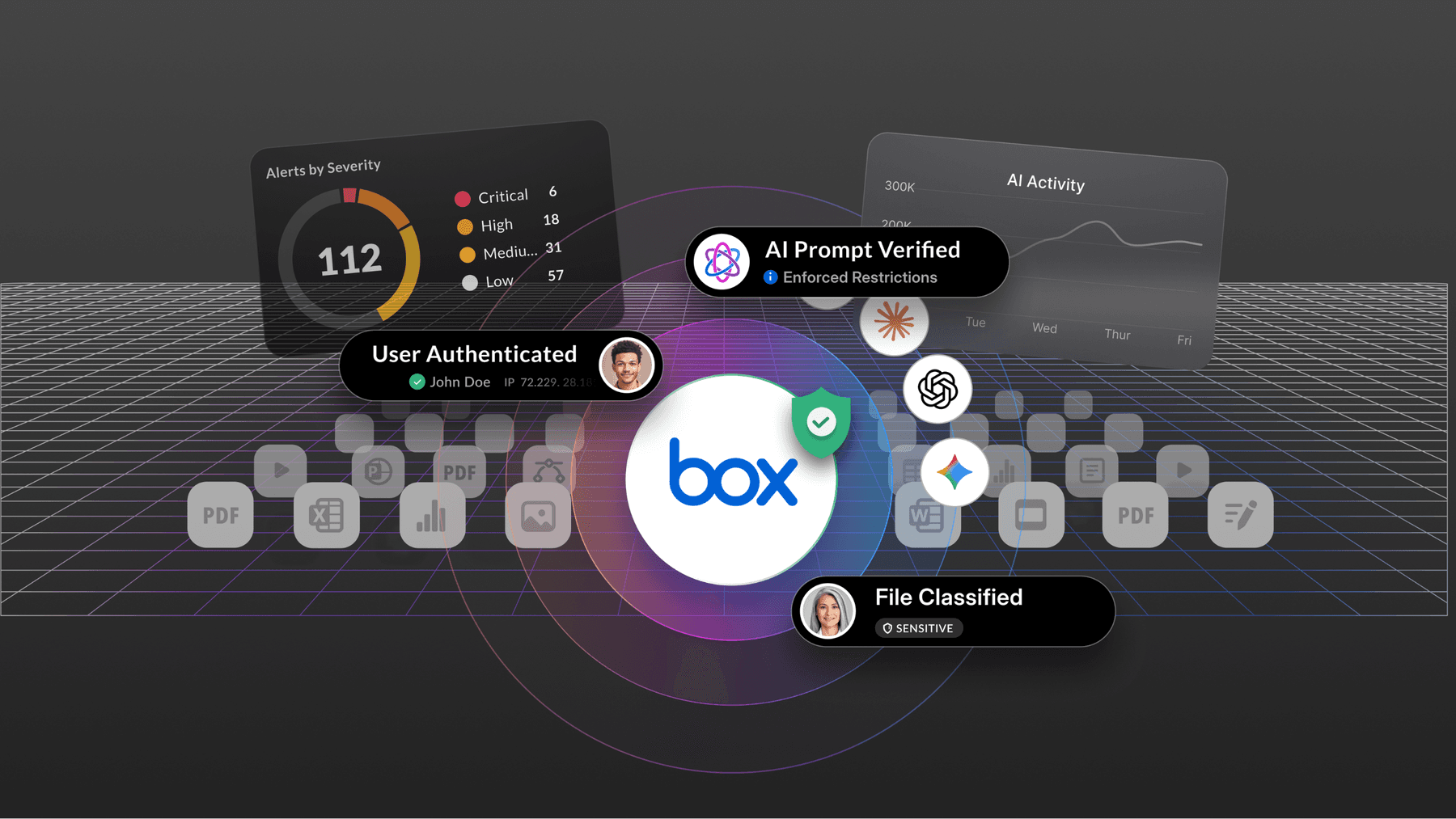
The governance conversation around enterprise AI is entering a new phase. For the past several years, much of the focus has been on understanding how AI systems produce answers. Autonomous agents raise a different and more practical question: once an AI system can take action, how do we know what it actually did?
That question will become increasingly important as enterprises build and deploy agents that can search repositories, retrieve documents, initiate workflows, update records, communicate with other systems, and act on a user’s behalf. The more capable these systems become, the less useful it is to think about governance only in terms of prompts and outputs. Organizations also need to understand the authority an agent has been given, the information it can access, the actions it can take, and the record it leaves behind.
The next standard for agent governance will be the ability to demonstrate control. Organizations will need to show that agents operate within clear boundaries, respect existing permissions and information controls, and remain accountable to the people and systems on whose behalf they act.

Agent governance starts with practical guardrails
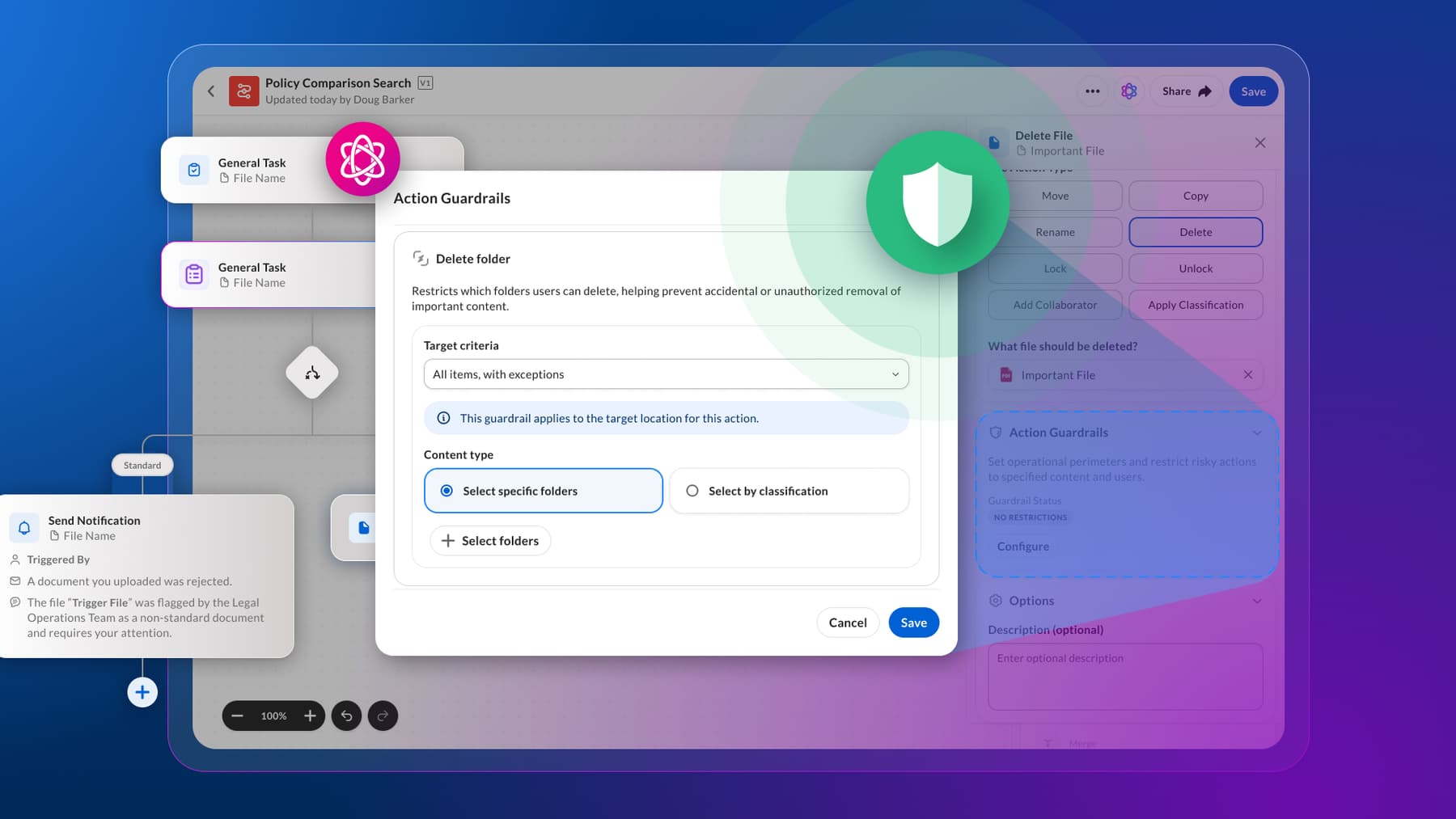
That starts with practical guardrails. An agent shouldn’t become a shortcut around the controls that already apply within the enterprise. If a user can’t access a restricted file, the agent acting for that user shouldn’t be able to access it either. If a document can’t be shared externally, an agent shouldn’t be permitted to distribute it. And where an action is sensitive, irreversible, or high impact, there should be an appropriate point for human review.
An agent shouldn’t become a shortcut around the controls that already apply within the enterprise.
The goal is not to remove autonomy, but to make it manageable. Low-risk and reversible actions may be appropriate for automated execution with limited to no human oversight, while more consequential activities like deleting information, changing permissions, transferring sensitive data, or publishing critical enterprise information externally may call for stronger controls. To manage this effectively, organizations must lower the risk of irreversible consequential decisions by ensuring they don’t occur without a human in the loop and proper core controls. Essentially, the level of oversight and controls should reflect the action’s potential impact.
The harder challenge often appears after the agent has completed its work. An auditor, customer, security team, or user may need to understand which agent performed an activity, who initiated it, what information it accessed and based its decision/action taken on, what tools it used, what it created or changed, and whether a person approved any part of the process. Ultimately, there must be a sufficient audit trail.
Today, those answers are often scattered across application logs, identity systems, security tools, model records, and content repositories. Each system may preserve part of the story, but few capture the full context. This creates a meaningful compliance and operational gap; an organization may know that individual events occurred without being able to explain how they fit together.
Building a record beyond traditional activity logs
Traditional logs may show that a file was opened or a permission was changed, but might not explain why the agent took that action, on whose behalf it was acting, what task it had been given, or what controls were applied along the way. Reconstructing that history after the fact can be slow, costly, and incomplete.
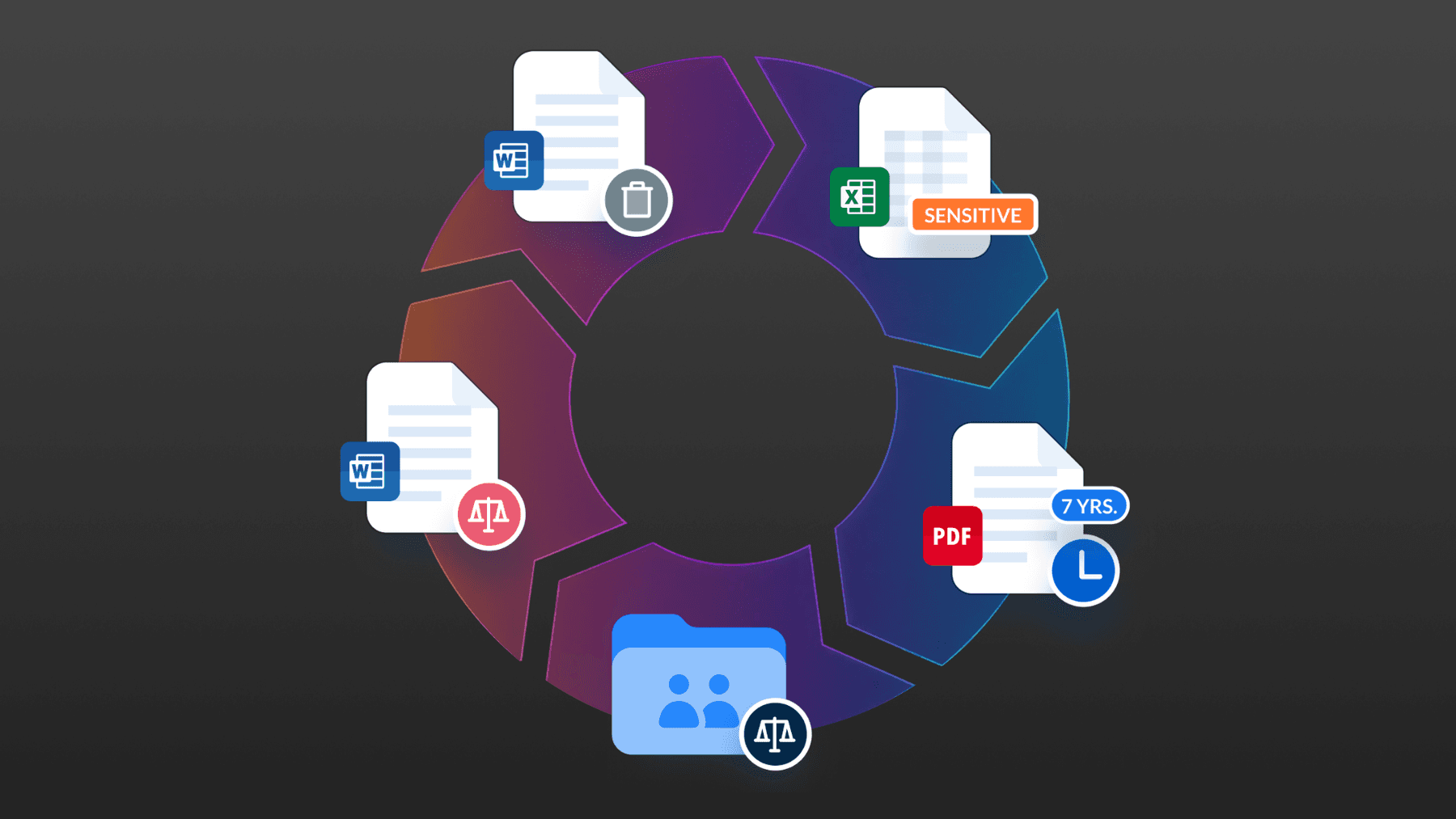
The better approach is to apply the controls organizations already rely on into the agent experience itself, and where needed expand and/or enhance the current controls based on the respective use case and risk profile. At the very foundation, identity and access management, data classification, retention policies, legal holds, incident response, and audit logging should continue to apply when an AI agent enters the workflow; the introduction of an agent only makes the consistent application of these controls more important.
Session governance as the essential agentic record
This is where session governance becomes especially valuable. The traceability of an agent session should serve as the basic record of what occurred from beginning to end. A useful session record would show who initiated the task, which agent acted, what objective it was given, which systems and documents it accessed, what permissions were checked, what actions were proposed or completed, whether human approval was required, and what the final outcome was. Session records should be maintained to equally demonstrate compliance with applicable privacy, security and other requirements.
There’s an important difference between activity logging and session governance. Activity logging may show that a file was accessed. Session governance explains that an employee asked an agent to prepare a customer briefing, that the agent accessed three permitted documents, that it was denied access to a restricted folder, and that an attempted external share was paused for approval. That fuller account is far more useful when the organization needs to understand what happened.
These controls must also operate in real time. Policies, committees, and periodic reviews remain important, but they can’t supervise every action taken by an autonomous system. Before deploying an agent, users should verify permissions, access limitations, sharing restrictions and ultimately testing and, post-deployment, periodic verification. This is especially true when the agent is taking actions that may be consequential or high risk; then, the human in the loop with noted approval process is critical. Applying these controls and processes will result in a comprehensive session record that’s auditable, defensible and can help to identify gaps when the agent needs to be altered.
The organizations that succeed with autonomous agents will be the ones that can show how those agents are governed, what they’re permitted to do, and how their actions can be understood when questions arise. In the next phase of enterprise AI, trust won’t slow innovation down; it will be what makes innovation sustainable and agent governance a strategic advantage.