With AI becoming a bigger part of workflow automation, banks, credit unions, and investment firms are moving beyond old-school rule-based document processing. They’re now using AI to pull valuable insights from contracts and other unstructured files. But it doesn’t stop there — financial companies also use advanced automation to make faster decisions backed by data and deliver better experiences for their customers.
Let’s break down the benefits of document automation for financial services and how you can implement intelligent solutions to optimize workflows and get more value from business data.
Key highlights:
- Financial document automation is the use of AI and other technologies to streamline the creation, processing, and management of documents in finance, helping reduce delays and maintain compliance with regulatory requirements
- Document automation for financial services enables faster processing, lower operational costs, improved compliance, and better client experiences by reducing manual work for repetitive tasks like data extraction and document routing
- With document automation in financial services, businesses speed up invoice approvals, loan origination, customer onboarding, and other critical workflows
- Box, the leader in Intelligent Content Management, offers AI-powered data extraction, secure storage, and automated workflows that help financial institutions enhance customer experiences while improving accuracy and speed for financial documents

What is financial document automation?
Financial document automation is the use of technologies, such as machine learning, AI, and optical character recognition (OCR), to automate every stage of financial document management, including creation, capture, processing, and storage.
Consider a contract: it requires drafting, reviewing, approving, and signing. Automation tools streamline these steps by standardizing document formats, tracking changes, enforcing approval workflows, and more. These capabilities not only reduce delays and human error but also help maintain compliance with regulatory requirements.

The role of AI in financial services document management
According to Gartner, 90% of finance functions will adopt at least one AI-enabled technology solution by 2026. AI now powers modern finance workflow automation, with natural language processing (NLP) and intelligent document processing (IDP) replacing rigid rules and manual reviews.
Intelligent systems can handle repetitive tasks and enforce internal controls. In financial document management, you can use AI automation to:
- Pull data from forms and contracts with multiple layouts, something traditional text-recognition tools can’t accurately process because they depend on strict formatting
- Identify contradictory information or unusual patterns in business financial documents, rather than just flagging missing fields
- Translate and process international documents in multiple languages simultaneously, without your team’s input
- Generate AI summaries, audit reports, or market analysis documents almost instantly

How does document automation in financial services work?
Document automation in financial services leverages AI, OCR, or robotic process automation (RPA) to extract information, classify files, and route them to the right people for approval.
The steps vary depending on your team’s specific workflow, but here’s how an automated document workflow could look in the world of finance.

- Data capture and ingestion: The process begins when you upload files into your digital document management system. OCR converts scanned images into machine-readable text. The platform then standardizes file formats and assigns metadata (like client name, invoice number, and date), preparing the content for the next steps.
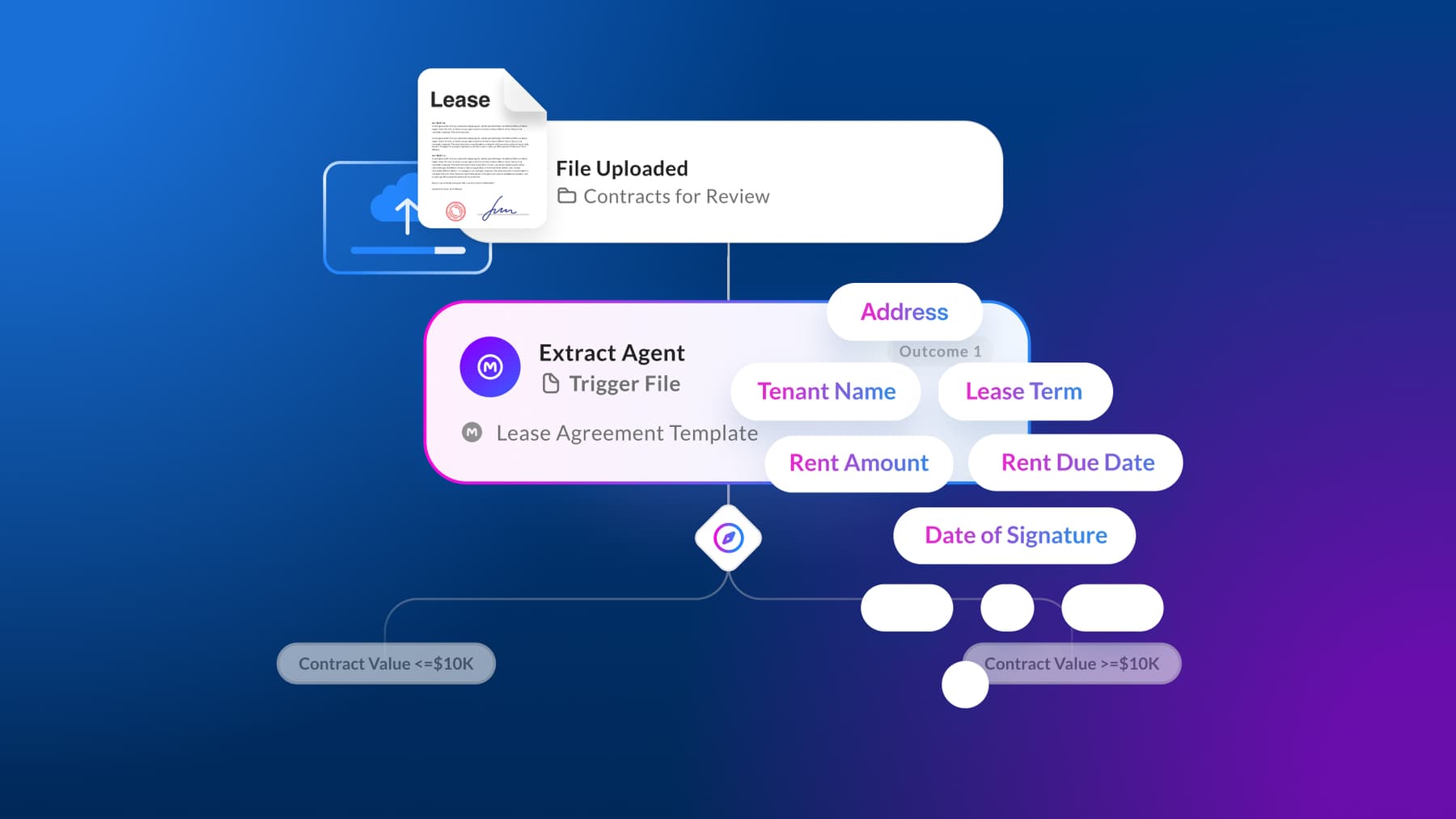
- Data extraction: AI algorithms read through documents to identify and retrieve information like account numbers, transaction amounts, and regulatory data. Financial automation software can pull information from structured files (like spreadsheets) and unstructured data (like notes that don’t follow a fixed format).
- Validation: The system checks data against predefined rules and formats, with RPA automating these validation tasks. At this stage, you can catch inconsistencies like missing numbers or mismatched account details.
- Routing: Based on document type, approval hierarchy rules, or other specific criteria, the system directs files to the appropriate parties. For example, you can set up priority levels to handle urgency and escalate critical documents faster.
- Workflow automation: The system manages the entire content review process, sending notifications and tracking progress through each stage. It can also adapt routing based on user roles and send a document to multiple reviewers to speed up the approval process.
- Integration and storage: Once the workflow reaches the final step, the system moves the files into financial document storage. It also updates integrated CRM and ERP platforms with the latest transaction or client data, keeping records consistent across applications.
Discover how to manage your content securely with a cloud storage platform.
Free 14-day trial. No risk.
Box free trial includes native e-signatures, lets you securely manage, share and access your content from anywhere.

5 document automation benefits for financial services
Financial services are tapping into advances in AI to automate more of their complex, data-heavy processes. The World Economic Forum and Accenture highlight this trend, showing AI investments in the industry are expected to jump from $35B in 2023 to $97B by 2027. This growth supports automation and machine learning initiatives that help banks, insurers, and capital markets cut costs and speed up workflows.

Explore five document automation benefits in financial services.
1. Faster document processing
With intelligent document processing, you reduce approval cycles by extracting and validating data without delays. A survey by NVIDIA reveals that 53% of financial institutions use AI in document processing. For example, in banking, financial document automation solutions help analyze loan agreements and validate data points to speed up turnaround times.
2. Reduced manual errors in financial workflows
When teams input data manually, it’s not uncommon to have duplicate records or transposed digits. Automating financial document processes lets you retrieve information directly from the source, so teams no longer rely on copy-paste. That helps eliminate errors in invoices, tax forms, and other documents you work with.
3. Lower operational costs
An SMA Technologies report shows that 52% of financial organizations already save at least $100K per year through automation. These companies cut costs by reducing human errors, streamlining data processing, improving system integration, and boosting staff productivity without increasing headcount.
4. Better client relationships through faster, more reliable service
Clients expect fast, error-free service, especially when dealing with time-sensitive files. When done well, document automation for financial services reduces back-and-forth communication by ensuring forms are correct and approvals move without roadblocks. The result: faster decisions and more responsive client experiences.
5. Improved data security and compliance
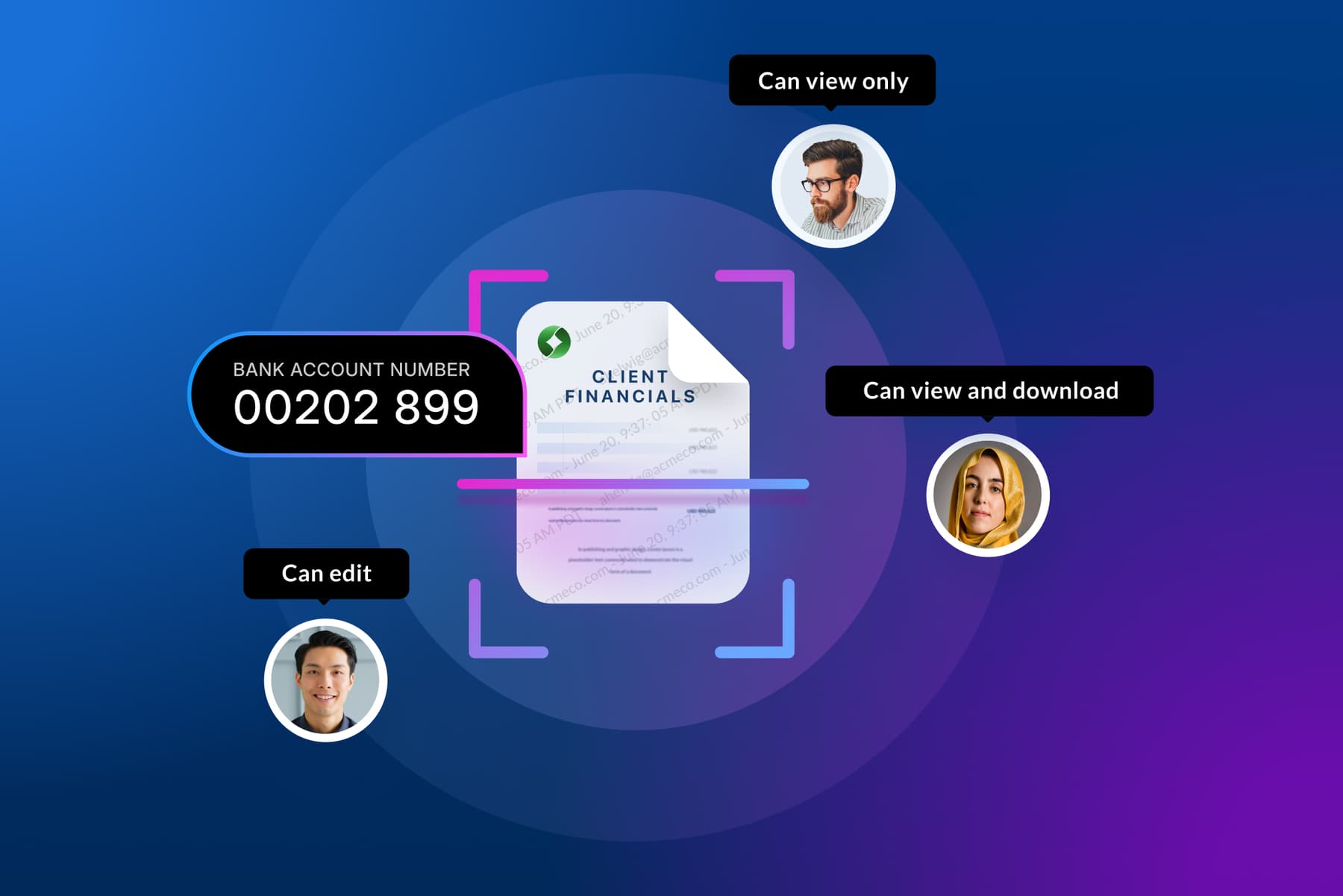
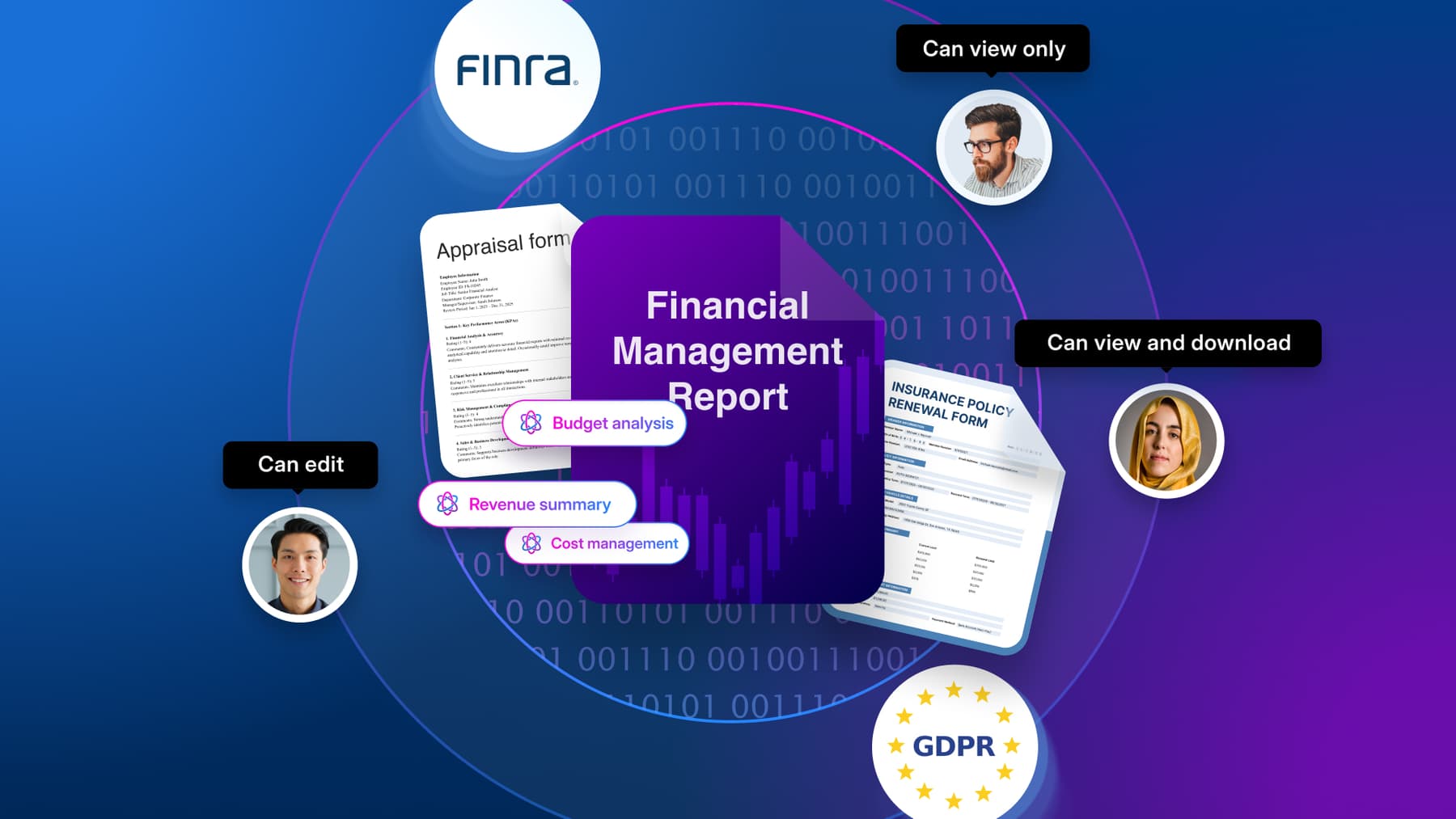
Financial organizations operate in one of the most regulated industries, which has now, according to Kroll, surpassed healthcare in the number of data breaches. With document automation, financial services firms centralize sensitive content and apply consistent access controls, making it easier to enforce compliance policies.
And you can also pair financial process automation software with virtual data rooms (VDRs) to manage sensitive deal materials, including those used in mergers and acquisitions, helping stakeholders access key information quickly and securely at every decision-making step.
Strengthen data protection in the financial services industry with these actionable steps.
Which financial document workflows can you automate?
You can automate financial document workflows that involve capturing, extracting, and validating data, as well as directing files to the right teams for review or approval. Take a look at these examples of digital workflow automation.
- Claim processing: Reduce delays in form processing by automating data capture and routing documents to the right departments based on predefined rules.
- Customer onboarding: Enhance the onboarding experience by integrating AI-powered insights and electronic signatures for faster, accurate processing and routing.
- Contract management: Track versions, extract key terms, and speed up reviews by creating and customizing workflows according to contract type and approval roles.
- Loan origination: Enable more efficient loan intake by integrating AI in data extraction, document processing, and financial document generation.
See what you can do with automated document generation in your business.
Critical features to look for in financial document automation services
A modern content management system for financial services not only offers AI-powered automation to streamline workflows but also equips you with features to customize processes and protect your financial data.
When looking for financial document automation services, prioritize these features:
| Feature of financial document automation software | How to use this feature to support business financial document workflows |
| Custom workflow templates | Personalize templates for common financial processes like underwriting review, so you can define the exact sequence of steps and responsible parties for faster turnaround |
| E-signature | Add electronic signatures to your workflows to trigger signing requests at the approval step and automatically mark documents as signed |
| Scalable financial document storage | Cloud-based data storage gives you control over the capacity to handle growing volumes of documents without slowing down your system |
| Security and compliance controls | Built-in controls help you adhere to regulatory requirements by enforcing document encryption, managing user access, and tracking document activity throughout automated workflows |
| Cloud app integration | Connect your financial document automation services with data analytics, accounting systems, and other tools to keep information consistent across the apps you use |
Check out the top features of document management and workflow solutions.
Best practices for automating business financial documents
Here are five best practices for integrating automation into document management.
- Document your data formats: Map out existing document structures to prevent data extraction errors caused by multiple document layouts.
- Select platforms with open APIs and prebuilt connectors: Choose automation tools that easily integrate with your existing tech stack to avoid manual workarounds — for example, syncing your document management system with word processing software enables collaborative editing of files.
- Start with low-complexity use cases: Begin with straightforward workflows like invoice approvals or bank statement imports, so you can test automation early and refine processes before moving to more complex tasks.
- Provide hands-on training and support: Make sure your team understands how to adjust workflows and handle exceptions as they appear.
- Set up document audit trails: Keep a record of who accessed or modified files to support compliance and accountability.
Learn other best practices to strengthen your business process automation strategy.
Simplify document automation for finance with Box
Box equips your financial service organization with solutions to unleash the full potential of your content. Our Intelligent Content Management platform offers unstructured file storage, enterprise-grade security, AI-powered capabilities, and automation tools that simplify document workflows in finance.
See why 7,000+ customers trust Box for financial services document management:
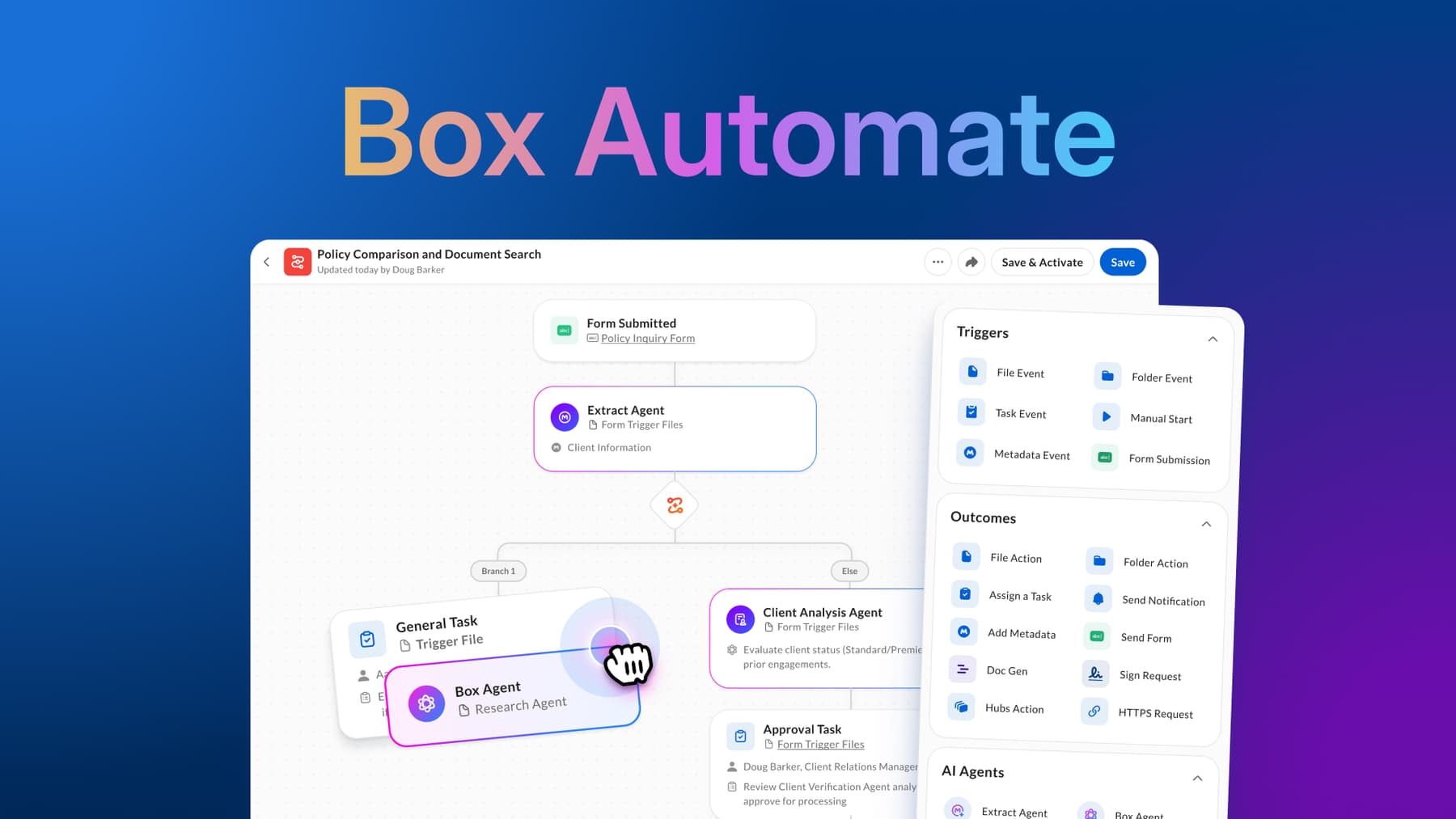
- Build automated workflows: Box Automate can streamline invoice management by consolidating data from multiple documents, synthesizing key information, and routing invoices through multi-level approval workflows.
- Unstructured data insights: Use Box AI to get information from documents and forms — generate instant summaries and use intelligent insights to make informed decisions quickly
- Automation with AI agents:Box AI Agents leverage data within your documents to automatically route documents for review and approval
- Faster client onboarding: Enhance onboarding experiences with real-time electronic signatures and easy collaboration from anywhere
- Security and compliance: Protect sensitive data from cyber threats and non-compliance penalties with encryption, advanced user authentication, and built in compliance controls
Contact us to see how Box powers document automation for financial services and find out how it can work for you.

While we maintain our steadfast commitment to offering products and services with best-in-class privacy, security, and compliance, the information provided in this blog post is not intended to constitute legal advice. We strongly encourage prospective and current customers to perform their own due diligence when assessing compliance with applicable laws.