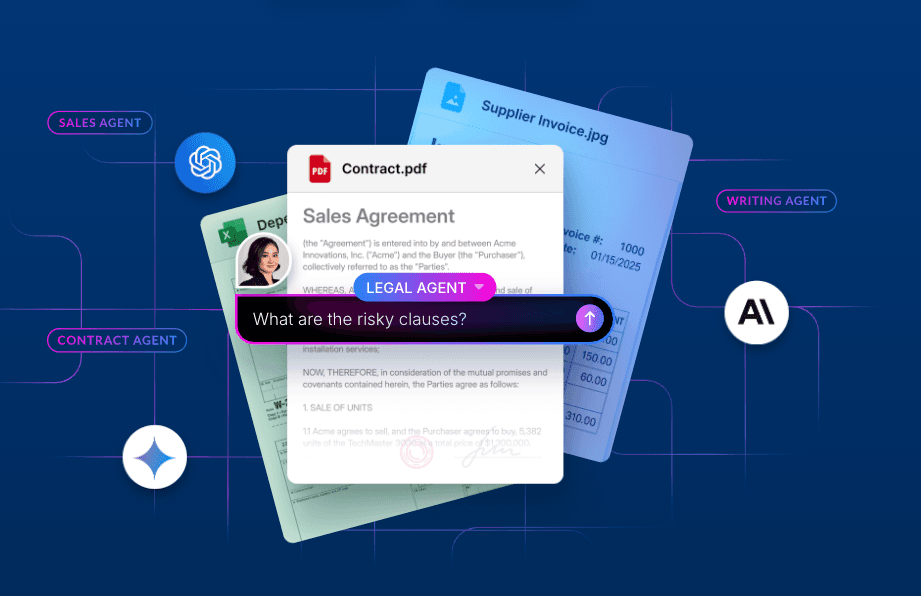
Frontier models can write code, draft research papers, take actions on your computer, and automate meaningful work. The capabilities are real and they keep accelerating.
But once AI needs to operate inside the reality of your business — your institutional knowledge, your processes, your permissions — you hit a wall.
Ask a model to do something meaningful for your company — draft the proposal that wins an RFP, build an acquisition deal room, resolve the customer ticket that depends on your refund policy — and the magic gets thinner. The intelligence is still there. It just isn’t yours and it’s not working with your systems.
That’s the gap Box and Claude are built to close together.
Box gives Claude context and efficiency
Claude is the intelligence. Box is the context. The file system gives models the enterprise information they need – their “work brain.” Together they’re the difference between AI that’s impressive in a demo and AI that gets used on Monday morning.
To be useful at work, Claude needs context — access to the right information, in the right moment, with the right constraints, and the knowledge of how to act on it.
That’s where Box model context protocol (MCP) server in Claude comes in. Box gives Claude the proprietary information and file-related actions — the context and efficiency — that make the model relevant and effective for your company.
Box gives Claude two fundamental qualities:
- Context needed to do useful work
Box connects Claude to the content that runs the business — the documents, research, contracts, policies, designs, and reference materials an organization actually operates on. - Efficient and effective ways to take action
Box MCP server provides Claude with the relevant information and the most effective actions, instead of forcing it to sift through everything and learn what to do on the fly.
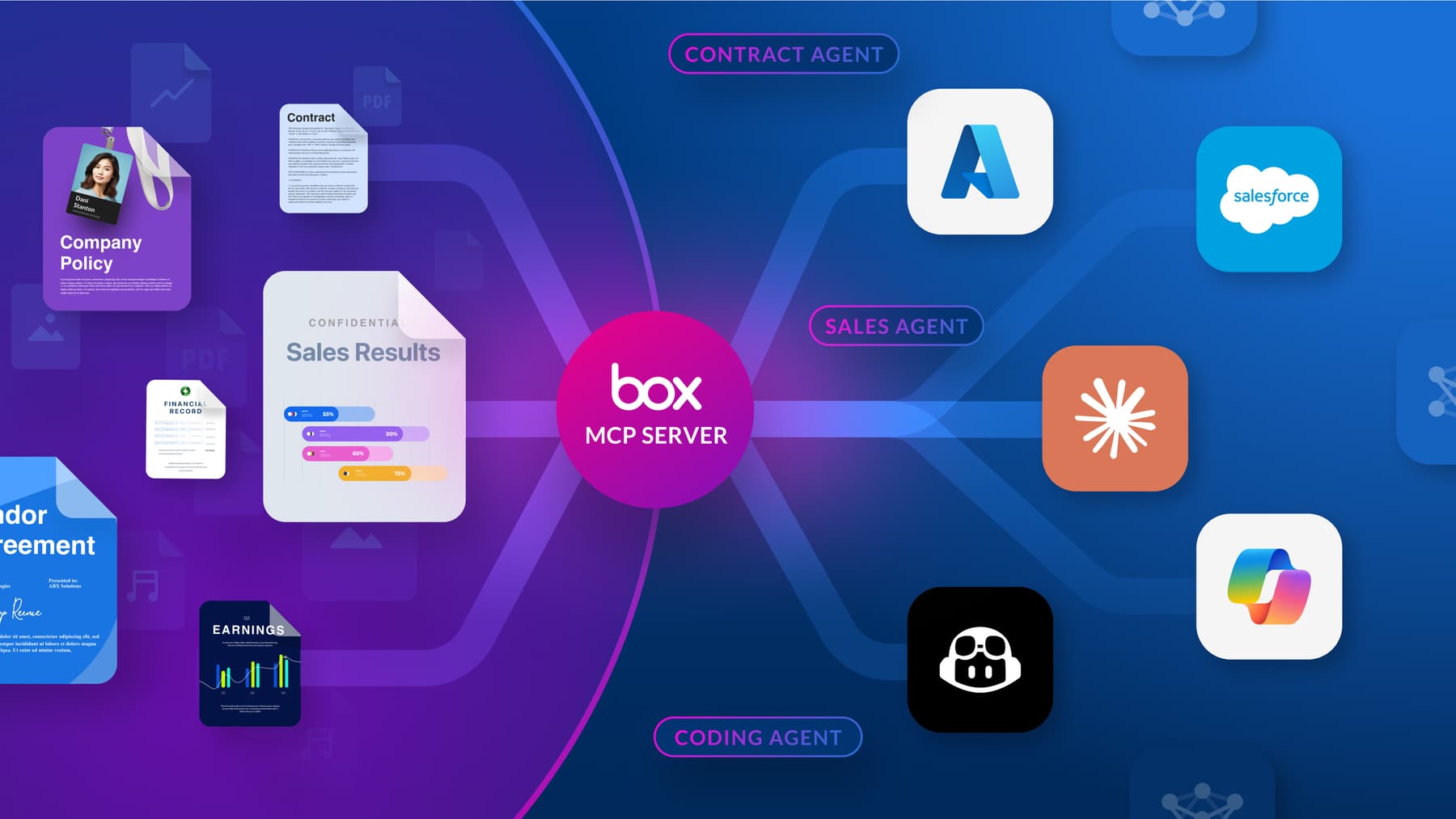
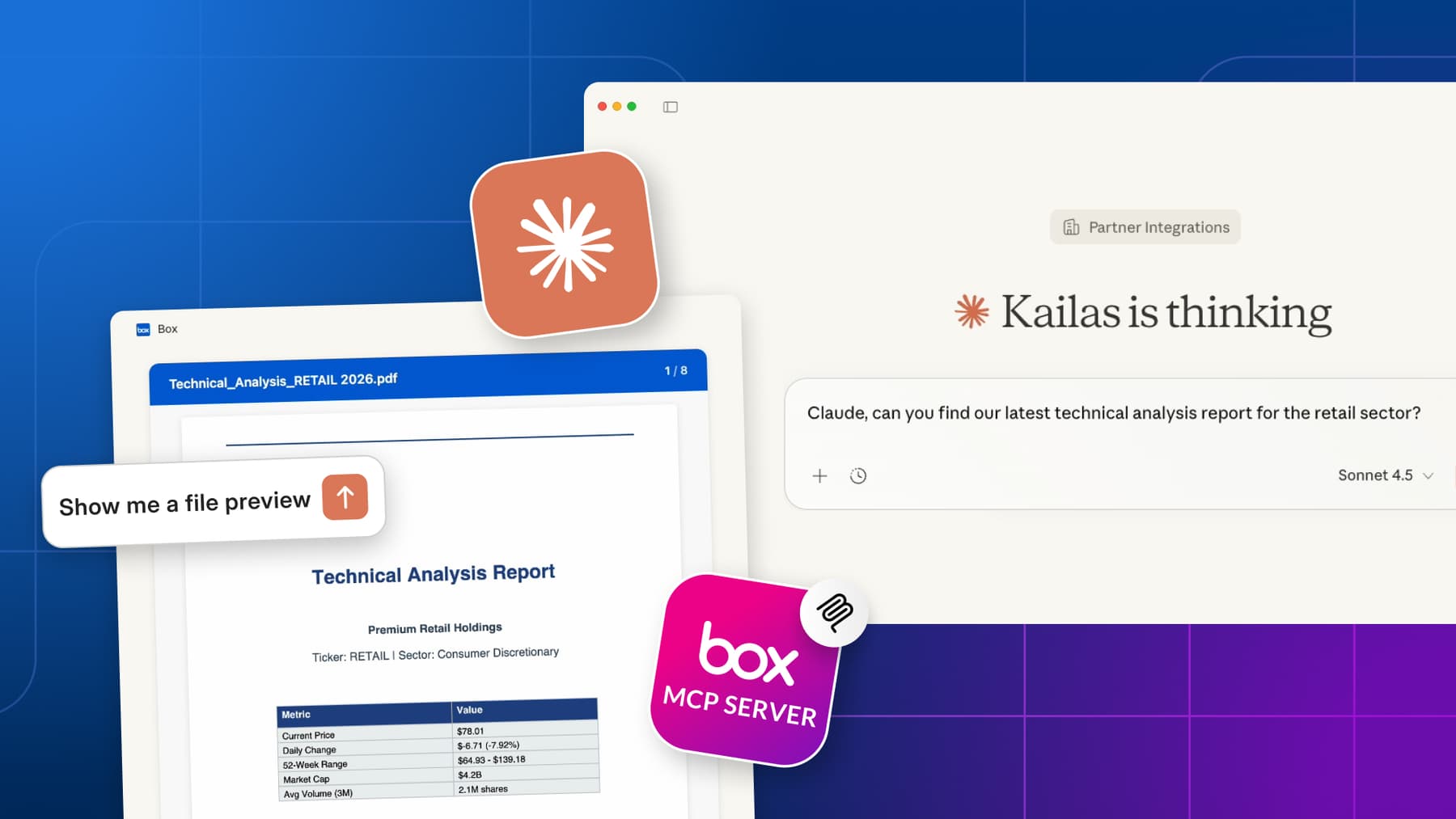
These qualities become essential at enterprise scale. Organizations can have millions or even billions of files. It’s not enough to dump this mountain of content into a model and hope for the best. If you flood a model with too much irrelevant material, you slow it down and increase the odds of weaker outputs. Box helps narrow the scope so Claude gets the data that’s most relevant to the task at hand. Box finds the ten files that matter inside a corpus of ten million and extracts the important information from those files.
That’s not a metaphor — it’s an operational reality. Box understands what people are actively working on, what content has been purposefully curated, and what is contextually relevant in a given workflow. It separates the signal from the noise before Claude ever starts reasoning.
And once Claude has the right context, Box gives Claude the tools it needs to easily do things like create a new folder, ask questions on a curated hub, generate documents from existing templates, and upload new files into Box. All of these can happen immediately – Claude doesn’t need to learn 100+ APIs from scratch or cycle through multiple failed attempts as it tries different paths.
Box makes it easy for Claude to act on files and complete work in your existing systems.
Different surfaces, same work brain
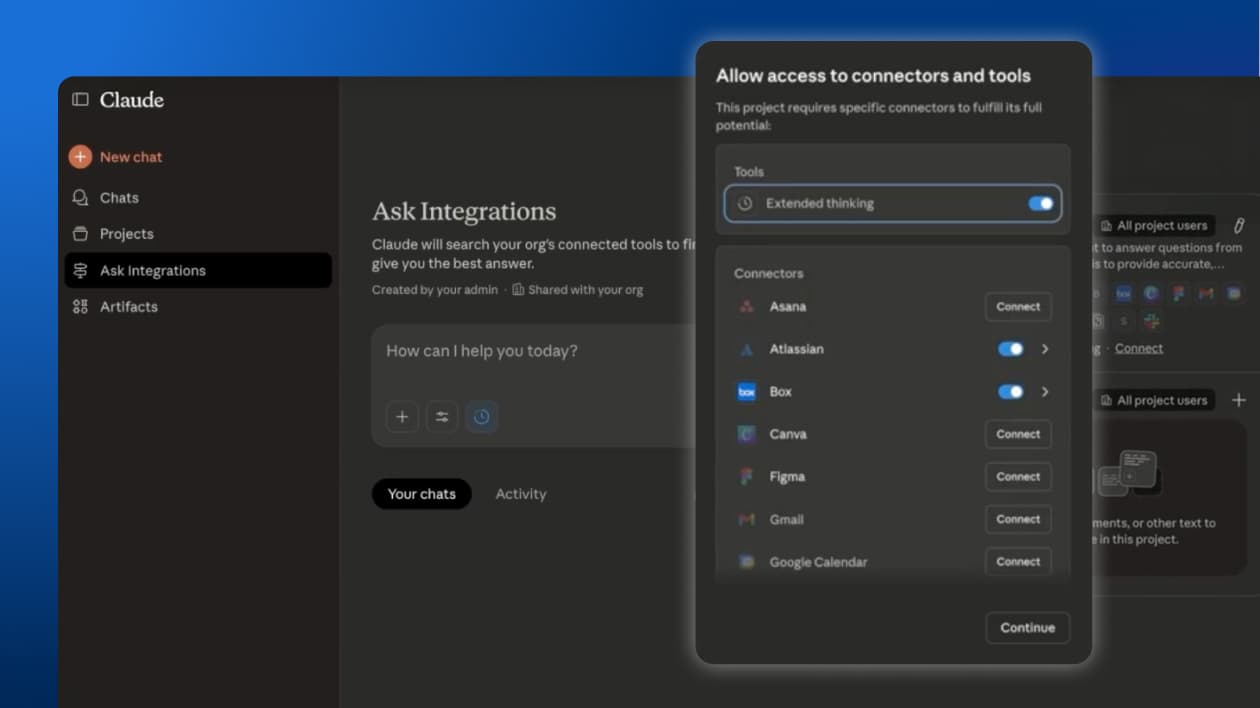
Claude has four different offerings, all of which Box can enhance with context and actions
Claude Chat
The familiar chat surface — ask a question, get an answer, draft something useful. With Box connected, answers stop being general and start being grounded in your company’s content. A small change in mechanics delivers an enormous increase in usefulness.
Claude Cowork
As users move from answering to doing — executing tasks and managing multi-step workflows – Box supplies the content and operational scaffolding that turn that coworker into a productive one.
Claude Code
The same Box context shows up when you use Claude to build on your code base and run commands, providing relevant context and guidance from files throughout the development lifecycle. Custom agents, internal apps, automation — all of it runs better when the model has structured access to the content that defines the business.
Claude Platform
This is the most complex surface, where companies use Claude models, tools, skills, and agents to build custom agents and apps to enhance their core product and enable internal use cases – customer service, contract review, document processing, vendor onboarding — that wrap Claude in their own interface and run on their own content. Claude is the engine. Box is the source of truth.
Claude for Financial Services and Claude for Legal
These solutions tailor workflows, plugins, and agents for industry-specific use cases. Box has been a launch partner for both solutions, providing the foundational context for the business processes that underpin these companies and creating industry-specific file skills.
The pattern repeats: Claude brings intelligence, Box brings the work brain, and the surface determines the shape of the experience.

The unsexy part is the part that matters
It’s tempting in AI conversations to spend all the oxygen on model capability — the new benchmark, the longer context window, the agentic demo. That’s the visible part. But it’s the invisible part that actually decides whether enterprise AI works.
Can the model get to the right content quickly? Can it respect the permissions that were already in place? Can it operate inside the compliance perimeter the company has spent fifteen years building? Can it find the ten relevant files without ingesting the other ten thousand?
Those are unglamorous questions. They’re also the questions that will help separate companies that get value out of AI from companies that announce pilots.
Box has spent two decades building the controls, metadata, permissions, compliance, and file capabilities. Plug all that into Claude, and the model stops being a brilliant generalist and starts behaving like someone who’s actually been at your company for a while.
Claude reasons, writes, builds, and acts. Box helps make that intelligence useful inside the messy, high-stakes reality of enterprise work.
The future of enterprise AI will be built on pairing strong models with the right business context, the right retrieval, the right controls, and the right execution paths.The companies that figure out how to operationalize those connections, will end up with AI that genuinely understands and transforms their business.
That’s exactly where Box fits.