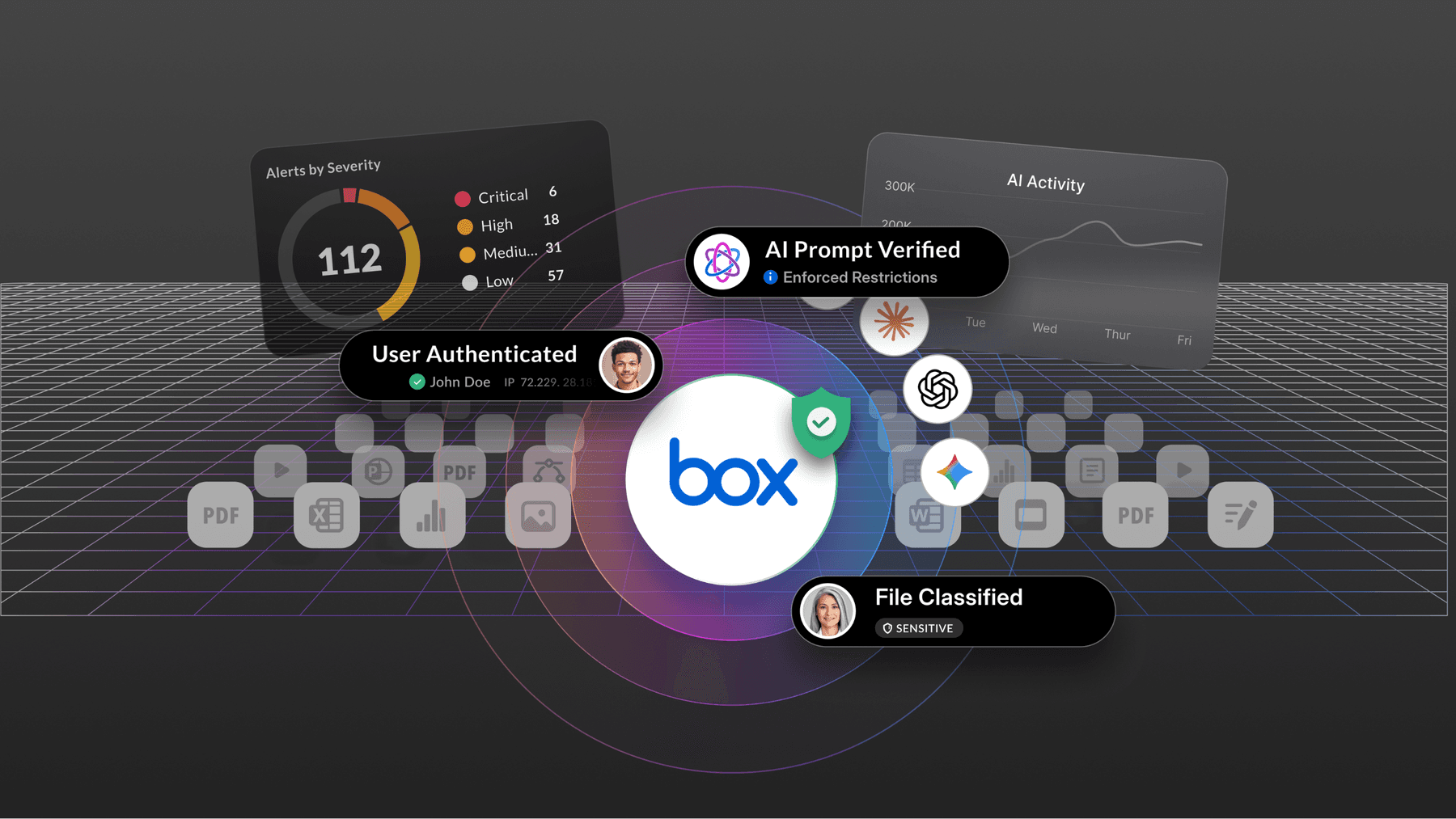
Over the past two years, enterprise technology has crossed an irreversible threshold. AI has graduated from conversational chatbots that summarize meeting notes to autonomous agents capable of analyzing complex financial portfolios, reviewing contracts, triggering multi-step code deployments, and executing business workflows end-to-end.
As business units sprint to harness this unprecedented leverage, cybersecurity and risk leaders find themselves standing at an uncomfortable crossroads. For decades, the enterprise security playbook operated on perimeter enforcement, explicit gates, and friction. When an unvetted technology emerged, the default institutional reflex was simple: block it.
In the era of autonomous agents, that playbook isn’t just obsolete; it’s dangerous.
I recently sat down with Mark Sutton, chief information security officer at Bain Capital, to discuss the real-world operational and philosophical shifts security leaders face as AI embeds itself into enterprise operations. What emerged from our conversation was a profound realization: the mandate for modern CISOs is no longer to be the department of “No.” In an economy where autonomous agents represent 5x to 10x operational leverage, the CISO’s ultimate goal must be enabling the business to drive 100 miles an hour down the highway by building invisible, impenetrable guardrails.
As Mark put it during our discussion: “Historically, security teams felt their job was to pull the emergency brake. But when technology offers this level of step-function leverage, our mandate changes completely. If we don’t help the business move safely at top speed, we aren’t mitigating risk; we’re just creating irrelevance.”
Here’s what that evolution demands — and why the secret to agentic security lies in the content layer.
The peril of the perimeter “no” and the rise of shadow AI
When new generative tools first landed on employee desktops, many organizations responded with blanket domain bans. But as Mark points out, blocking enterprise access doesn’t stop AI adoption; it just drives it into the shadows.
Employees under intense pressure to deliver results inevitably bypass corporate friction. If a marketing manager, investment analyst, or software engineer realizes an external AI agent can accomplish in ten minutes what once took three days, they’ll find a way to use it — often by pasting confidential corporate data, customer records, or financial models into unsanctioned personal tools on unmanaged devices.
“Whenever you erect an arbitrary wall in front of high-value productivity, you don't actually stop adoption,” Mark explained. “You simply blind yourself to it. The moment an employee pastes corporate data into a personal web tool to meet a deadline, security has failed twice: we didn't protect the data, and we lost visibility into where it went.”
Whenever you erect an arbitrary wall in front of high-value productivity, you don't actually stop adoption, you simply blind yourself to it.
The data confirms this shift. Box’s recent industry study, the State of AI in the Enterprise Report 2026, found that nearly half of all surveyed organizations reported experiencing an AI-related data exposure incident where an AI system surfaced content a user wasn’t authorized to view. Strikingly, 73% of leading-edge enterprises report comprehensive visibility into both sanctioned and unsanctioned AI usage, compared to just 17% of early-stage organizations. As the report highlights through the lens of high-reliability organization theory, maturity doesn’t make incidents magically disappear; it makes them visible, measurable, and manageable.

When security teams erect insurmountable roadblocks, they simply diminish their own visibility. Security leaders looking to protect enterprise assets must provide sanctioned, secure, friction- free pathways that are so seamless that employees have zero incentive to wander off-platform.
A fundamental threat model shift: from accuracy to action and data governance
Executive anxiety during the first wave of enterprise AI adoption centered largely on model accuracy: Is the LLM hallucinating? Are its outputs reliable?
While output validation remains essential, the threat model in the agentic era has fundamentally changed. Autonomous agents are no longer passive text generators; they have tool-use capabilities, API integrations, persistent memory, and the power to execute actions across enterprise systems.
As Mark highlighted, the primary questions keeping modern CISOs awake at night have shifted as well:
- Which systems and data sources can this agent access?
- Whose permissions and security context is the agent inheriting when it queries our repositories?
- What specific actions is the agent authorized to take on behalf of the user or the company?
- What happens when an agent encounters malicious instructions hidden within unstructured documents?
This last challenge — prompt injection — represents a permanent architectural reality. Much like email phishing or social engineering, prompt injection is an enduring structural vulnerability inherent to systems that process untrusted, natural language inputs alongside instructions. And it can’t be treated as a temporary software bug waiting for a patch.
Everyone’s looking for the magic patch that solves prompt injection. The reality is that as long as models interpret unstructured natural language as both input and instruction, this risk is structural.
"Everyone’s looking for the magic patch that solves prompt injection,” Mark noted. “The reality is that as long as models interpret unstructured natural language as both input and instruction, this risk is structural. We have to treat it like phishing: assume hostile inputs will arrive, and design our data boundaries so the agent simply doesn't have the blast radius to do catastrophic damage.”
When an autonomous agent reviews an incoming supplier invoice, a customer support attachment, or a counterparty contract, that document itself becomes an executable input surface. If the document contains adversarial prompt injections, an unconstrained agent might be tricked into exfiltrating confidential data or altering system records. Securing agents against prompt injection requires rigid boundary enforcement, least-privilege action scoping, and continuous verification at the data and execution layers.
Democratized development and the non-technical builder
The democratization of development compounds this challenge. In previous technology shifts, connecting applications to corporate databases required trained software engineers who understood access control lists, network firewalls, and data sanitization.
Today, low-code and natural language platforms empower non-technical knowledge workers across sales, HR, operations, and finance to build custom agents and complex automated workflows. In a matter of hours, a business analyst can spin up an agent that aggregates client onboarding files, summarizes financial health, and routes reports across internal channels.
The security responsibility cannot sit on the user's shoulders. The content platform itself has to enforce native entitlements and containment by default, regardless of who configured the agent.
“You can't expect an operations lead or marketing manager to perform threat modeling on a Friday afternoon before deploying a custom workflow,” Mark observed. “The security responsibility cannot sit on the user's shoulders. The content platform itself has to enforce native entitlements and containment by default, regardless of who configured the agent.”
While this democratization drives explosive productivity, non-technical builders rarely possess deep training in permission boundaries, data classification, or downstream risk. If an agent is granted broad, unchecked access to a shared folder or repository, it may inadvertently pull sensitive compensation figures, pending acquisition terms, or proprietary intellectual property into general summaries.
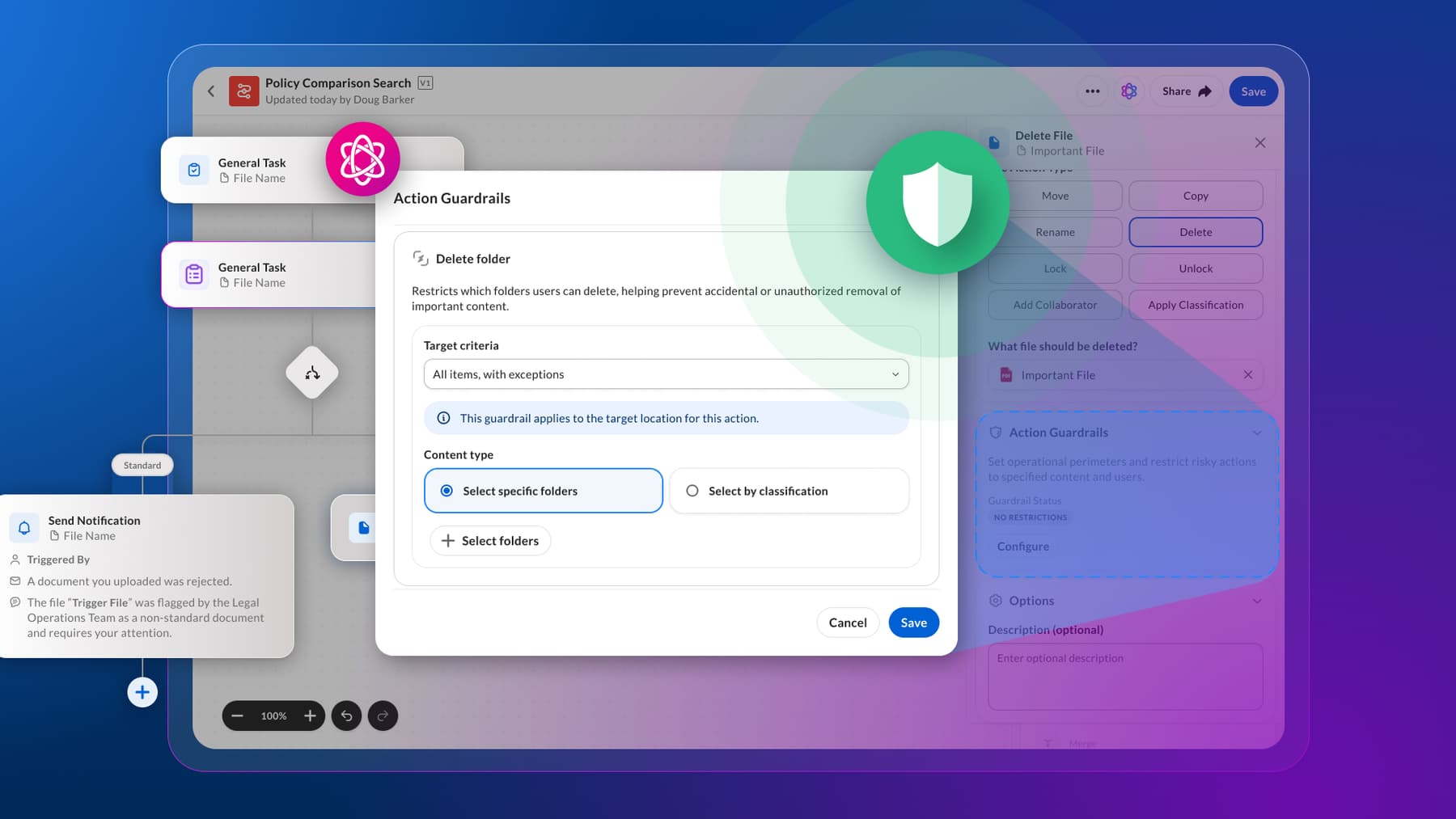
Security architectures can no longer assume that the builder of a workflow understands the blast radius of the data they’re connecting. The platform itself must enforce governance by default.

The antidote: foundational content classification and guarding your crown jewels
How do enterprise leaders reconcile the need for innovation speed with data protection’s non-negotiable imperatives? As Mark observed, the answer requires getting back to foundational data security basics: Knowing where your “crown jewels” live, classifying your content, and minimizing the blast radius. “Enterprise AI is only as safe as the data architecture underneath it,” Mark emphasized. “If you haven't identified your crown jewels, classified sensitive intellectual property, and scoped user entitlements, deploying autonomous agents is like turning on high beams in heavy fog. You have to get the content layer right first."
The bottleneck in enterprise AI adoption today is context. Most companies’ content is fragmented across decades of unstructured documents, legacy file shares, and disparate applications with conflicting permissions. When organizations attempt to layer autonomous agents on top of unorganized, unclassified data, governance collapses.
To build a scalable agentic enterprise, organizations must adopt a tiered governance model powered by a unified, intelligent content layer:
A. Automatic classification and blast-radius reduction
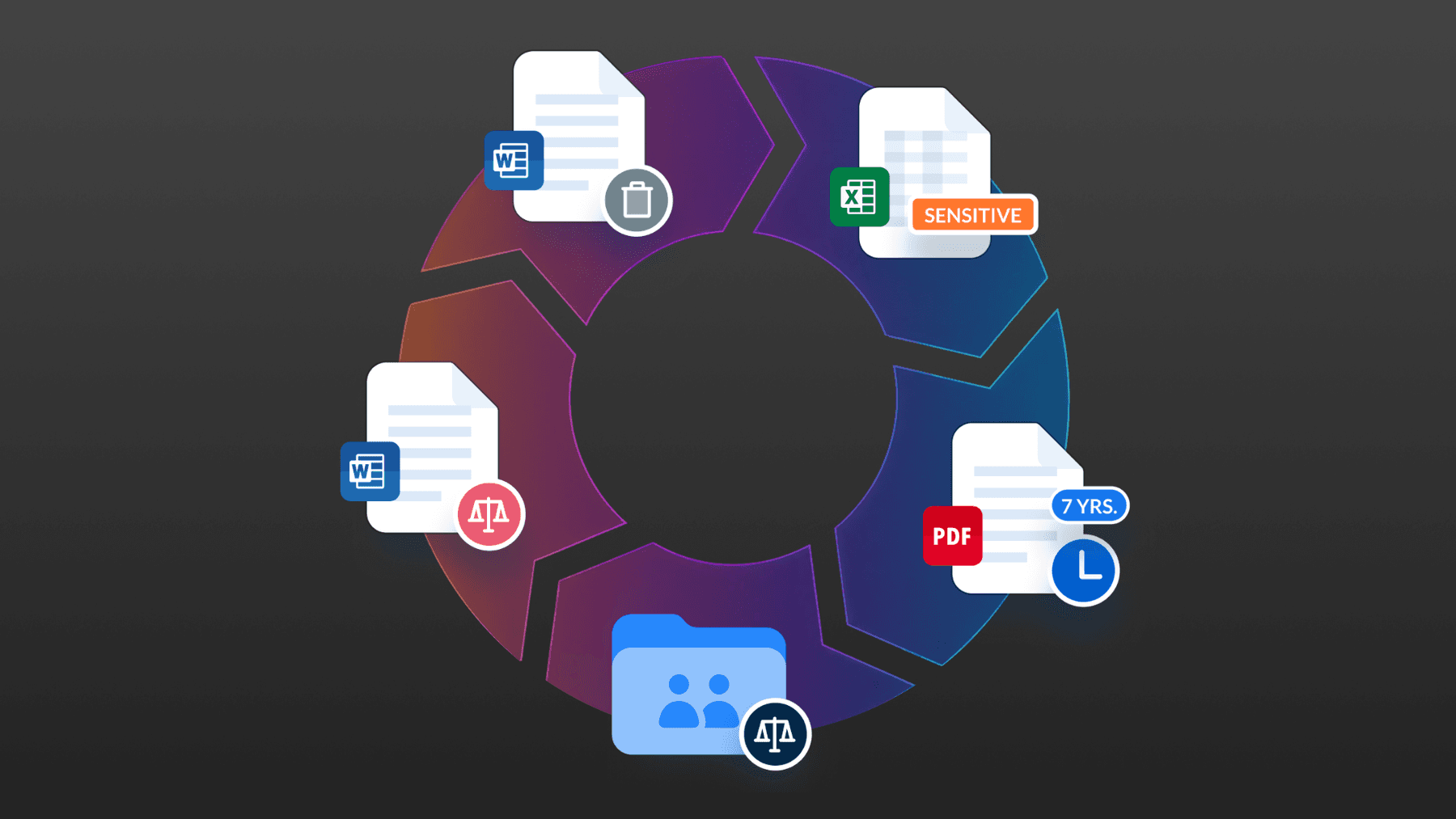
Security teams can’t manually audit millions of enterprise files. But AI-powered classification at the content platform layer can identify sensitive intellectual property, PII, financial disclosures, and regulated records. With the crown jewels clearly identified, security leaders can apply high-friction, strict containment around critical assets while lifting unnecessary friction from general knowledge repositories, freeing business teams to experiment in low-risk environments while ensuring that sensitive data remains untouchable.
B. Native permission inheritance for every agent
AI agents should never possess superuser access or bypass established enterprise entitlements. Whether an organization deploys out-of-the-box assistants or builds custom agents via external LLM frameworks, every agent interaction must execute within the authenticated user’s permission boundaries. If an employee can’t access an executive compensation document, an agent acting on their behalf shouldn’t be able to, either.
C. Headless, cross-functional agility
At Box we believe enterprise success hinges on a unified, 3-part promise: All your content. Any AI agent. Deploy AI agents with confidence. The leading edge of enterprise AI is multi-model and platform-agnostic; instead of locking themselves into a single AI provider, organizations are running multiple models headlessly against a centralized, secure system of record.
By establishing a secure content platform as the single source of truth, security teams provide a pre-approved, audited foundation. Cross-functional review engines spanning Information Security, Legal, and Compliance can establish clear, rapid onboarding criteria for third-party agents, knowing that the underlying content layer guarantees audit trails, data loss prevention (DLP), and zero-retention privacy standards.
The path forward: defining the CISO’s legacy
We’re living through a profound economic realignment. As noted in recent evocations of Jevons’ Paradox, when technology drastically reduces the cost and friction of executing a task, demand for that work multiplies exponentially. Leading enterprises aren’t shrinking their operations; they’re running existing workflows at 10x scale and tackling entirely new classes of problems.
In this high-velocity landscape, CISOs’ success won’t be measured by how many AI tools were blocked, how many permissions were locked down, or how long projects stalled in compliance review; it will be measured by how quickly and safely they empowered their organizations to lead their industries into the autonomous era.
By establishing intelligent content governance, enforcing least-privilege action boundaries, and transforming unstructured data from an unmanaged liability into a governed competitive advantage, security leaders can build the invisible guardrails that turn AI velocity into enduring enterprise value.