For Box’s newly released 2026 State of AI in the Enterprise report, we surveyed 1,640 IT decision-makers across the United States, United Kingdom, France, and Japan. Here’s a summary of what we learned from these organizations, from early-stage companies that have just begun their AI journeys to leading-edge AI pioneers. This is part 1 of 7.
Executive Summary
The agentic enterprise has gone from vision to reality, and the pace of the transformation has been striking.
For this year’s State of AI in the Enterprise report, Box surveyed 1,640 IT decision-makers across the United States, United Kingdom, France, and Japan, who self-selected into four AI-maturity tiers: early stage, developing, advanced, and leading edge.
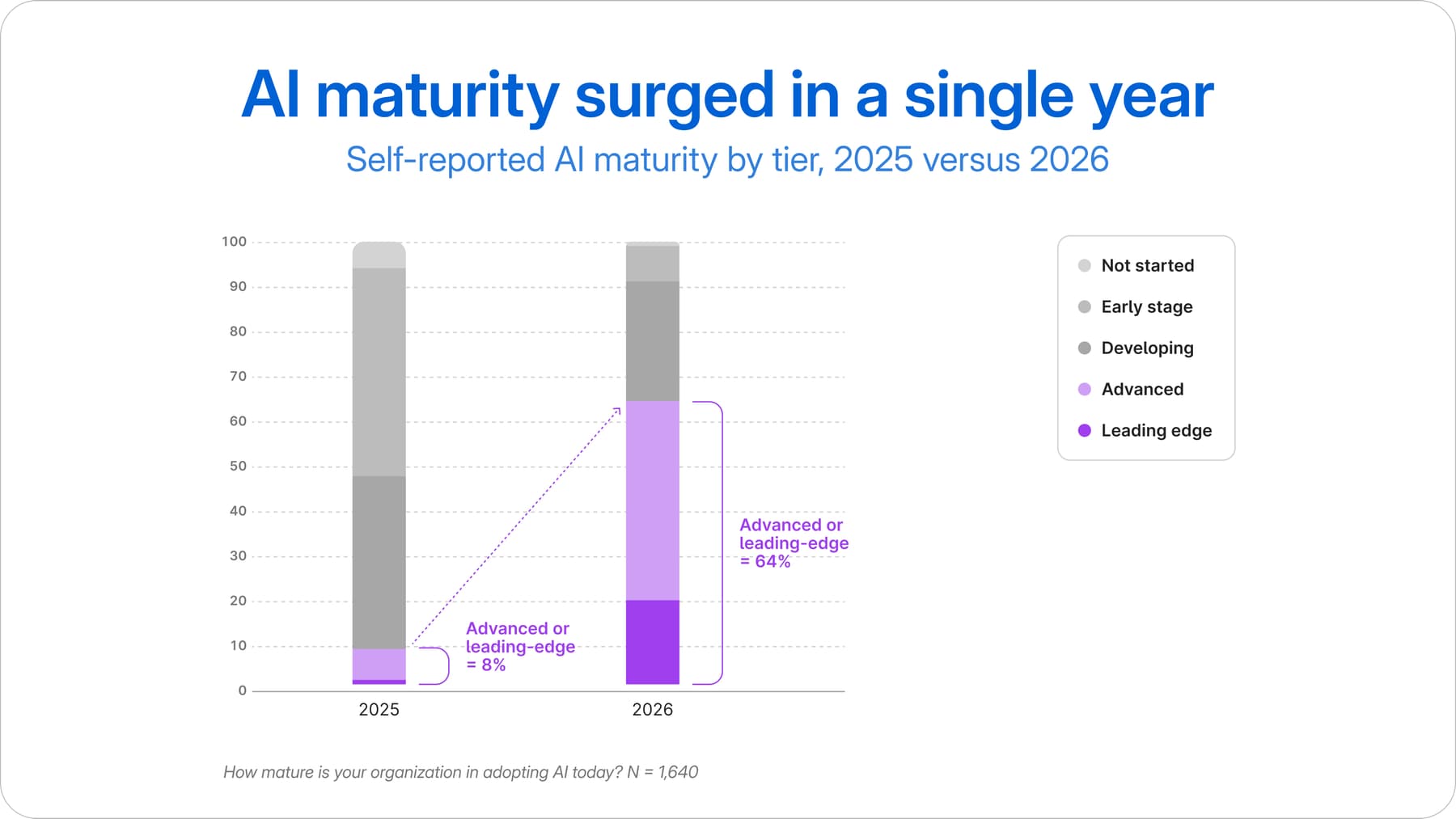
In a year, the share of organizations describing themselves as advanced or leading-edge has risen from 8% to 64%, while the share calling themselves early-stage (or not started) has collapsed from 53% to 9%.
83% of organizations surveyed are running AI agents and 19% are doing so autonomously at scale. 80% report notable ROI — at least a 10% improvement — from their AI work to date.
At every maturity level, respondents agree on the same three things: agents need access to company content, governance is key, and with the speed things are moving, no one wants to get locked into any single AI tool or technology.
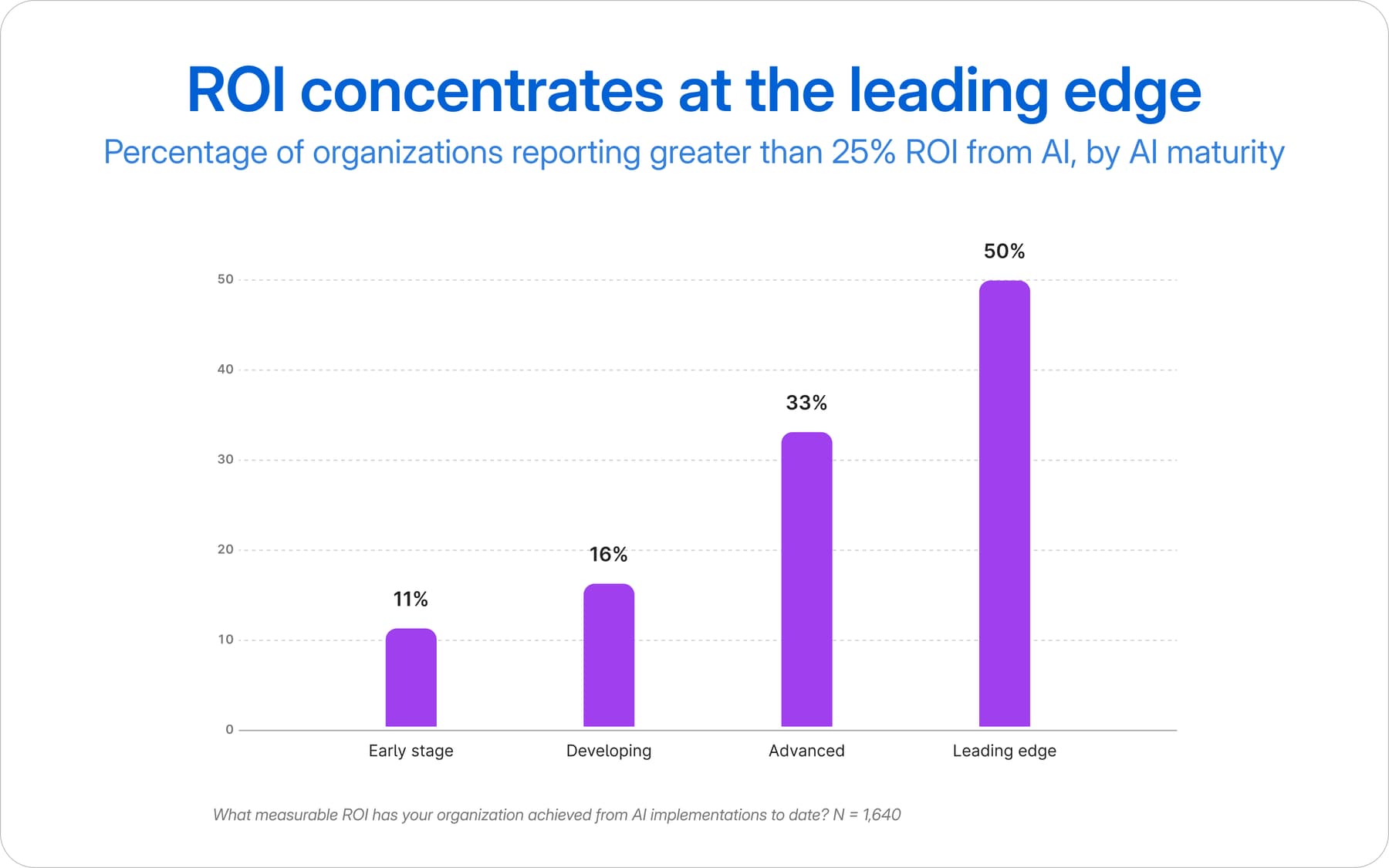
Organizations on the leading edge see markedly better results. Half of leading-edge companies say their ROI has been ‟significantˮ -- an improvement above 25%. Only one in nine early-stage companies report the same.
80% report notable ROI — at least a 10% improvement — from their AI work to date.
So, what are the leading edge companies doing right?
They aren′t the ones who understand AI differently. They’re the ones who have built the infrastructure for the agentic enterprise — the operating muscle around agents: teams to deploy them, governance to control them, content to ground them, and architecture flexible enough to keep upgrading as the AI stack changes.
Here are the survey’s main findings about the state of enterprise AI today.
1. The leading edge uses AI for new work, not just cheaper work
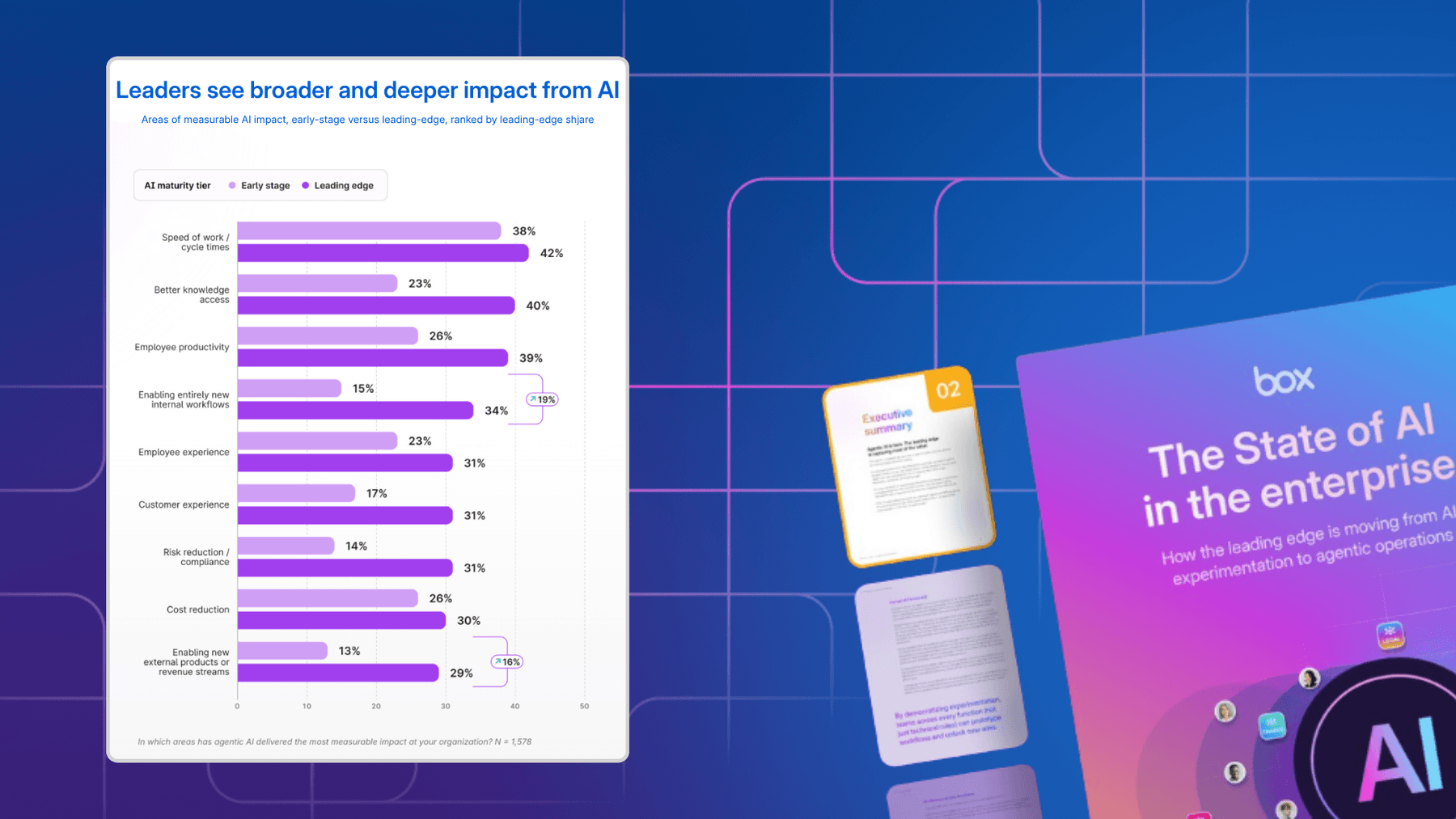
General-purpose assistance (44%) and helpdesk automation (42%) are still the most common use cases, and the leaders pursue those efficiencies too. What sets them apart is a second agenda the rest haven’t reached. 48% of leading-edge organizations — against 23% of early-stage ones — name doing existing work at far greater scale than was previously possible as a primary objective. 41%, against just 21% at the early stage, name doing entirely new types of work that weren’t feasible before: a salesperson reviewing a contract without waiting on legal, or a one-off internal tool that used to go unbuilt because no developer was free to build it. Read more in the report chapter "The Maturity Gap".
2. AI is reshaping workforces, and might actually grow them
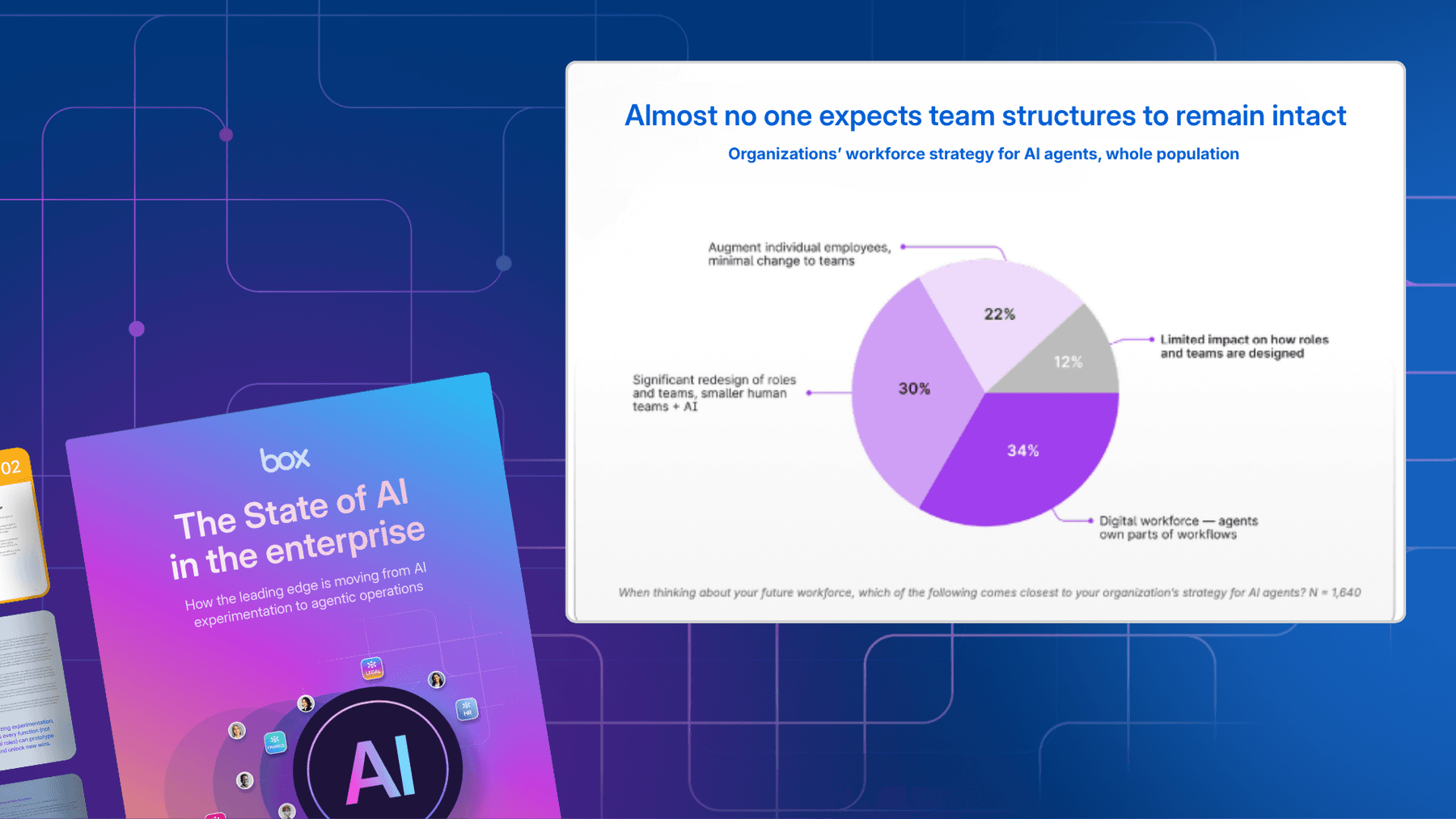
Despite the forecasts, 58% of organizations, 58% of organizations expect headcount to rise over the next three years, climbing to 79% among the most mature. Only 9% say AI agents are primarily eliminating roles today. And the roles being added fastest — agent operators, governance professionals, workflow specialists — barely existed two years ago. Read more in the report chapter "Capability".
3. Context is this year’s AI bottleneck
96% of organizations say agents need access to company-specific content, but only 36% have connected agents to trusted content across many use cases. The 2026 challenge isn’t models; it’s making enterprise knowledge accessible, usable, and trustworthy for the agents that depend on it. Read more in the report chapter "Context".
4. AI governance is essential, but isn’t yet widely implemented
Nearly half (49%) of organizations have already had an AI-related data exposure incident. In that context, the speed at which governance frameworks have been adopted is no surprise. The share reporting established or advanced frameworks rose from 24% in 2025 to 73% this year. The gap is in instrumentation. Only 39% have comprehensive visibility across sanctioned and unsanctioned use, only 34% have formal standards for how agents access company data, and 27% still call their governance ad hoc or developing. Read more in the report chapter "Control".
5. AI leaders are betting on platform flexibility
68% of respondents are concerned about being locked into a single AI provider. Since our 2025 survey, the average number of AI tools officially adopted by respondents has increased to 3.3.
And 79% now say it’s important or critical that agents operate “headlessly” — connecting directly to systems, APIs, and data sources without a human interface. The leading edge is building so it doesn’t have to bet on which tools win. Read more in the report chapter "Change".
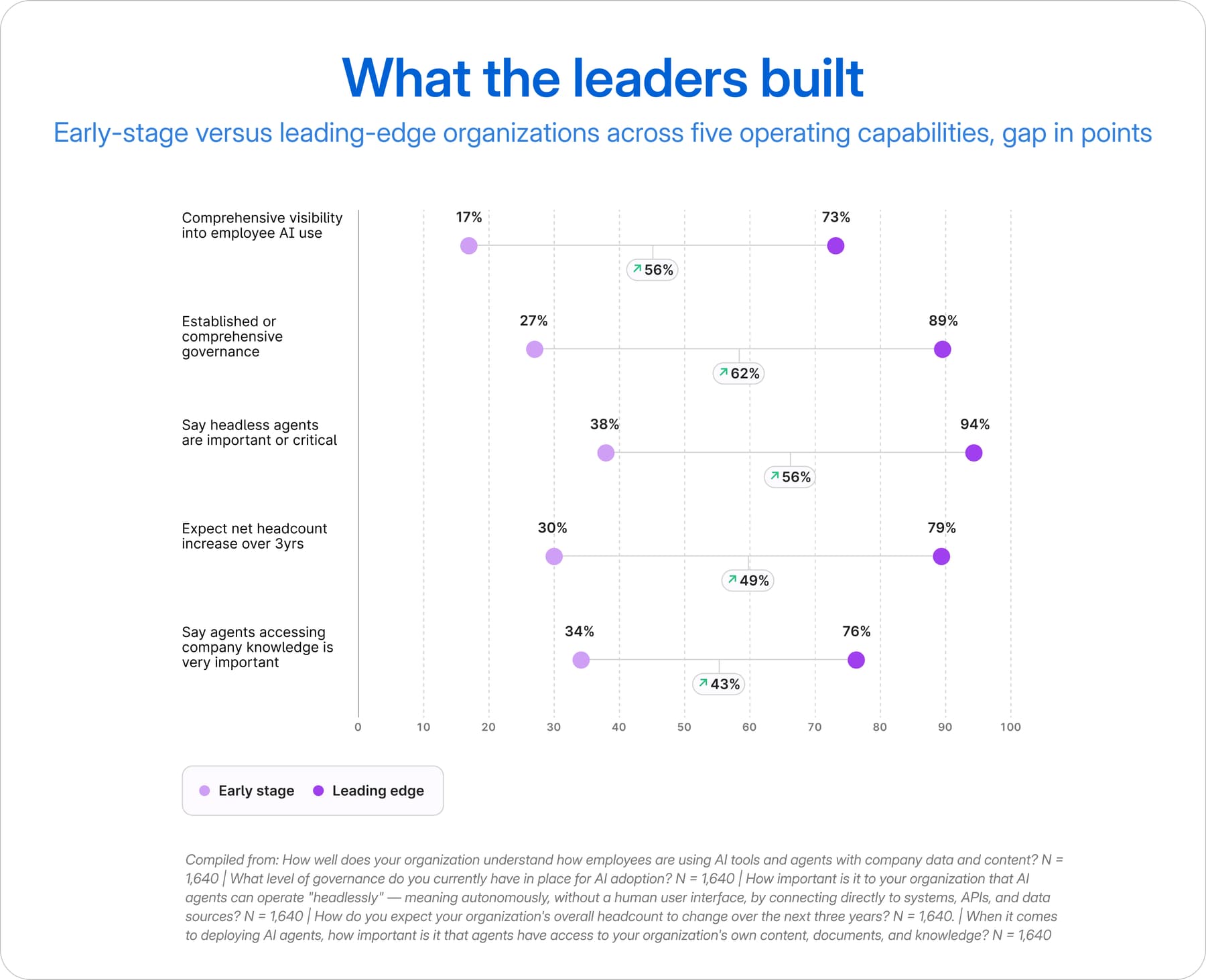
The organizations seeing the strongest returns aren’t simply deploying more AI; they’re operationalizing it differently. They integrate AI into multi-step workflows, connect systems to enterprise knowledge, formalize governance, and deploy agents for new categories of work rather than standalone productivity gains for individuals. AI is becoming a core operational capability at the leading edge. A capability that generates measurable business impact today, and is beginning to reshape the nature of work. Content, governance, and flexibility are the three foundations of the agentic enterprise, and are places where the gap between the leading edge and everyone else is wide. The rest of this report takes each in turn.
Methodology
This research was conducted online in the U.S., U.K., France, and Japan by The Harris Poll on behalf of Box among 1640 IT professionals, aged 21+, employed full-time in companies with at least 100 employees, and who have at least a manager title and some level of input in decisions regarding AI. The survey was conducted April 30 - May 8, 2026. Raw data were not weighted and are therefore only representative of the individuals who completed the survey. In this report, there are references to the 2025 report. Comparisons to 2025 are directional at best given changes to methodology, where we surveyed over 1,300 global IT leaders from companies of varying sizes in the United States, Canada, Europe, Australia, New Zealand and Japan; and who were involved in AI decisions such as usage, purchasing, deployment and administration.
Frequently Asked Questions
What is the Box 2026 State of AI in the Enterprise report?
It is a survey of 1,640 IT decision-makers across the United States, United Kingdom, France, and Japan, conducted on behalf of Box by The Harris Poll. The report examines how organizations at different AI maturity levels are deploying agents, governing data, and building flexible architectures.
How quickly has enterprise AI maturity changed?
In one year, the share of organizations describing themselves as advanced or leading-edge rose from 8% to 64%, while early-stage organizations dropped from 53% to just 9%. This shift reflects how rapidly the agentic enterprise has moved from vision to operational reality.
What ROI are organizations seeing from AI today?
80% of surveyed organizations report notable ROI, meaning at least a 10% improvement, from their AI work to date. Half of leading-edge organizations report significant ROI above 25%, compared to only one in nine early-stage companies.
What is the biggest bottleneck holding enterprise AI back in 2026?
Context is the primary bottleneck: 96% of organizations agree agents need access to company-specific content, but only 36% have successfully connected agents to trusted content across many use cases. The challenge is making enterprise knowledge accessible, usable, and trustworthy for AI agents.
How widespread are AI governance frameworks today?
The share of organizations reporting established or advanced governance frameworks rose from 24% in 2025 to 73% in 2026. However, only 39% have comprehensive visibility across sanctioned and unsanctioned AI use, and 27% still describe their governance as ad hoc or developing.
How concerned are enterprises about AI vendor lock-in?
68% of respondents are concerned about being locked into a single AI provider, and the average number of officially adopted AI tools has grown to 3.3. Leading-edge organizations build flexible, multi-model architectures so they can swap providers as the technology evolves.
Will AI agents reduce enterprise headcount?
The data suggests the opposite: 58% of organizations expect headcount to rise over the next three years, climbing to 79% among the most mature organizations. Only 9% say AI agents are primarily eliminating roles today.
What distinguishes leading-edge AI organizations from their peers?
Leading-edge organizations build the operational infrastructure for agentic AI, including dedicated teams, formal governance, connected enterprise content, and flexible architectures. They also pursue new categories of work that were not previously feasible, rather than focusing solely on cost reduction.
This is chapter 1 of Box's State of AI in the Enterprise report 2026. Read more:
1: Executive Summary | 2: The Maturity Gap | 3: Context | 4: Control | 5: Change | 6: Capability | 7: Conclusion
-----