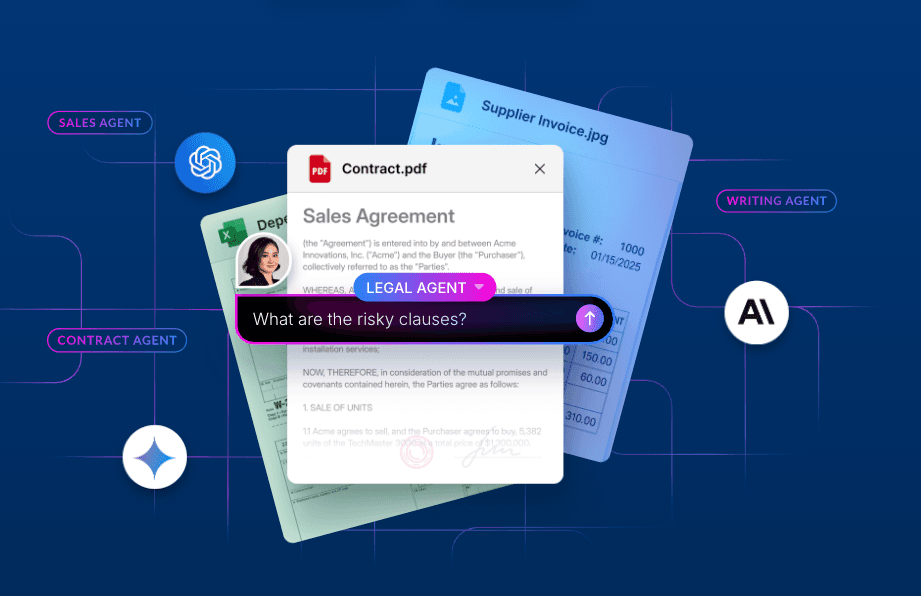
An AI application can tell you that a customer is at risk. The harder questions are why, what evidence supports that conclusion, and what should happen next. The answer is often spread across a data warehouse, the current contract, the account plan, and recent support history.
A data warehouse can aggregate and analyse the structured signals. A lakehouse can combine wider data sets, and a vector index can make selected content easier to retrieve.
None of these systems removes the need for a governed content layer. An analytical copy or retrieval index can help an application find content, but the content system needs to remain connected so it can confirm the current source, the user’s access, and the policies that apply at the time of use.
That connection gives AI applications the current, permission-aware business context they need to produce grounded, auditable answers and authorised actions. It lets data architects combine structured signals with enterprise content without creating unmanaged copies or rebuilding governance in every downstream system.
Box’s 2026 State of AI in the Enterprise research found that 96% of IT decision-makers consider access to company-specific content and knowledge important for AI agents. Only 36% had connected agents to trusted internal content across many use cases.
The architectural question is how to connect that content to the data and AI stack without creating a new copy-and-governance problem.

Connect enterprise content to the data architecture
Enterprise content often sits alongside the formal data estate rather than inside its architecture.
A CRM record may show that a customer is at risk. Product telemetry may show a decline in usage. The explanation could be in a contract, support summary, research deck, or account plan stored in Box.
The same pattern appears across the business. A supplier record contains a renewal date; the agreement defines the obligations. A project database reports a missed milestone; the launch plan shows what is blocking it. A transaction table records a payment; the invoice explains what was purchased.

Use metadata to connect content and data
Files become more useful across the data stack when they carry consistent business metadata.
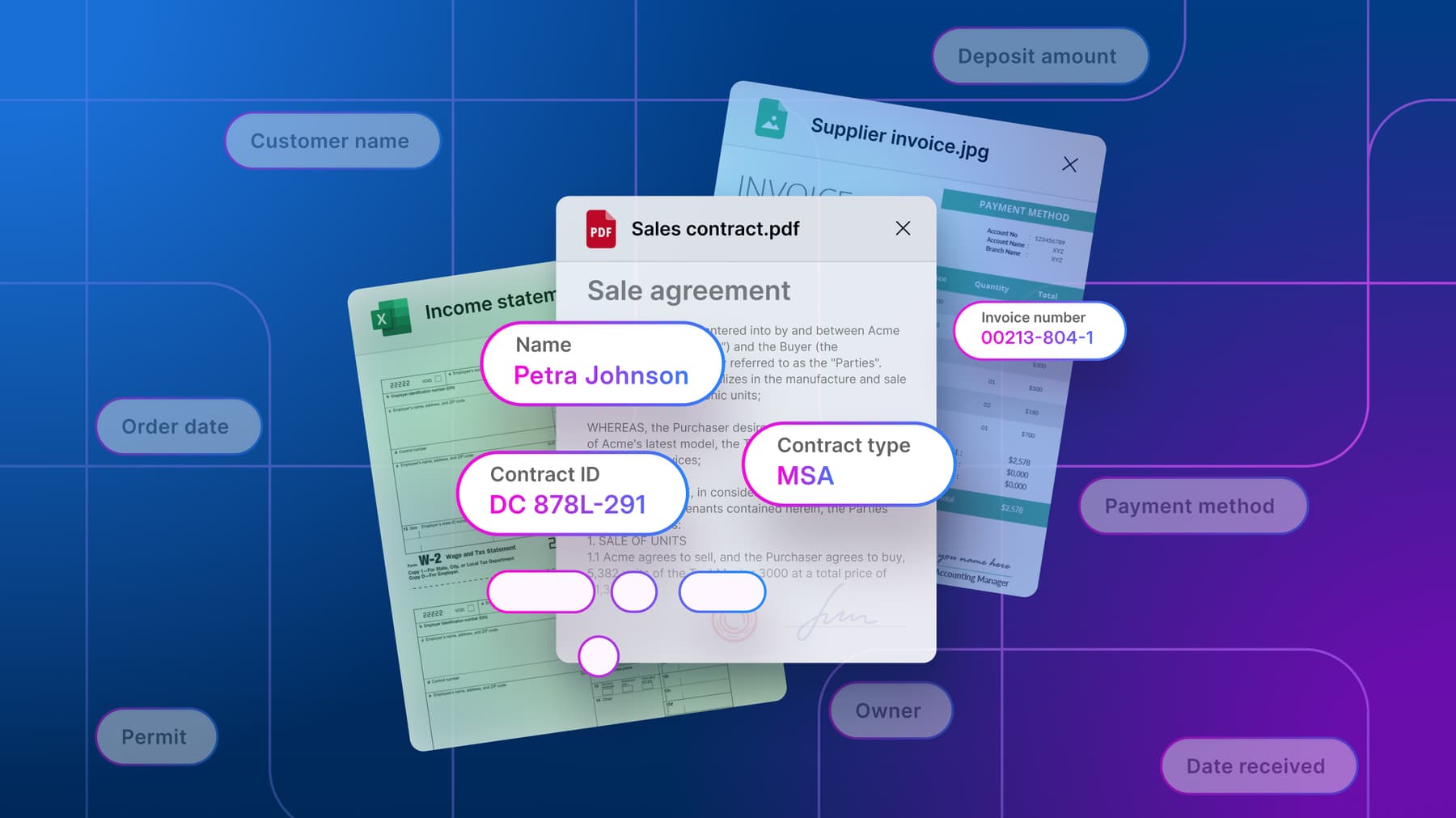
Box metadata templates provide reusable schemas that can be applied to files and folders. An example of a contract template might include customer ID, agreement type, effective date, renewal date, region, and status. An invoice template might include supplier ID, invoice number, amount, purchase order, and payment date.
The fields in these templates give data teams a reliable way to connect Box content with records in a warehouse, lakehouse, ERP, or CRM. They also help an application narrow its search before relying on semantic similarity.
Consider a request such as:
Find the current, executed agreements for customer 1048 that renew within the next 90 days.
The metadata created by the request identifies the customer, document type, status, and renewal window. When an LLM goes to retrieve it, it can then focus on the clauses and documents relevant to the task.
Automate metadata extraction at scale
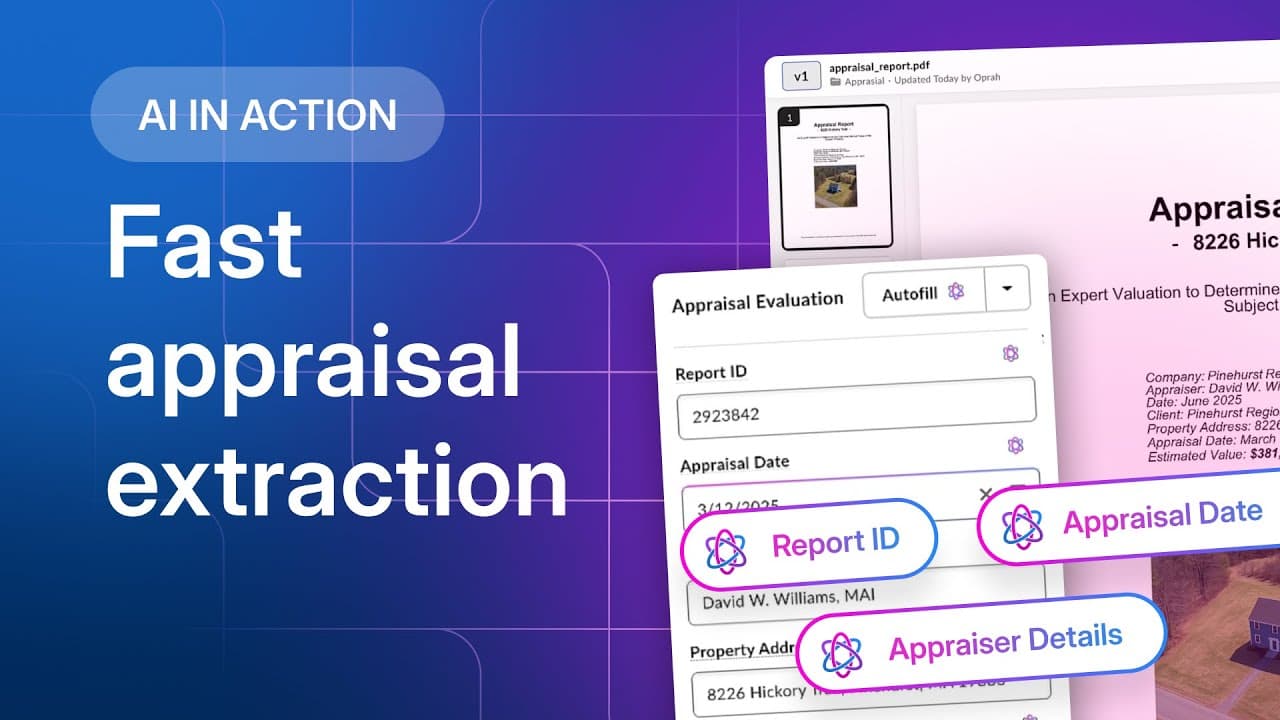
Manually tagging every file will not scale across a large content estate. Metadata extraction identifies information inside documents and applies it as metadata alongside the source.
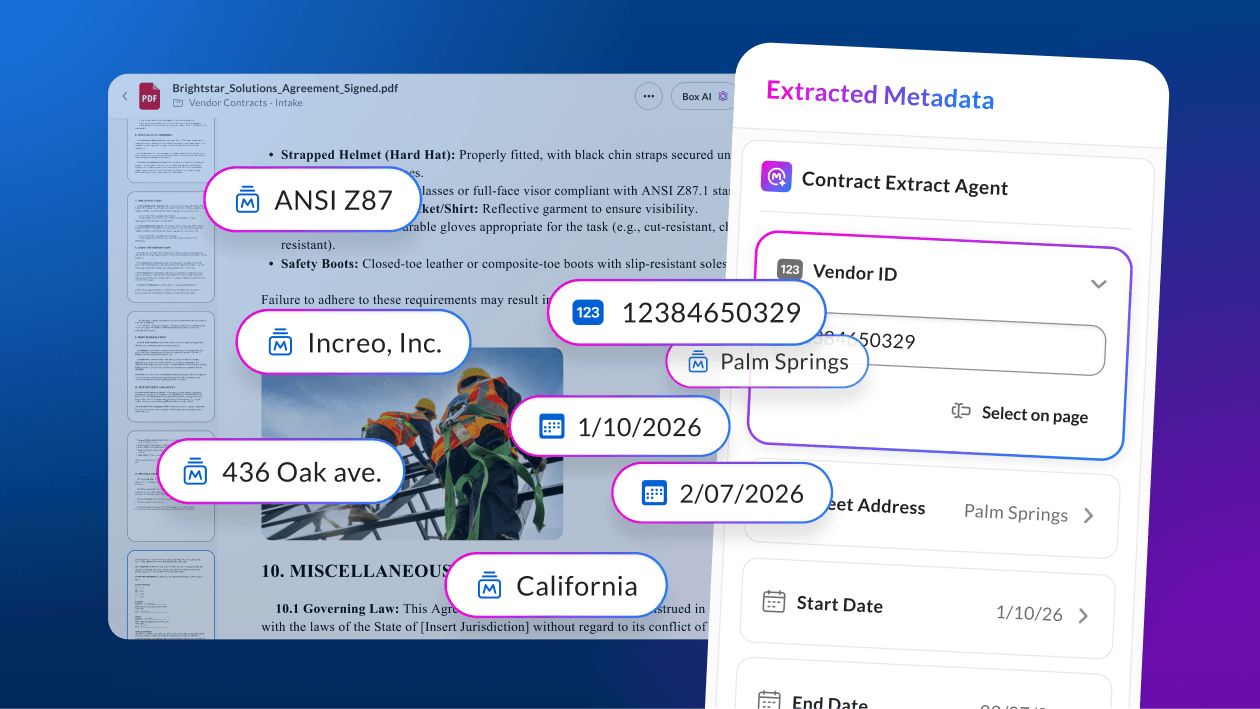
For contracts, that might include parties, dates, obligations, governing law, or renewal terms. For invoices, it might include the supplier, invoice number, amount, and due date.
In Box, Extract captures those fields as metadata that remains connected to the source file. Teams can use them to improve search, trigger workflows, support application logic, or send selected values to a data platform for analysis.
This creates a practical bridge between enterprise content and structured data. A downstream table can contain contract dates and customer IDs while retaining the Box file ID as the link back to the agreement.
Giving each system a clear role
An AI application needs an architecture that can locate relevant content, check the current source and user access, and return a usable result. In a Box architecture, that has four parts:
- Box maintains the source content and its metadata, permissions, versions, classifications, and lifecycle controls.
- The retrieval index creates searchable representations and identifies likely sources.
- The context service checks the source, assembles the relevant material, and returns citations.
- The AI application or agent applies task logic, reasons over the context, and presents an answer or takes an authorized action.
The boundaries matter because an index represents a file at the time it was processed. Since then, a user may have lost access, a new version may have been approved, or the file may have been reclassified or deleted.
At request time, the context service knows the user’s identity and the task being performed. It can use the index to find candidate Box file IDs, then return to Box to confirm current access, version, policy, and availability.
This follows a zero-trust model: connecting an agent to Box does not give it broader access to enterprise content. Box evaluates each request against the user’s existing permissions, so the agent can only search, retrieve, or act on content that person is already authorized to use.
The index makes retrieval fast. Box remains the current source and enforcement point for access and policy.
Keeping downstream systems aligned
Any external index or analytical dataset will drift as content changes.
Box events and webhooks can notify downstream services when a file is uploaded, updated, moved, or deleted. An indexing service can reprocess the affected file instead of crawling the entire repository. An analytical pipeline can update the corresponding extracted fields. A deletion can trigger cleanup of downstream representations.
Each chunk, embedding, metadata record, or summary should retain enough information to trace it back to Box, including:
- Box file ID
- Source version
- Location within the file
- Transformation performed
- Processing time
This link supports citations and gives platform teams a practical way to handle updates, deletion, and lineage.
Choosing the interface that fits the workload
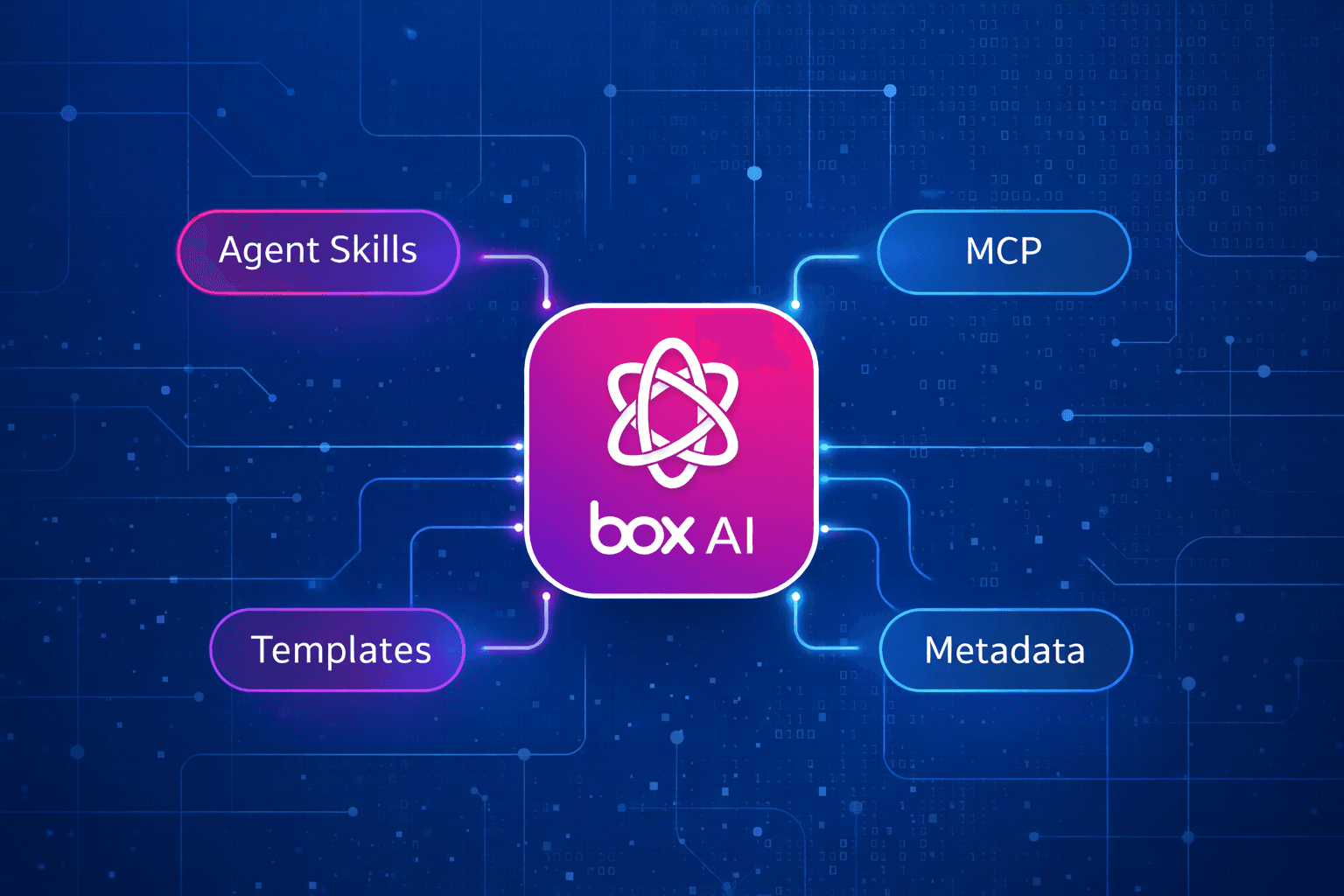
Box can expose content capabilities through several interfaces.
APIs and SDKs make sense when the operation is explicit: retrieve this file, read these metadata fields, subscribe to these events, or upload an output to this folder.
The Box MCP Server is useful when an AI agent needs to choose among authorized capabilities during a task. The agent may search for content, retrieve a file, analyze documents, work with metadata, or perform an approved content action.
A production architecture can use both. The SDK might support indexing and event processing, while MCP gives an external agent a governed path to Box content and tools.
Being deliberate about what moves
Not every workload needs a copy of the source content. Three patterns cover most cases:
Request-time access
The application retrieves content from Box when it is needed. This works well when current permissions, versions, and policies are central to the task.
Indexed retrieval
Selected Box content is represented in an external vector or hybrid index. Preserve the Box file ID and recheck the source before returning the content.
Analytical replication
Metadata produced by Box Extract, or other selected content attributes, is written to a data platform for reporting, modeling, or analysis.
An organization may use all three. The important questions are what gets copied, why it is needed, how it stays current, and which system owns the authoritative value.
Starting with one joined use case
There is no need to begin by indexing the entire content estate.
Choose one workflow that requires structured data and enterprise content. Customer renewal risk is a useful example:
- The warehouse holds account, product usage, and renewal data.
- Box holds contracts, support summaries, account plans, and customer research.
- Box Extract captures renewal terms and obligations as metadata.
- Customer IDs connect the Box files to warehouse records.
- The context service combines structured signals with authorized Box content.
- The application produces a cited renewal brief.
This first implementation establishes the patterns other teams can reuse: stable identifiers, metadata schemas, event formats, identity propagation, authorization checks, and citations.
Where Box fits in the data and AI stack
Box does not replace the warehouse, lakehouse, search index, orchestration framework, or model. It gives those systems a governed way to work with enterprise content.
That division of roles lets data architects add models, indexes, and analytical systems without moving authoritative content or rebuilding its controls each time.