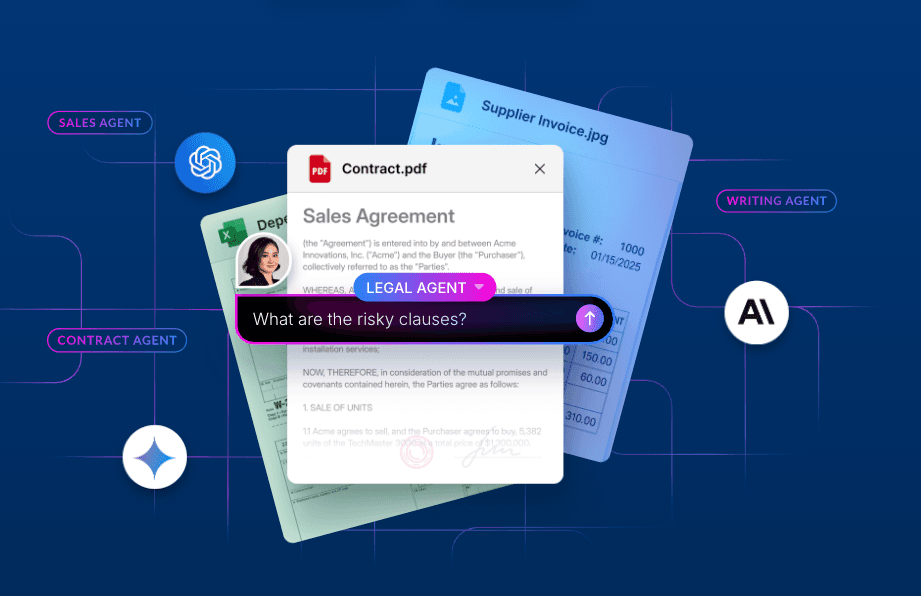
Last week at Dreamforce, Marc Benioff shared how headless is expanding through the AgentExchange ecosystem, bringing AI-native builders and apps into the Salesforce experience. For Box, it was our vision for the headless enterprise come to life: governed content flowing seamlessly into the applications, workflows, and AI agents where work gets done.
Salesforce brings together customer records, business processes, and agent experiences. Box provides the secure content foundation behind them, helping organizations connect contracts, proposals, onboarding materials, financial records, case evidence, and other unstructured content to the work happening in Salesforce — all without moving files out of Box.
That partnership is at the heart of our better-together story. Salesforce serves as the system of record for structured business data, Box as the filesystem for AI: a governed, headless content layer that gives people and agents access to the right information, in the right context, through the applications they already use.
And when structured data and unstructured content are connected, teams can work with complete context, automate more meaningful processes, and give AI agents the information they need to take action securely.
Box and Salesforce have worked together to make this vision a reality. With Box for Agentforce, the Box MCP Server, Box AI, Box for Salesforce, Box Doc Gen, and Box Sign, organizations can securely manage, create, sign, and act on content across Salesforce, Slack, and Claude without disrupting the way their teams already work.
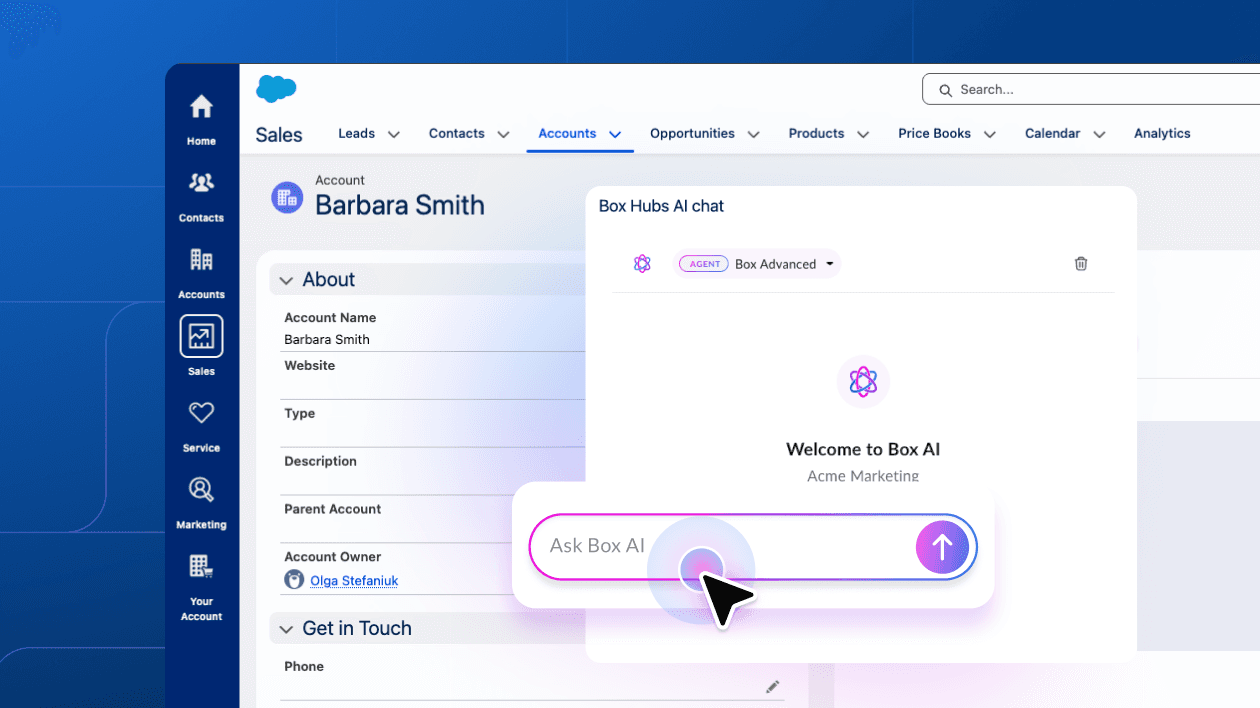
Here’s a look at what Box and Salesforce have built together, and how we’re helping organizations prepare for an agent-powered future.
Box in the AgentExchange ecosystem
At Dreamforce, Salesforce extended AgentExchange, its partner ecosystem and marketplace, with headless capabilities, giving customers more choice in where they put AI to work without giving up their Salesforce context, permissions, and business rules. Box is one of the partners featured in the new AgentExchange ecosystem.
Headless means the AI interface is a choice. Salesforce exposes its data, workflows, actions, and governance through MCP and APIs, so the same trusted context can show up in Agentforce, Slack, Claude, and other AI experiences. Box does the same for content. That’s what makes Box the secure content platform for any AI agent: governed enterprise content reaches whichever agent your teams use, with Box permissions and classifications enforced along the way.
Box and Claudeforce
Salesforce in Claude (Claudeforce) brings Salesforce directly into Claude, combining Claude’s intelligence with trusted Salesforce context and 37 prebuilt sales skills. Add the Box MCP Server, and Claude can reason across Salesforce records and the governed Box content behind them, including contracts, reports, presentations, and policies, to answer questions or complete tasks.
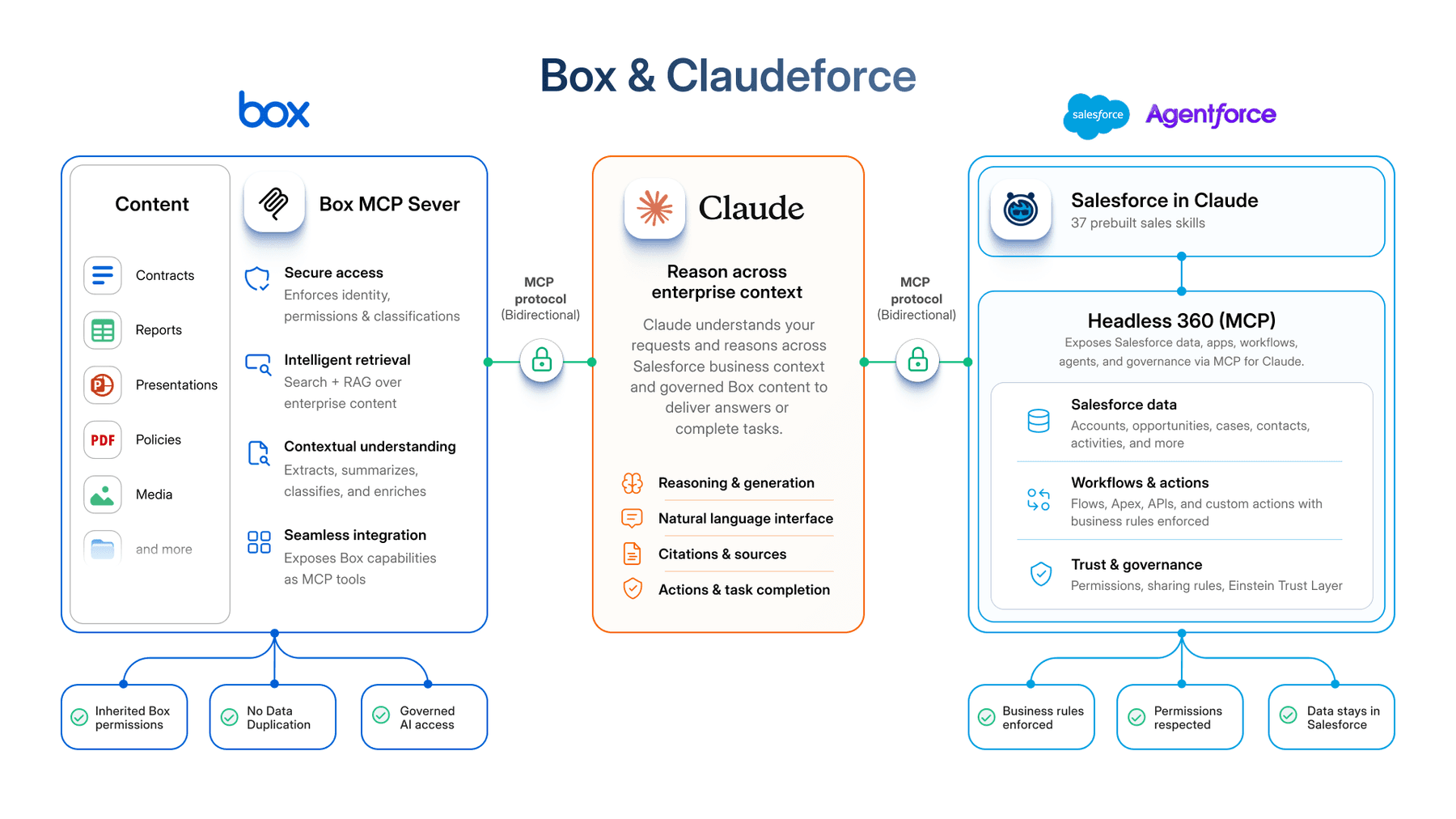
The Box and Claudeforce reference architecture
Here’s how the pieces fit together:
- Box brings content: The Box MCP Server gives Claude secure access to enterprise content, enforcing identity, permissions, and classifications while handling search, retrieval, extraction, and summarization.
- Salesforce brings business context: Through MCP, Salesforce exposes accounts, opportunities, cases, and other records, along with Flows, Apex, and custom actions, with sharing rules and the Einstein Trust Layer in force.
- Claude connects the two: Claude reasons across both sources, cites where its answers come from, and takes action to complete the task.
Files stay in Box and records stay in Salesforce. There’s no duplicating content into a separate index to make it usable by AI, and each system’s permissions carry through to every answer.
See it in action: from loan application to decision, faster
A loan decision is only as good as the documents behind it and the lending policies they're checked against. In Box's AgentExchange ecosystem demo, everything happens in Claude, right where users are already doing their work. Claude works through the loan file in Box, flags policy risks, validates terms, and prepares the approval package and letter. Teams move from application to decision faster, without switching apps, and with enterprise permissions and controls in place the whole way.
Box in Slack: context where the conversation is happening
Agents don’t fail because they lack capability. They fail because they don’t understand the business context. The context that makes agents useful for enterprise work lives across Slack conversations, Salesforce records, and the documents and contracts that teams have built up in Box over years, and those sources rarely talk to each other.
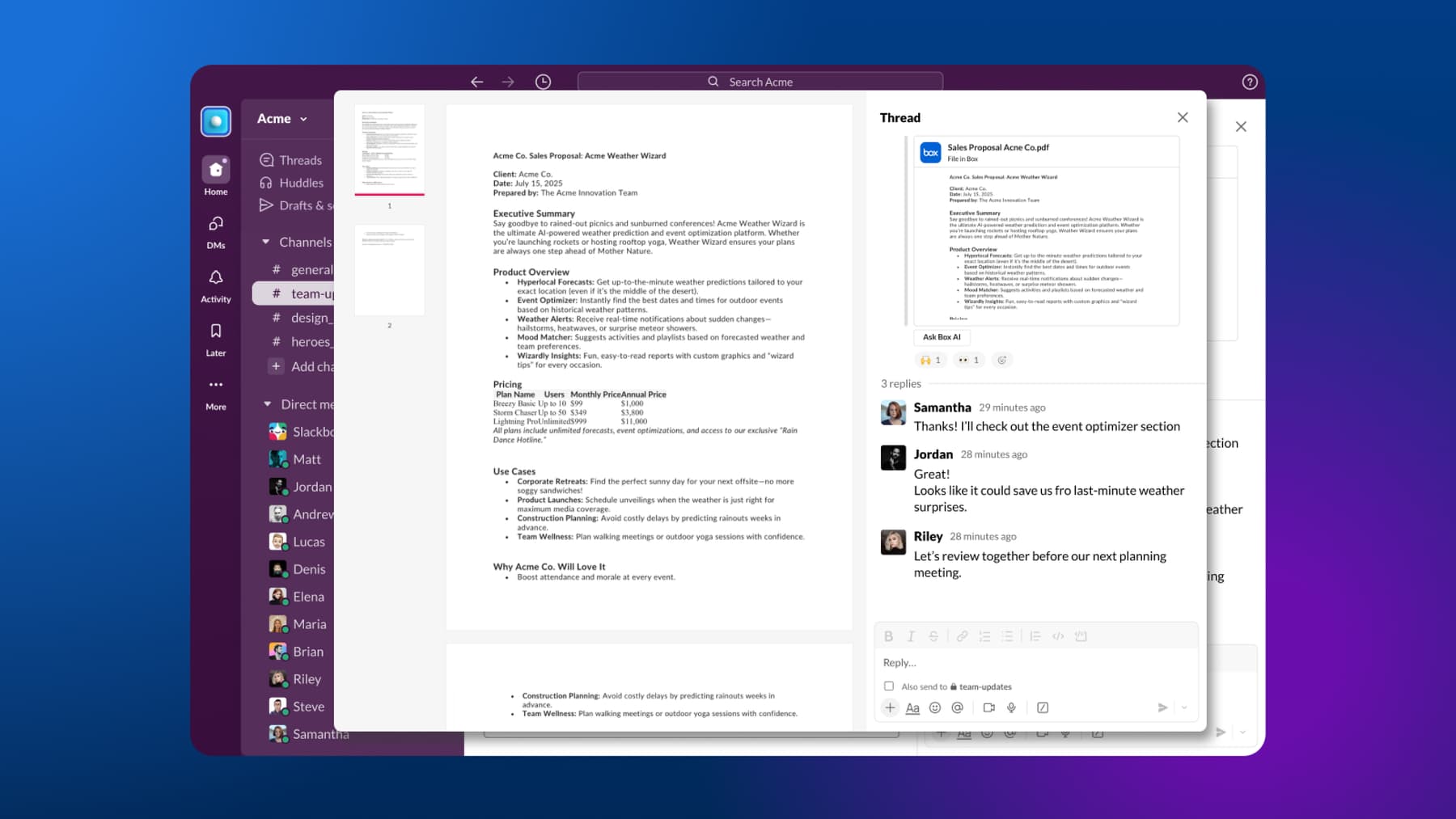
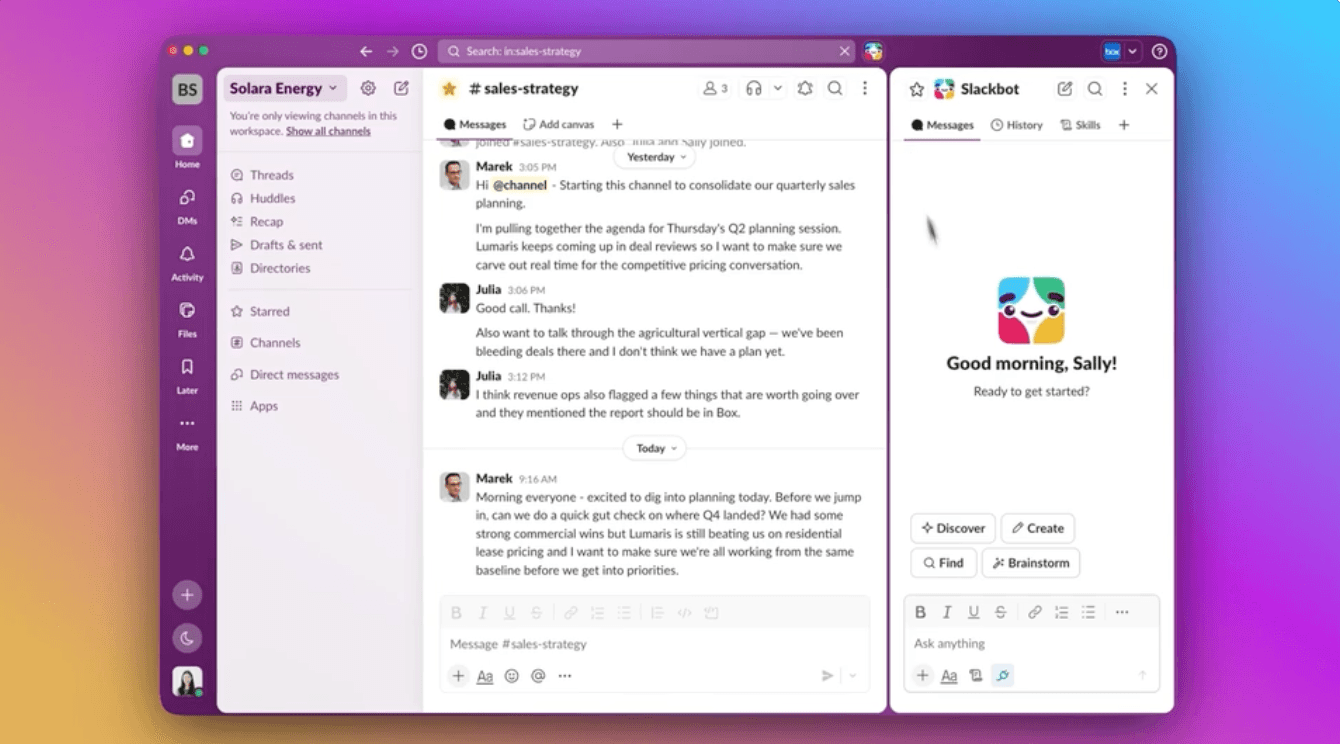
At Dreamforce we showed what changes when they do. Box and Slackbot work together to bring files and organizational context into Slack, so the information a team needs shows up where the work is already happening.
Box also works with Agentforce in Slack. Box brings the content and context, while Agentforce and Slack orchestrate the action. A question asked in Slack can reach across Box content, combine it with Salesforce data, and return an answer grounded in the full picture of the business, without anyone leaving the conversation.
Agentforce and MCP: governed content for every agent
AI agents can automate more meaningful work when they have access to not just the structured fields in a CRM record but the full business context, which often lives in documents stored in Box.
Grounding Agentforce in enterprise content
With Box for Agentforce, Salesforce agents can work with governed content stored in Box. This enables use cases such as:
- Reviewing warranty documents, inspection reports, and correspondence associated with a service case.
- Summarizing account and opportunity materials before a customer meeting.
- Extracting information from forms and supporting documents.
- Creating and organizing folders as part of a Salesforce workflow.
- Routing content and initiating downstream business processes.
Box provides prebuilt agent actions that help developers and administrators incorporate content operations and Box AI capabilities into Agentforce workflows.
Box for Agentforce is available on AgentExchange.
Box as the filesystem for AI
The next generation of enterprise applications will be built for people and agents working together. Those agents need a reliable content foundation: a place where files can be stored, governed, discovered, and used across applications and models.
That’s the role Box plays as the filesystem for AI. Box gives organizations a secure, headless content layer that AI agents can access through APIs, SDKs, and agent frameworks — including Salesforce Agentforce — without forcing content into every application that needs it.
With Box at the center, organizations can connect the models, applications, and agents that matter to their business while maintaining one governed source of truth for enterprise content. Files stay in Box, permissions remain in force, and agents can use the right information in the context of the work.
Open interoperability with the Box MCP Server
The Box Model Context Protocol (MCP) Server makes it easier for compatible AI clients and agents to interact with Box content using natural language. Agents can search for relevant files, retrieve content, and use Box AI capabilities while respecting existing permissions and governance policies. It’s the same server that connects Claude to Box content in the Claudeforce architecture above.
This reduces the need for every application or agent to build and maintain its own content retrieval and reasoning workflows. Instead, Box provides a consistent content layer that can support a growing ecosystem of AI experiences.
The foundation: governed content on every record
Native Box for Salesforce integration
The Box for Salesforce managed package brings Box content and capabilities directly into Salesforce Sales Cloud, Service Cloud, Experience Cloud, and Industry Clouds.
With Box for Salesforce, organizations can:
- Bring content to the record: Embed Box directly into Salesforce record pages so teams can view, preview, upload, edit, and organize files associated with Accounts, Leads, Opportunities, Cases, and other records.
- Automate content organization: Create corresponding Box folders when Salesforce records are created, apply consistent folder structures, and sync relevant Salesforce attributes into Box.
- Scale beyond native file storage: Store large files and content libraries in Box, helping organizations reduce their reliance on Salesforce file storage and support content that might exceed Salesforce upload limits.
- Apply Box governance: Protect content with Box permissions, access controls, retention policies, legal holds, classification, and compliance capabilities.
The result is a more connected experience; Salesforce remains the system of record for business processes, while Box manages the content those processes depend on.
Low-code automation with Salesforce Flow and Slack
Prebuilt Box actions for Salesforce Flow help administrators automate common content workflows without custom Apex development. Teams can create customer folders, manage access, trigger document processes, and notify stakeholders on Slack based on Salesforce events.
Streamlining document generation and e-signatures
Box Doc Gen and Box Sign for Salesforce
Agreements are central to sales, service, and legal workflows. With Box Doc Gen and Box Sign for Salesforce, teams can generate documents from Salesforce records, send them for signature, and track the whole process without leaving Salesforce.
- Generate documents from record data: Box Doc Gen merges Salesforce record data into templates stored in Box, producing contracts, NDAs, statements of work, and other documents in seconds, with no manual data entry.
- Go from draft to signature: Route generated documents for e-signature with Box Sign and track their status in real time.
- Standardize recurring workflows: Use reusable Box Sign templates across Salesforce objects and business processes.
- Keep signed documents connected: Store completed agreements in Box, where they remain governed alongside the rest of the organization’s content.
- Support unlimited e-signatures: Joint Box Enterprise and Salesforce customers can use Box Sign without per-envelope surcharges while maintaining secure audit trails.
Industry solutions built for the way businesses work
Box and Salesforce help organizations connect content to the industry workflows where it matters most.
- Public sector and government: Support citizen services, digital evidence management, intake workflows, and benefits processing with governed content and FedRAMP-compliant capabilities.
- Life sciences and healthcare: Manage clinical trial documentation, investigator packets, regulatory submissions, and other sensitive content across Salesforce and Box.
- Financial services and insurance: Streamline loan origination, KYC workflows, claims processing, and customer onboarding by connecting structured records with governed documents.
- Retail and commercial organizations: Bring contracts, account plans, product materials, and customer documentation into the workflows teams already use in Salesforce.
Looking ahead
AI agents will transform how work gets done — but only when they can access the right information securely and act within the context of the business.
Together, Box and Salesforce are helping organizations connect structured data with unstructured content, bring intelligence into everyday workflows across Agentforce, Slack and Claude, and build a more open, secure foundation for the agent-powered enterprise.
Learn more about Box and Salesforce here.