For years, the promise of artificial intelligence in business felt like a mirage — always shimmering on the horizon but never quite arriving. Companies invested in chatbots that could answer simple questions but crumbled the moment a conversation went off-script. They deployed automation tools that worked beautifully in demos but failed in the messy reality of actual workflows. The gap between what AI could theoretically do and what it actually delivered left many executives skeptical.
But that skepticism is now giving way to cautious optimism backed by real results. This shift isn’t happening because of a single breakthrough, but because several pieces of the puzzle are finally coming together. AI systems are no longer just answering questions. They’re completing tasks, coordinating with each other, and operating with a level of reliability that makes them genuinely useful in high-stakes business environments.
Recently I sat down with Gary Lerhaupt, VP of Product Architecture for Agentforce at Salesforce, to discuss how Salesforce is thinking about the new era of AI-powered workflows — and how the collaboration between the Box and Salesforce platforms is helping enterprises unlock the full potential of intelligent agents working together.
Key takeaways
- AI agents have evolved beyond brittle chatbots: Modern systems combine the reliability of structured workflows with the flexibility of generative AI
- The real breakthrough is multi-agent collaboration: Specialized AI agents working together can compress hours of work into minutes
- Open standards are enabling a new era of interoperability: Shared protocols allow AI agents from different vendors to communicate and coordinate
- Governance and trust are non-negotiable: Successful AI deployment requires giving IT teams full control over what agents can access and do
- AI agents augment rather than replace human judgment: Let the digital workforce handle routine tasks while humans focus on creativity, empathy, and strategy
From scripted responses to genuine reasoning
The evolution of AI in business has moved through distinct phases. Early chatbots were essentially decision trees dressed up in conversational clothing. They could handle predictable interactions, but anything unexpected sent them spiraling into unhelpful responses or awkward handoffs to human agents.
“We had these overly deterministic on-the-rails experiences that can deliver some amount of value through a chat-based experience,” explains Lerhaupt. “But ultimately they would hit the edges of what they were capable of. They were too deterministic, too brittle.”
The arrival of large language models introduced AI that could understand context, generate nuanced responses, and handle conversations that wandered into unexpected territory. But this creativity came with its own problem: unpredictability. A system that could improvise was also a system that could improvise poorly, making up information or taking actions that didn’t align with business rules.
The current moment represents a synthesis of these two approaches. Modern AI agents combine the reliability of structured workflows with the flexibility of generative AI. “We want to mix the determinism that we saw with bots with the capabilities and creativity of generative AI,” Lerhaupt says. “That’s very exciting for us, because it means we can get to that 100% reliability.”
When AI agents start talking to each other
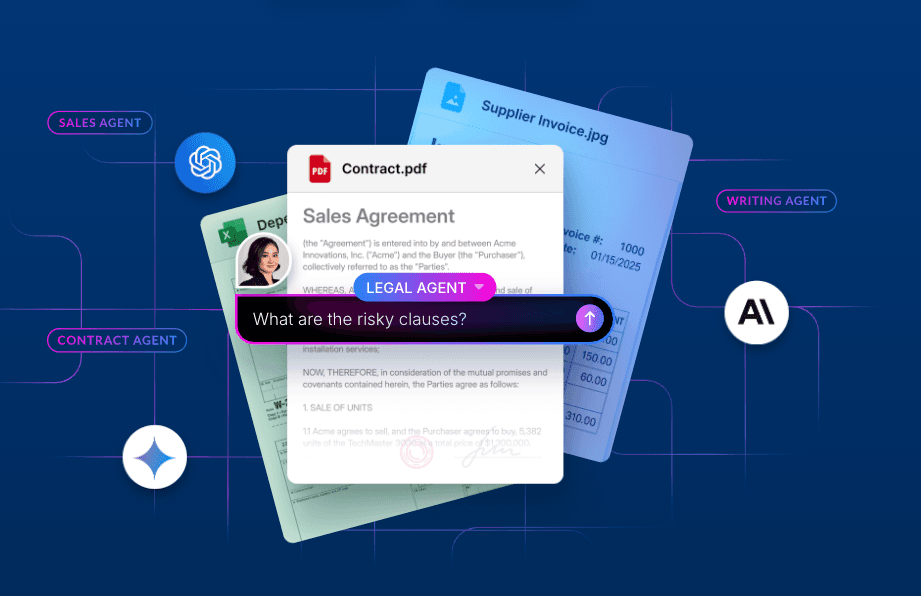
Perhaps the most significant development isn’t what individual AI agents can do. It’s what AI agents can do when they work together. Rather than building one massive system that tries to handle everything, companies are now deploying specialized agents that each excel at a specific task.
- A sales agent understands customer relationships and deal structures
- A document agent excels at analyzing contracts and extracting key information
- A compliance agent knows regulatory requirements inside and out
The magic happens when these specialists collaborate. My team has been working on exactly this kind of integration. The vision is straightforward: instead of forcing humans to shuttle information between different systems, let the AI agents coordinate directly.
Consider what this looks like in practice. A salesperson receives a request for a proposal that needs a response. Traditionally, this would mean hours of work — pulling information from the CRM, digging through past contracts stored in document management systems, consulting with colleagues about pricing and terms, and finally assembling everything into a coherent response.
With coordinated AI agents, the process compresses dramatically. “We built this use case together of doing an analysis of an RFP,” Lerhaupt describes. “We’re able to orchestrate and do something together with our agents such that we could look at that RFP, analyze it, and come to a response in just minutes.”
The AI generates a first draft and surfaces relevant information, but a person reviews, refines, and ultimately approves the final response.
The key insight is that humans remain central to the process. The AI generates a first draft and surfaces relevant information, but a person reviews, refines, and ultimately approves the final response. “You want to bring that back to the human,” Lerhaupt emphasizes. “An employee can affect this multi-agent orchestration and then start from that rough draft, build it out, hone it over time.”
The infrastructure that makes it possible
Behind the scenes, a quiet but crucial development is enabling this new era of AI collaboration: the emergence of open standards for how AI agents communicate with each other. Just as the internet required common protocols for computers to exchange information, AI agents need shared conventions for working together.
Two foundational protocols have emerged in the agent ecosystem: the Model Context Protocol (MCP) and the Agent2Agent Protocol (A2A). MCP focuses on expanding what individual agents can do by connecting them to new data sources and capabilities, while A2A addresses how agents collaborate — by breaking complex goals into discrete tasks that can be distributed among specialist agents.
“Protocol acronyms aside, what we need in order to work together is the ability to speak a similar language, to be able to understand similar conventions,” Lerhaupt explains. “It’s the same effective situation here just now with agents.”
What makes this particularly significant is that these standards are being developed in the open, governed by industry coalitions rather than any one company. This matters because it prevents the kind of vendor lock-in that has frustrated enterprises for decades; when standards are open, companies can mix and match solutions from different providers, choosing the best tool for each job rather than being forced into a single ecosystem.
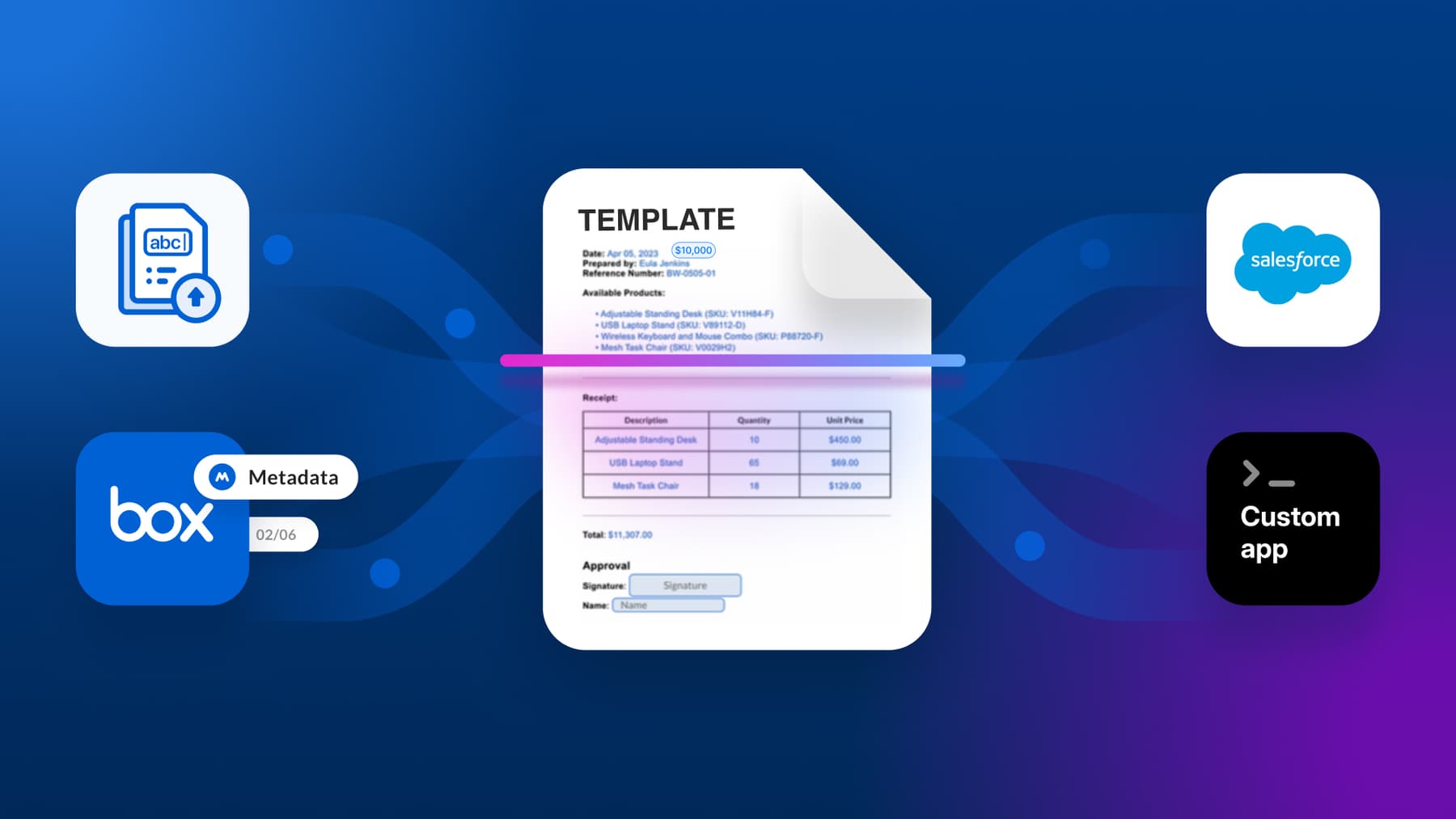
Box has embraced this open approach, building integrations that allow Box AI to serve as a specialized content intelligence agent within broader workflows. When a Salesforce agent needs to understand what’s in a contract, analyze a proposal, or retrieve information from unstructured documents, Box AI can handle that task and return the results — all without requiring users to leave their workflow.
Trust is still the foundation
For all the excitement about AI capabilities, the conversation among technology leaders increasingly centers on governance and trust. When AI agents can take actions — not just provide information — the stakes rise considerably. A system that can update customer records, generate contracts, or initiate workflows needs to operate within carefully defined boundaries.
“It’s all about governance,” Lerhaupt says. “We want this open ecosystem approach where people can bring whatever it is that they trust, but we do that by keeping admins in control.”
This means giving IT teams visibility into exactly what AI agents are doing, which tools they can access, and what decisions they’re making. It means building audit trails that can explain why an agent took a particular action. And it means creating testing environments where new capabilities can be validated before they touch production systems.
The companies that succeed with AI agents won’t necessarily be the ones that deploy the most sophisticated technology; they’ll be the ones that build the organizational muscle to govern these systems effectively, treating AI agents not as magic solutions but as powerful tools that require thoughtful oversight.
What comes next
The trajectory is clear: AI agents will become increasingly capable, increasingly specialized, and increasingly interconnected. The question for business leaders isn’t whether to engage with this shift, but how to do so thoughtfully.
The most promising approach treats AI agents as members of a digital workforce — valuable contributors that augment human capabilities rather than replacing human judgment. The goal isn’t to automate people out of the picture, but to free them from routine tasks so they can focus on work that requires creativity, empathy, and strategic thinking.
“If we can bring agents together with other agents, what are the business processes that we can then deliver?” Lerhaupt reflects. “I start to think about the ROI we’re capable of delivering with these agents and their specialized skills across wider domains.”
The AI revolution that was promised for so long is finally arriving, not with a single dramatic announcement, but through the steady accumulation of practical capabilities that solve real problems. For organizations willing to invest in the infrastructure, governance, and cultural change required to use these tools effectively, the opportunity is substantial.
You can watch the full episode below and learn more about the Box/Salesforce integration here.