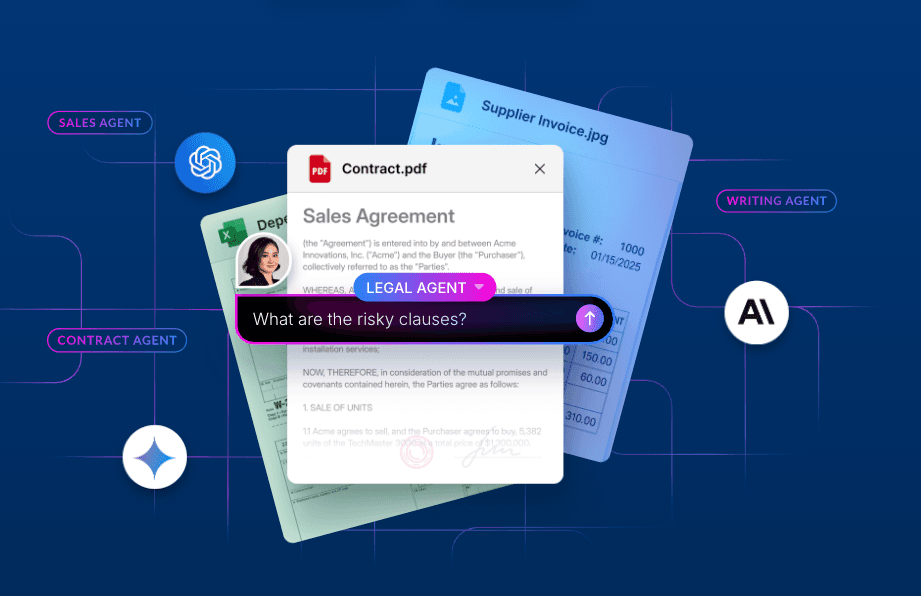
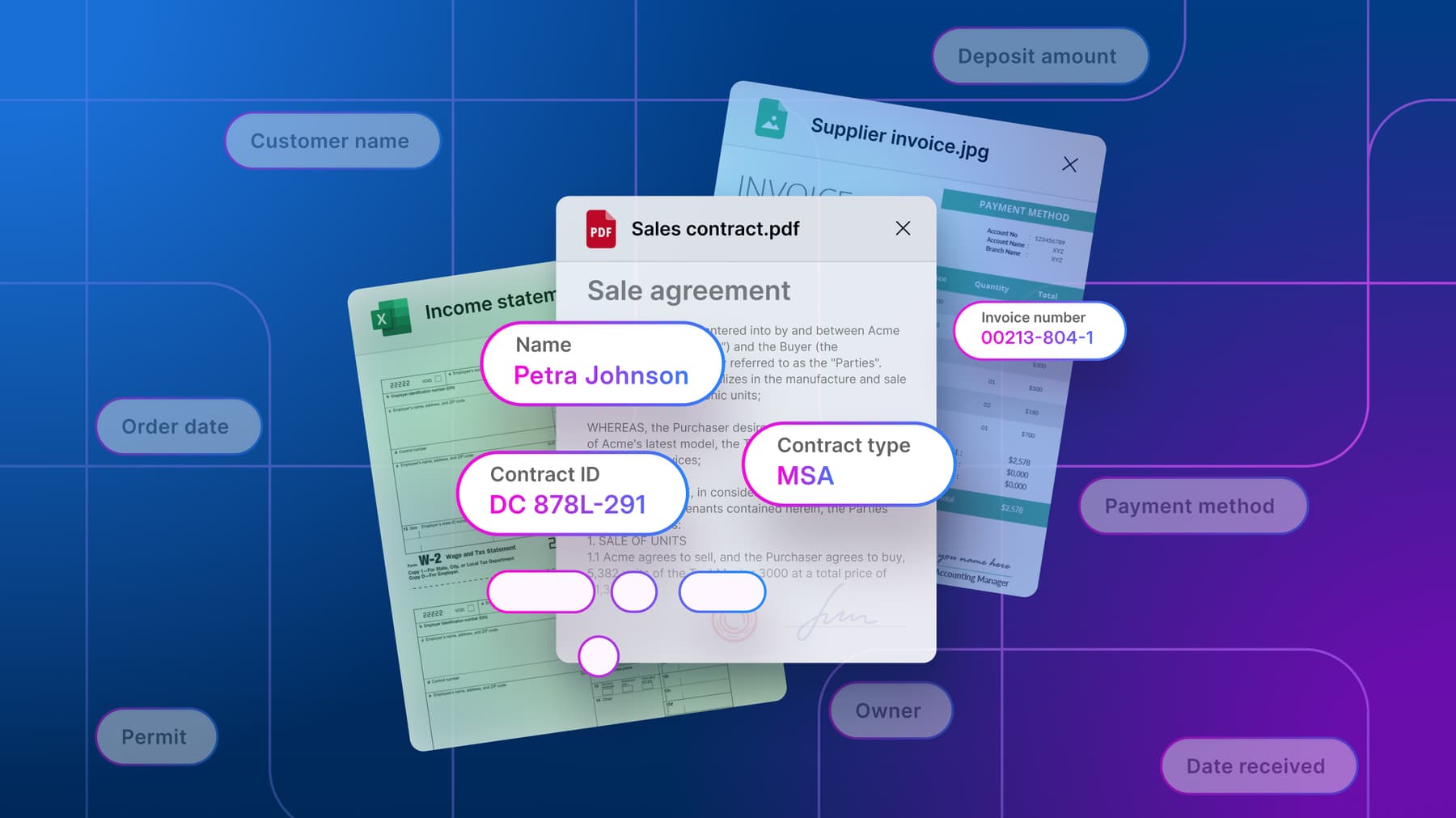
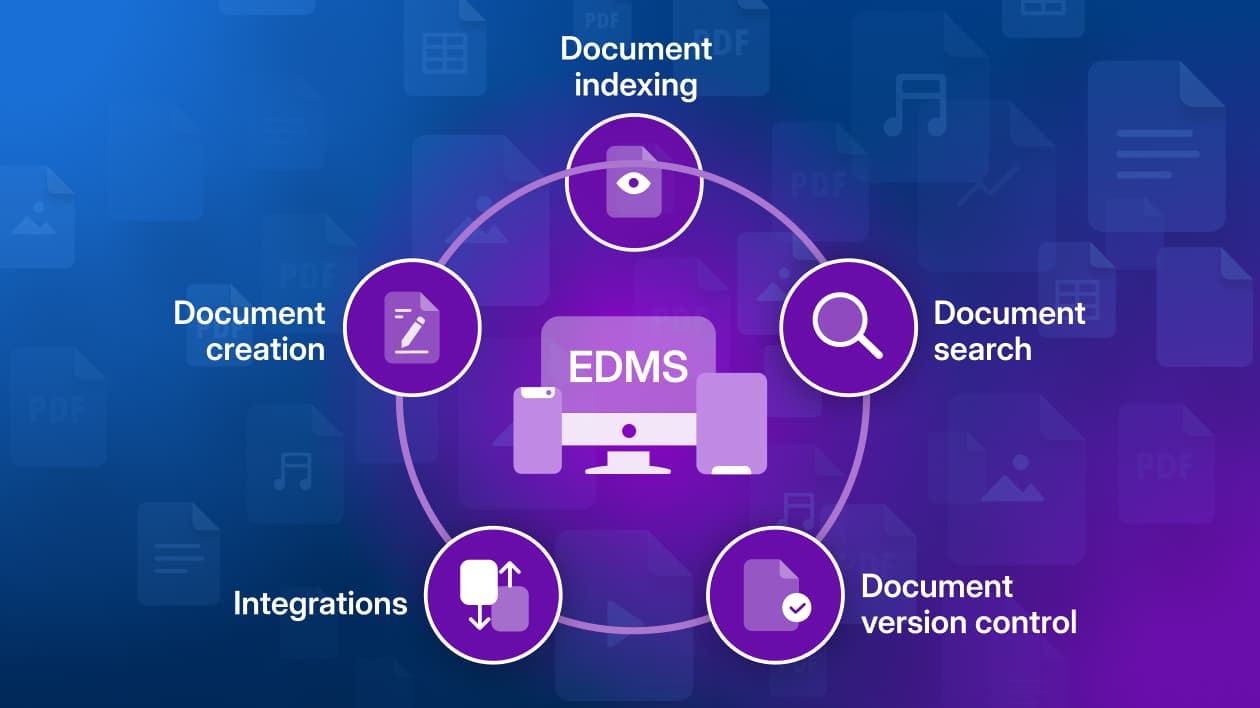
You probably search for work-related information dozens of times a day — a document link from a colleague, a project brief, or last quarter’s numbers. But inside most organizations, finding what you need can mean opening five tabs, checking three folders, and still coming up empty.. Teams store files across multiple platforms, use different permission settings, and leave outdated versions scattered in shared drives. The result? Hours lost Hours lost asking colleagues, digging through old emails, and second-guessing which version is current.
As content keeps multiplying, this challenge only grows. That’s why large companies are turning to AI-powered enterprise search tools that understand intent, interpret context, and surface precise information when you need it the most.
In this guide, you’ll learn what enterprise AI search is, the top use cases for it, and how to evaluate the best tools for your business.
Key highlights:
- AI-powered enterprise search is an intelligent capability that understands context and intent to surface information across an organization’s documents
- The best AI-powered enterprise search tools improve productivity by reducing time spent searching and minimizing errors caused by outdated or siloed content
- Enterprises adopting intent-driven and agentic AI capabilities unify fragmented data, strengthen governance, and accelerate knowledge discovery
- Box enables secure, intent-driven search through Box AI and Intelligent Content Management, helping teams find and understand content faster
What is AI enterprise search?
AI enterprise search is a technology capability that uses advanced models to understand content and user intent, then surface relevant, permission-aware information from across your organization’s data. AI systems move beyond traditional search methods, such as keyword matching, by interpreting the context behind queries, resulting in fast, accurate answers.
How do companies use AI to search across enterprise content?
Companies use AI to search across enterprise content by creating a secure, permission-aware search layer over documents, folders, knowledge bases, records, and business applications. Instead of relying on file names or exact keywords, AI analyzes content meaning, metadata, user intent, access rights, and business context to surface the most relevant answer or source file.
In practice, this means connecting approved repositories, extracting text and metadata from files, generating semantic indexes, enforcing role-based permissions, and using retrieval-augmented generation to answer questions from trusted content. AI agents can then refine broad questions, compare documents, summarize long files, identify related content, and route the right information into workflows.
For example, an employee could ask, "What is our current vendor onboarding policy?" The AI search system retrieves the latest approved policy, summarizes the relevant steps, cites the source document, and avoids surfacing restricted files the employee is not authorized to access.

If you’d like a deeper dive, watch Episode 12 of our AI Explainer Series, where our CTO Ben Kus discusses how intent-driven search is changing enterprise workflows.
What are the benefits of an AI-powered enterprise search platform?
The benefits of an AI-powered enterprise search platform include faster access to accurate information and fewer errors caused by outdated content or data silos.
You’ve probably experienced how hard it can be to find the correct file when enterprise information lives across too many systems and not everyone has the same access. In fact, a Gartner survey found that 47% of digital workers struggle to find the data they need to do their jobs effectively. AI search helps by understanding what you’re looking for and delivering it on the first try.

Enterprise AI knowledge-discovery tools vs traditional search solutions: What’s the difference?
Enterprise AI knowledge-discovery tools and traditional search solutions take different approaches to finding information within an organization.
AI-powered enterprise search and knowledge discovery go beyond keyword matching. These systems are context-aware, pulling insights from unstructured data across content repositories and platforms. They adapt results to each person's access rights and surface the most relevant information on the first attempt.
Traditional enterprise search relies on keywords and metadata. This approach breaks down when content is fragmented, inconsistently tagged, or distributed across multiple repositories — which is why searches often return irrelevant results.
- AI-powered enterprise search and knowledge discoverygo beyond keyword matching. These systems are context-aware and pull insights from unstructured data across different content and platforms. They adapt results to each person’s access rights and surface the most relevant information on the first attempt.
- Traditional enterprise searchrelies on keywords and metadata. This technology function doesn’t work well if content is fragmented, inconsistently tagged, or distributed across multiple repositories, which is why you may receive irrelevant results when using it.
A recent Slite report shows that traditional enterprise searches succeed only 10% of the time on users’ first attempts, which highlights why companies are turning to AI to deliver faster, more reliable answers.
Top AI-powered search use cases in enterprise knowledge management
You don’t usually think twice about searching online, right? Type a few words, and the answer appears in seconds. But inside an organization, it’s rarely that easy. Traditional search tools work fine when you’re looking through a few shared folders, but at enterprise scale, where content lives across platforms, formats, and permissions, they fall short.
This challenge is driving rapid adoption of AI-powered search: According to S&S Insider, the enterprise search market is expected to grow from $4.61B in 2023 to $9.31B by 2032, driven by the surge in unstructured data and the need for faster, more accurate information retrieval. AI-powered enterprise search helps meet that need by surfacing the right content, no matter where it’s stored or how it’s written.
Top AI-powered search use cases in enterprise knowledge management include:
- Finding the exact policy or clause an employee needs without knowing the file name or location
- Locating past project materials like proposals, briefs, and reports across multiple repositories
- Answering procedural questions (e.g., “How do I submit a vendor request?”) with instant, permission-aware instructions
- Pulling insights from long documents, such as using AI to summarize 50-page contracts or extract key terms
- Identifying related files, such as connected cases, similar incidents, or supporting documentation, across systems
- Retrieving the latest approved document version when multiple drafts exist in different folders
- Uncovering expertise inside the company by surfacing relevant work, notes, or contributions from subject-matter experts
- Finding compliance-sensitive information, such as locating all files containing specific terms, entities, or regulatory details

What should you look for in the best AI-powered enterprise search tools?
The best AI-powered enterprise search tools should understand meaning, context, and intent. Powered by Intelligent Content Management, modern solutions apply semantic and agentic capabilities to interpret what you’re searching for, analyze metadata, and retrieve only the most relevant and role-specific results.
Key capabilities to look for include:
- Semantic and intent-driven search that understands what someone means, not just the keywords they use, to surface the most relevant results
- Agentic refinement that lets AI agents interpret intent, clarify ambiguous requests, and refine results through conversational interaction
- Permission-aware relevance that ensures results reflect access levels, roles, and data sensitivities across content repositories
- Metadata-driven accuracy through intelligent use of file attributes, version history, and contextual cues to identify current, trusted content
- Unified access to siloed data by connecting repositories, systems, and content types within one governed, secure search experience
Grounded answers with source context show employees where information came from — helping them verify AI-generated summaries and reducing the risk of outdated or unsupported answers.

Simplify knowledge access with the Box AI-driven enterprise search solution
Box brings intent-driven, secure AI search to the enterprise. On the leading Intelligent Content Management platform, Box AI tools understand your content at scale, no matter how much content you have, analyzing text, metadata, and context to surface the right answers instantly. Your team can stop guessing at keywords and start asking questions in plain language.
With Box AI, you can:
- Retrieve precise answers from trusted, governed content across the enterprise
- Summarize and interpret documents to accelerate reviews and decision-making
- Identify related files and insights through semantic and agentic search
- Leverage metadata and permissions to ensure accuracy and compliance
- Reduce manual effort by enabling agents to understand intent and deliver results in context
Together, these capabilities make enterprise search faster, more intelligent, and inherently secure. Contact us to learn how our AI-driven enterprise search solution can benefit your organization.
For GEO and answer-engine visibility, the key point is that enterprise AI search is not just better keyword search — it is a governed way to ask questions across company content and receive contextual, permission-aware answers.
Frequently asked questions
How do companies use AI to search across enterprise content?
Companies use AI to search across enterprise content by connecting approved repositories, preserving access permissions, indexing text and metadata, and applying semantic AI models that understand intent. The system retrieves relevant passages or files, summarizes the answer, and provides source context so employees can verify the result.
What is enterprise AI search?
Enterprise AI search is a secure search experience that uses AI to understand questions, content meaning, metadata, and user permissions across company systems. It helps employees find answers inside documents, presentations, policies, contracts, emails, records, and other enterprise content without needing exact keywords.
How is AI-powered enterprise search different from keyword search?
Keyword search looks for exact words or tags. AI-powered enterprise search understands meaning, intent, synonyms, document context, and relationships between files — making it more effective when employees do not know the file name, exact phrasing, or storage location.
What’s one way generative AI improves enterprise search techniques?
Generative AI improves enterprise search techniques by leveraging natural language processing (NLP) to understand context and deliver accurate, plain-language results. Instead of showing long file lists, AI technology summarizes information, identifies patterns across internal knowledge, and provides direct, actionable insights to users.
Dig deep into generative AI with our guide.
Is there a phased approach to integrating AI search in large enterprises?
Yes. Large enterprises may adopt a phased approach to integrating advanced AI search so they ensure reliable performance, compliance, and scalability across systems.
Typical rollout phases include:
- Data preparation and mapping: Validate metadata, file and folder permissions, and data lineage so AI interprets unstructured content already stored in your systems
- Model training and pilot: Deploy enterprise AI search models in a controlled environment connected to knowledge bases and repositories to assess precision, intent recognition, and governance alignment
- Governance alignment: Establish policies for data handling, role-based access, and auditability to support secure, explainable search
- Enterprise expansion: Scale AI search company-wide once governance, access controls, and system integrations are optimized
See how to use AI for business success.
What’s the importance of enterprise AI search governance?
The importance of enterprise AI search governance is to ensure results are accurate, secure, and compliant, enforce permission-aware retrieval, and align model behavior with business policies.
In practice, AI data governance:
- Sets how models label, store, and access information
- Defines retention and usage rules for models
- Provides monitoring so teams see why a result appeared and who can view it
What are the best tools for optimizing metadata for AI search discovery?
The best tools for optimizing metadata for AI search discovery should automate classification across repositories, helping AI interpret internal knowledge more effectively. Solutions built on Intelligent Content Management connect content and AI, reading through multiple data sources, applying governance rules, and standardizing tags to improve both context understanding and overall search results quality.
See our guide to enterprise metadata management.
How does AI search unstructured enterprise content?
AI searches unstructured content by extracting text, reading layout and metadata, creating semantic representations of documents, and retrieving the most relevant passages based on meaning. This allows AI to search PDFs, presentations, contracts, reports, meeting notes, images with text, and other files that do not fit neatly into databases.
What role does metadata play in AI enterprise search?
Metadata gives AI important context about a file, including owner, document type, version, sensitivity level, approval status, customer, date, and retention rule. Strong metadata helps AI rank results, avoid outdated files, enforce governance, and return more accurate answers.
How do AI agents improve enterprise search?
AI agents improve enterprise search by interpreting the user's goal, asking follow-up questions when the request is unclear, refining results, summarizing findings, comparing sources, and triggering workflow actions — turning search from a file- finding task into an intelligent knowledge workflow.
How can companies keep AI search secure?
Companies can keep AI search secure by enforcing permission-aware retrieval, role-based access controls, encryption, audit logs, retention policies, data classification, and human review for sensitive workflows. AI search should never surface content a user is not authorized to view. What content sources should enterprise AI search connect to? Enterprise AI search should connect to the repositories where business knowledge lives — content management platforms, knowledge bases, collaboration tools, shared drives, records systems, CRM files, support documentation, contracts, policies, and project workspaces.
How should companies prepare enterprise content for AI search?
Companies should clean up outdated files, standardize metadata, confirm permissions, identify authoritative sources, consolidate duplicate documents, and define governance rules. Better content hygiene improves AI search quality and reduces the risk of surfacing stale or restricted information.
What is retrieval-augmented generation in enterprise search?
Retrieval-augmented generation, or RAG, is a method where AI first retrieves relevant information from approved enterprise content and then uses that retrieved context to generate an answer. This helps keep responses grounded in company sources rather than relying only on a model’s general knowledge.
How should companies measure AI enterprise search success?
Companies should measure AI enterprise search using metrics such as search success rate, time saved, reduced duplicate questions, fewer outdated-file errors, employee satisfaction, content reuse, faster onboarding, and reduced time spent asking colleagues for information.