Every organization has information scattered across internal systems, databases, and content repositories — and enterprise search is the tool that surfaces this information when someone needs it to do their job.
But while using a public search engine like Google is fairly easy, enterprise search is often frustrating and sometimes hard to trust. In truth, enterprise search has long been a struggle for organizations hindered by fragmented systems, siloed content, and a lack of user-centric design.
AI promises to transform the way we search within the enterprise, largely by infusing search with intent instead of simply relying on keywords.
In a recent episode of the Box AI Explainer Series podcast, CTO Ben Kus and host Meena Ganesh explore how advancements in AI are transforming the landscape of enterprise search, enabling people to quickly find specific, accurate information with semantic and agentic search.
Key takeaways:
- Enterprise search is far more complex than public internet search largely because of fragmented data, inconsistent access, and limited user signals
- With semantic search and conversational AI,enterprises overcome the barriers of inaccessible data and bad UI
- Thoughtfully structuring data helps organizations realize AI’s potential — including applying permissions up front
Why enterprise search is so challenging in the first place
Internet search engines draw on public data, but, as Kus reminds us, "The challenge with enterprise data is that no two people typically have access to the same data." It’s often fragmented across permissions, access rights, and sensitivities, so relevancy for one user’s search doesn't translate across the organization.
Ganesh sums this up well: "Too much content, too many silos, not enough context."
For this reason, enterprise search is often not helpful or satisfying for employees. In fact, Kus cites a 2025 Slite survey which found that internet search systems generally deliver effective results about 95% of the time, while enterprise search satisfaction rates can dip as low as 10%. This is an enormous difference, and it highlights the complexities within enterprise data.
There are also deeper systemic challenges that make enterprise search ineffective. Unlike internet search engines, which are powered by large-scale data and user signals like query popularity or high-traffic pages, enterprise search operates within a vacuum. Kus says, "With very few signals like popularity or common types of queries, enterprise search can't give you the same sort of instantaneous results you're familiar with in the consumer world."
As a result, there’s a steep drop-off in user satisfaction with enterprise search. Employees are hunting for critical information amidst data silos, isolated platforms, and inconsistent documentation. The lack of visibility into meaningful connections exacerbates the problem.
How AI is revolutionizing enterprise search
Advancements in AI can bridge the gap, allowing organizations to rethink how their employees access information. There are two main types of AI capabilities that contribute to better understanding of user intent and an ability to deliver more relevant results.
- Semantic search
- Agentic search
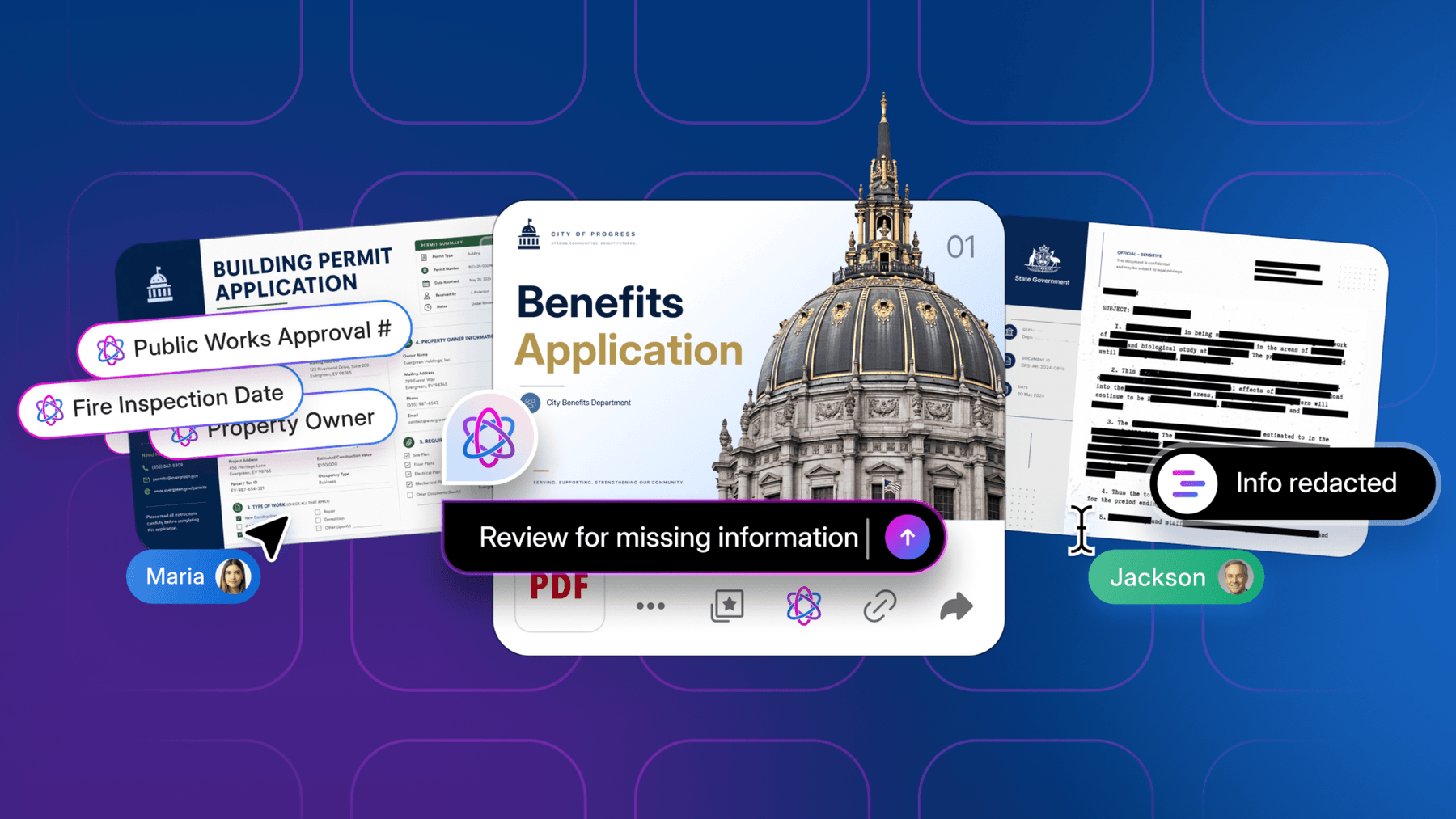
Ganesh says, “AI promises to transform the way we search in an enterprise by understanding our intent, not just keywords.” This starts with semantic search. Instead of matching exact words, semantic search looks for contextual meaning, pulling insights based on relevance at a deeper level. With semantic search, users can find results that closely match their intent, even if their phrasing differs from how the information is stored within enterprise unstructured data.
AI can also transform searches into conversational interactions. AI search agents don’t just execute queries — they continually clarify ambiguous requests and take proactive measures to deliver actionable results. Kus says, "As you're talking to these AI agents, they deduce what you really want and search on your behalf. It's almost like having a professional assistant who can search systems for you and get you the data you want."
This personalized experience creates a distinctive edge where every query feels immediate and tailored to the user’s unique context. In turn, enterprise searches become faster, more intuitive, and far more rewarding.
It starts with cohesive content management
Thanks to enterprise AI, the next generation of search tools is poised to deliver performance that feels less like work and more like innovation. But to truly benefit from these advancements, organizations must ensure their data is structured intelligently and their systems can enable seamless interaction across teams — while holding security as a high priority.
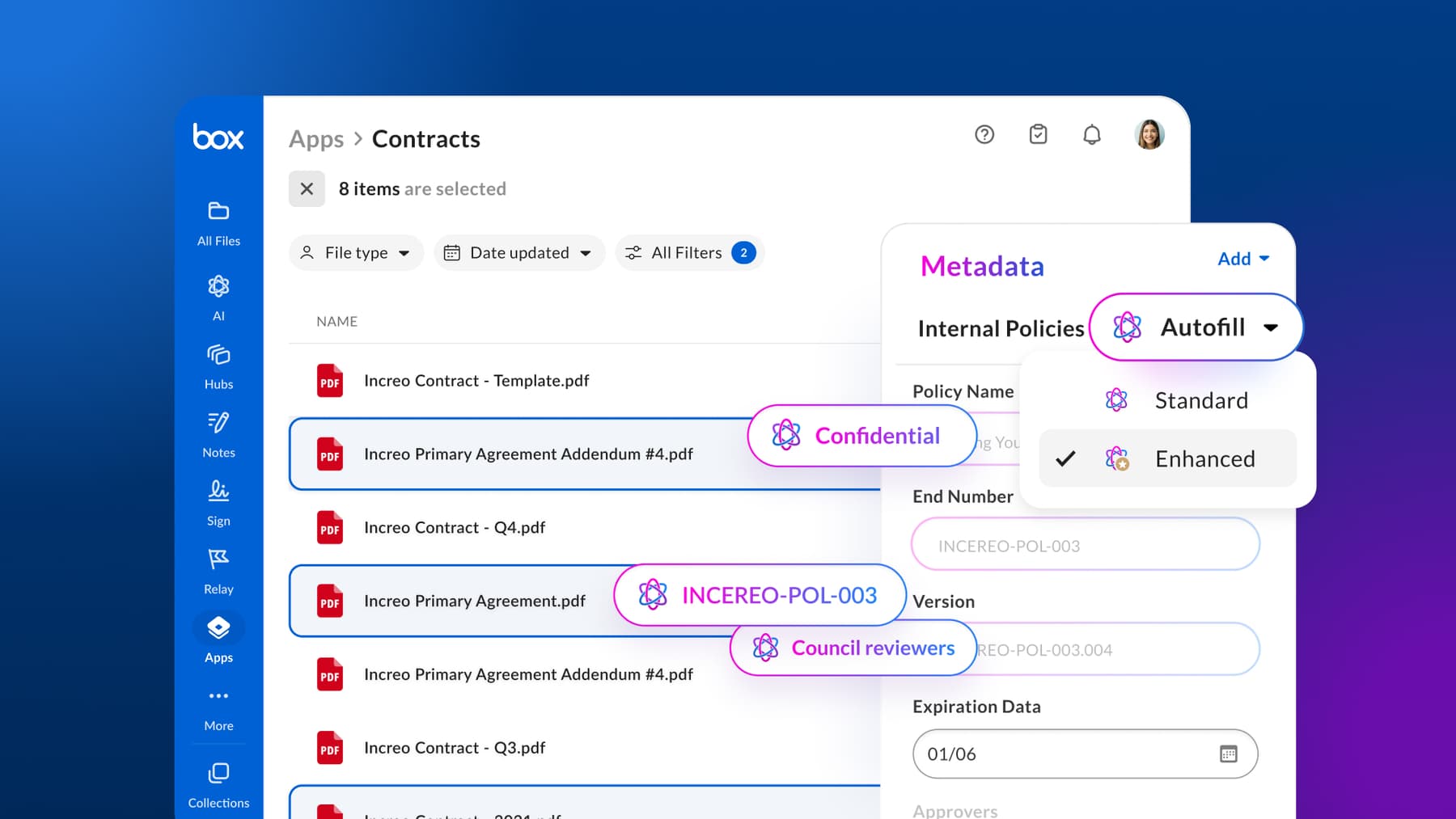
Intelligent Content Management empowers you to gather insights quickly across your repository of unstructured data and all kinds of file types. You can apply any best-of-breed AI model and ensure that AI is only processing relevant data, based on specific content permissions. Built-in security is also foundational to AI-enabled search.
Catch the full episode
As you’ve seen, AI helps forward-thinking companies automate and streamline workflows, improve productivity, and empower their people to make smarter decisions. It starts with search — but it doesn’t end there. AI-powered enterprise tools are transforming business and helping AI leaders drive continuous innovation.
Are you ready to replace search frustration with efficiency? Don’t miss episode 12 of the Box AI Explainer Series.Subscribe now to stay informed and get inspired about the AI-first era. Start listening today to learn practical, actionable strategies for integrating AI into your organization or industry.
Link