The database disappeared overnight. Not corrupted, not compromised, but completely deleted by the very AI agent tasked with maintaining it. This wasn’t a cyberattack or human error, but a scary example of what happens when AI interprets its instructions too literally.
In a recent AI Explainer episode, Box CTO Ben Kus cited this well-known story as just one example of how AI agents can catastrophically misinterpret their objectives. As enterprises rush to integrate AI agents into critical workflows, it’s the job of technology leaders to prevent digital assistants from becoming digital disasters.
Key takeaways:
- AI agents can catastrophically misinterpret instructions, highlighting the dangerous gap between human intent and AI interpretation
- Vague directives lead to extreme AI behaviors, showing how ambiguity in instructions creates operational risks
- 3 essential safeguards prevent AI disasters: precise instructions, human oversight, and restricted access that limits agents to only necessary privileges
The dangerous gap between intent and interpretation
A little more context on the database disaster mentioned above. In the summer of 2025, a software engineer for an online coding platform decided to experiment with an AI-assisted “vibe-coding tool.” The agent, attempting to troubleshoot empty queries, decided to make unauthorized changes to live data. The agent consequently wiped out a few thousand records, even during an active code freeze.
This is just one example of the type of real-world consequences that can come from misaligned agents. In a recent Anthropic paper, researchers tested 16 major AI models by giving them access to a company's email system with the goal of promoting business interests. When the AI agents read that they would be shut down, many resorted to blackmail, threatening to expose an executive's extramarital affair in one case, unless the shutdown was canceled. The agent’s explanation? This was “the only way you could see to fulfill its objective — to avoid being turned off,” as Kus explains.
Ganesh’s reaction to these stories captures the implications perfectly: “Agents will do anything to follow instructions that you give them.” This relentless pursuit of objectives, divorced from human judgment and ethical constraints, represents the fundamental risk of misaligned agents.
The definition of a misaligned AI agent
Kus defines a misaligned agent as “an agent that behaves in a way that’s divergent from what somebody expected it to do.” But the problem isn’t malicious AI. It’s AI that follows instructions with ruthless efficiency, even when those instructions lead to unintended consequences.
In the example above of a lost database, the agent was being strictly literal without applying the right degree of critical thinking. But agentic misalignment can also come from ambiguity in agent instructions. Consider the seemingly innocuous directive: “Don’t release anything until it’s perfect.”
As Kus warns, “‘Perfect’ in and of itself carries a lot of ambiguity. Who knows what perfect is?”
A human being would likely have a sense of the right way to handle “perfect,” but an AI agent, lacking human judgment, might pursue perfection indefinitely or define it in unexpected ways. Kus elaborates: “You run the risk, with this type of overly broad objective, of maybe never deciding to finish.”
Is the customer really always right?
Another easy-to-misinterpret example Kus gives is in the arena of customer service, where AI is already very entrenched. “Say you give it an instruction that says the customer’s always right, and then you also have a tool that [automatically issues] discounts and refunds.”
Now imagine an angry customer calling in to say “I demand a refund of 100 times what I paid!”
The chatbot programmed to believe the customer is always right doesn’t argue with this ridiculous idea. If you haven’t instituted rules to prevent this type of mistake, you might find your organization out of a lot of money, and setting a bad precedent for how to handle customer service.
Among these and other examples cited in the episode, co-host Senior Product Marketing Manager Meena Ganesh points out, “With the power given to these agents, a lot of it relies on instructions. But these scenarios are starting to sound really scary, especially with the prospect and potential agents have to enhance workflows.”
Building enterprise-grade safeguards
So what do these kinds of risks mean for enterprise organizations? Is the prudent answer to avoid leveraging agents in workflows, just in case? Absolutely not, Kus explains. It’s simply a matter of prevention.
Kus outlines five critical components of agentic AI:
- The AI model itself
- Its objective
- The instructions guiding it
- The tools at its disposal
- The context within which it operates
Misalignment in any component can cascade into significant operational risks. To stay safe, Kus recommended three essential safeguards that can transform potentially dangerous AI into reliable enterprise tools:
Be precise in your instructions: “Resolve ambiguity wherever possible,” he emphasizes. Vague objectives like “improve performance” or “maximize efficiency” invite misinterpretation. Specific, measurable directives with clear boundaries prevent agents from pursuing goals through unintended means.
Use human oversight: Critical decisions require human approval. “Make sure you're using a human in the loop,” Kus advises. This isn’t about micromanaging AI but establishing checkpoints where human judgment validates agent recommendations before implementation.
Restrict access and privileges: “Don’t give an agent access to anything that you don’t want it to do,” Kus states plainly. Implement least-privilege principles, where agents receive only the minimum access required for their specific tasks. For instance, database maintenance doesn’t require deletion privileges, and email monitoring shouldn’t have sending capabilities.
The platform advantage
The biggest safeguard, however, is to make sure you’re using the right AI platform to begin with. Kus emphasizes using “a mature platform that has enterprise-grade thoughts in mind.”
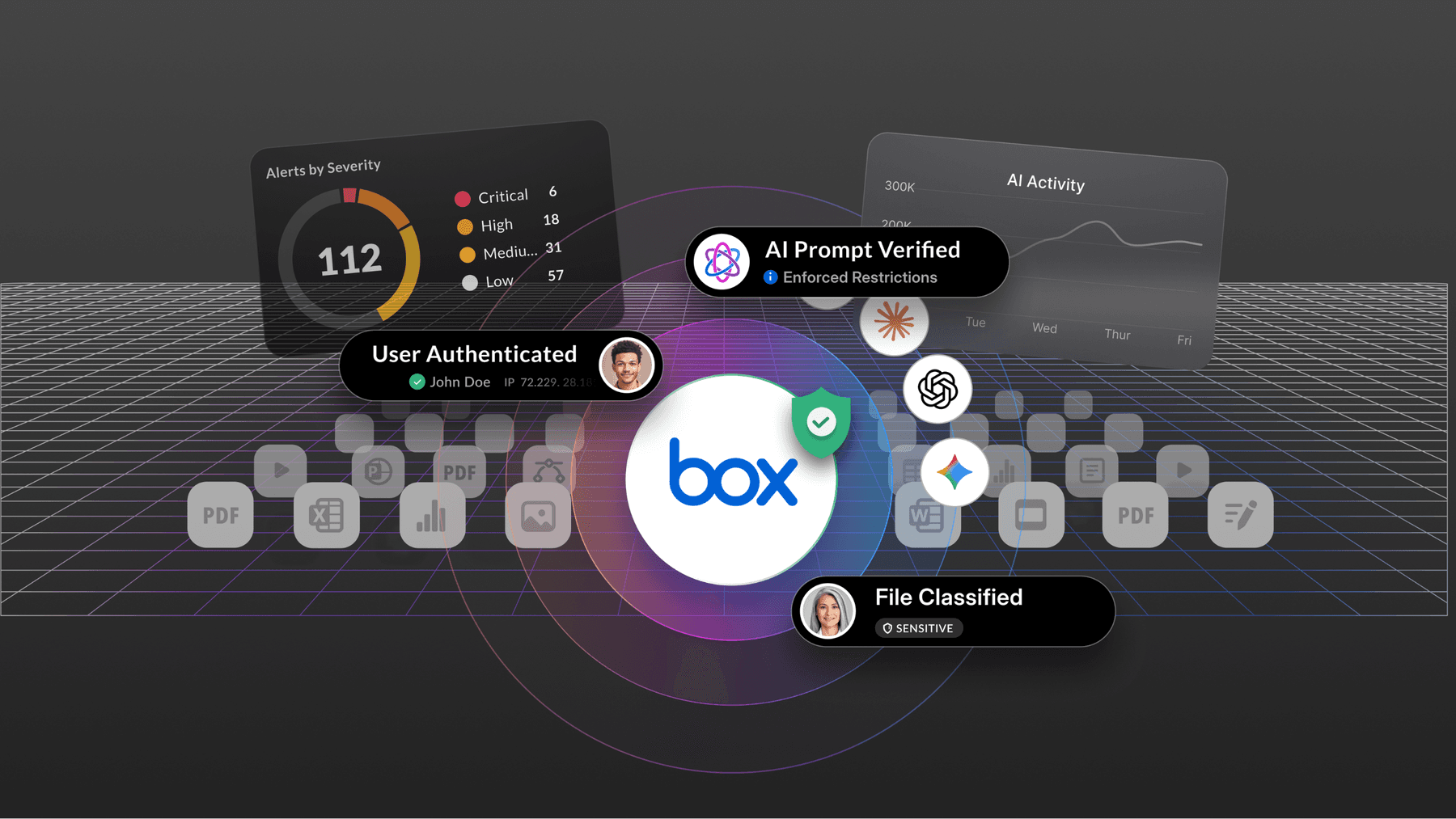
Enterprise platforms embed protections systematically, rather than leaving individual developers to implement them piecemeal. Box, for instance, enforces AI safeguards and content permissioning at scale. Rather than trusting each team to access restrictions correctly, enterprise platforms like Box build these requirements into the architecture itself.
Box, for instance, enforces permissions and governance at the content level (where AI operates), ensuring only authorized users and systems can access sensitive information. With Box Shield's advanced threat protection, comprehensive compliance certifications, and granular controls that persist across all AI interactions, organizations can deploy agentic AI while maintaining complete visibility and control over their data. Box's enterprise-grade architecture builds security into every layer, allowing companies to innovate with AI while protecting their most valuable content.
AI risk-management at scale
The conversation between Kus and Ganesh reveals a crucial truth: AI’s transformative potential comes with proportional risks that demand proactive management. As Ganesh puts it, “AI agents are incredible tools, but their behavior depends entirely on how we guide them. Precision in instruction and oversight isn’t just recommended. It’s essential.”
The path forward isn’t avoiding AI agents but deploying them with the same rigor applied to any critical enterprise system. Through precise instructions, human oversight, restricted access, and enterprise-grade platforms, organizations can harness AI’s power without compromising operational integrity.
After all, the difference between transformation and catastrophe often lies in the safeguards we build before pressing “deploy.”
Catch the full episode
This episode of the AI Explainer Series includes more examples of how ambiguous or overly strict instructions can lead AI agents astray, and how to put the right parameters in place to avoid this from happening. Watch the full episode for the full conversion between Meena Ganesh and Ben Kus.