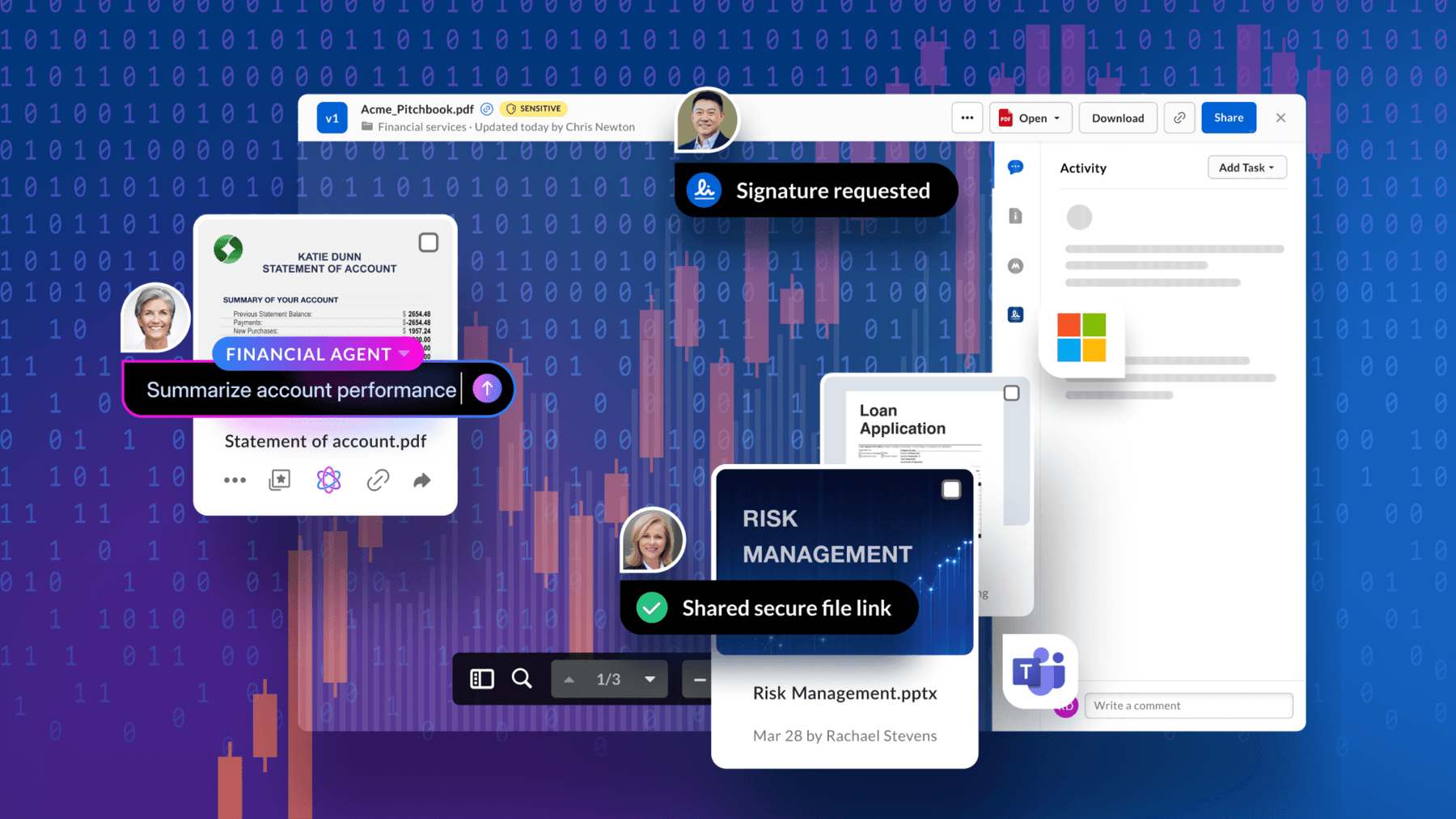
Many financial institutions have digitized their front-end applications, but supporting document workflows still rely on manual review, disconnected channels, and endless client chase. From the client’s perspective, the process looks modern: They fill out an online form, upload a driver’s license or proof of address, and hit submit.
Behind the scenes, things look different. Days after a potential customer submits an application, an operations analyst opens that submission and discovers an unreadable scan, a missing signature page, or an address mismatch. The team initiates an email back-and-forth, waits for corrected files, and pushes the case back into the review queue.
This disconnect is why digital onboarding can still take weeks and why almost a quarter of consumers will abandon an application altogether if the identity verification process is too time-consuming. This is a problem banks need to solve.
Key insights:
- Automated document validation remedies the “NIGO trap” and cuts down on over-requesting information from customers
- With permissions-aware AI and extraction directly to incoming files, analysts spend less time manually keying in data
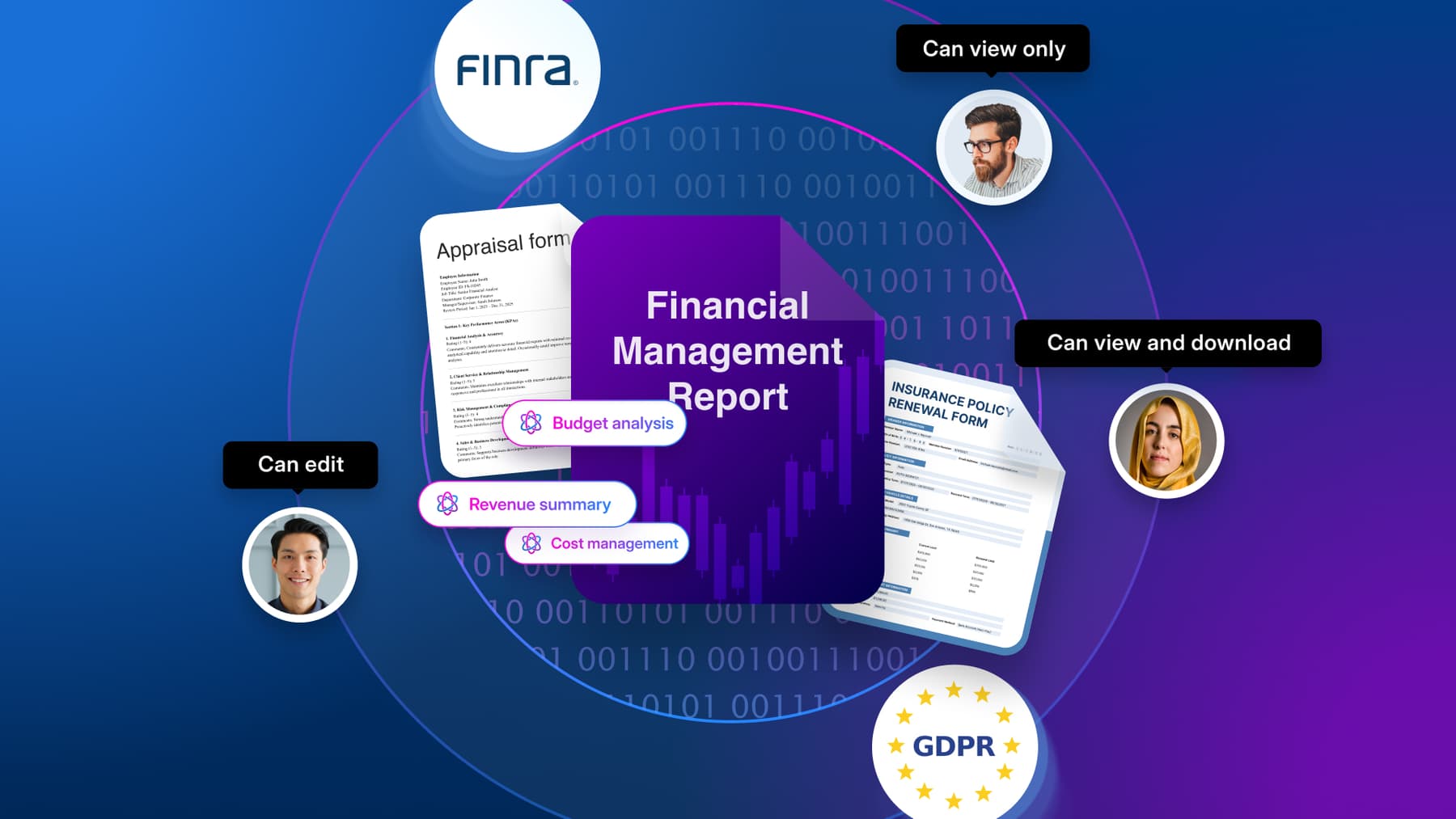
- A unified, governed digital client vault means clients aren’t asked twice for documents the firm already holds — with retention, legal hold, and audit history configured for FINRA and SEC Rule 17a-4
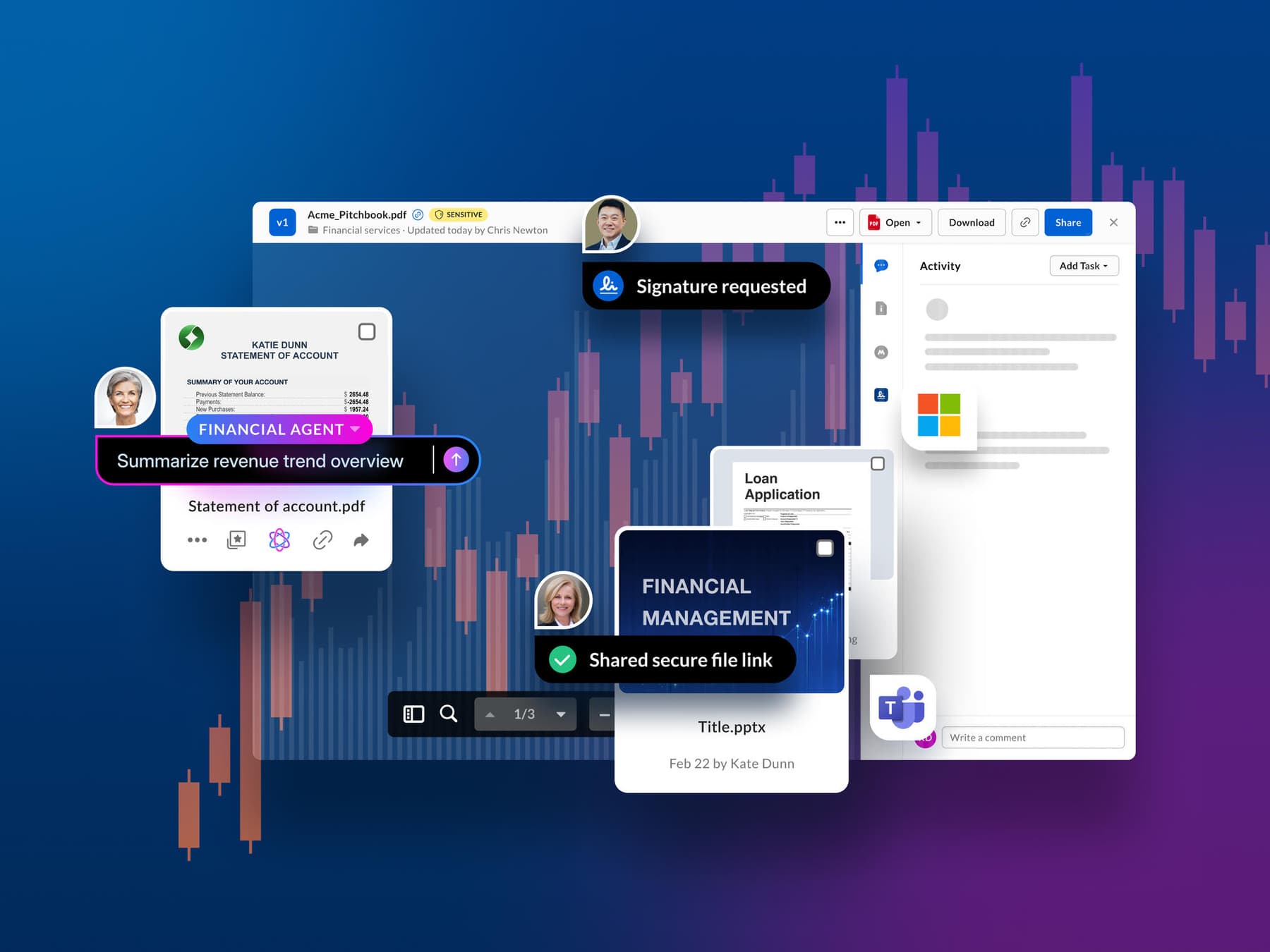

Digital applications are only the front door
While financial institutions have invested heavily in slick digital front doors, the back-end workflows that power document verification, KYC/AML evidence gathering, and reviews remain bogged down by spreadsheets, emails, and legacy file shares.
Rigorous identity verification (CIP), fraud checks, sanctions screening, and regulatory compliance take time for vital reasons. But regulatory rigor does not explain why operations teams lose days requesting, reviewing, correcting, and rekeying unstructured document content. Every type of banking onboarding brings unique document complexity:
- Retail banking applicants submit IDs, utility bills, and pay stubs
- Wealth management clients share complex tax returns, trust agreements, and portfolio statements
- Commercial and corporate banking clients provide entity formation documents, operating agreements, ownership charts, and authorized signer registries
While web forms can capture structured data fields, the supporting unstructured data travels down fragmented paths. Files arrive across secure email attachments, ad-hoc upload links, and branch drop-offs. Operations teams manually download and save copies across shared drives, core platforms, and siloed document repositories, tracking case progress in separate spreadsheets.
Putting intake forms online simplifies how clients initiate a banking relationship, but it does not solve how teams build a complete client record. Behind the scenes, it’s a manual timesink.
Document defects are caught too late (the NIGO trap)
Most client portals merely check file sizes and formats (.pdf, .jpeg) rather than validating document content and completeness. If an applicant uploads the wrong document type, an expired ID, or an incomplete signature packet, the system accepts it without question.
Analysts don’t catch these issues until days later when they pull the file for manual review. By that time, the applicant is no longer engaged. Operations teams classify these as not-in-good-order (NIGO) submissions, triggering preventable rework, customer friction, and extended review cycles.
True document validation means verifying completeness and consistency at the moment of intake:
- Did the client provide all mandatory document types required by policy?
- Are all pages present, legible, and uncorrupted?
- Are IDs and dates current?
- Do legal names, entity titles, and addresses match across every submitted file?
Running these checks during the intake experience (rather than days later in a back-office queue) enables clients to correct errors immediately, eliminating round-trip delays while preserving the integrity of formal CIP, fraud, and AML screening.
Clients are asked for too much or asked twice
Static, one-size-fits-all document checklists create friction on both sides of the relationship:
- Over-requesting: Checklists frequently demand documents that do not apply to the client’s specific entity type or jurisdiction
- Redundant requests: Banks frequently ask existing clients for documents they have already submitted for another product (like an existing trust agreement or corporate charter), simply because teams lack a centralized, searchable repository
Adopting a “collect once, reuse continuously” approach requires a unified, governed client record. Before triggering outreach to a client, teams should be able to instantly check existing governed repositories and request only what’s missing, expired, or newly required.
Analysts spend valuable time rekeying data
Once complete document packages are finally assembled, analysts spend hours manually transcribing data. They read through dense PDFs to locate tax IDs, formation dates, officer names, and addresses, re-entering those values into CRMs, onboarding platforms, and core banking systems.
Skilled analysts and underwriters should focus on evaluating risk, analyzing complex ownership structures, and resolving true exceptions, not retyping printed text or hunting for missing pages.
Intelligent document automation from Box can read each document as it arrives and pull the fields reviewers need, showing them next to the source document for a quick human check. Once approved, validated data flows automatically into core downstream systems via APIs.
Commercial entity onboarding multiplies the complexity
Commercial, corporate, and institutional onboarding introduces exponential document friction. Tracing ultimate beneficial ownership (UBO) across multi-tiered corporate structures, subsidiaries, and foreign entities requires cross-referencing operating agreements, formation certificates, and corporate resolutions.
When documents are scattered across inboxes and disconnected systems, tracing these relationships drags cycle times from days into weeks. An intelligent content foundation automatically parses corporate hierarchies and presents structured, source-linked relationship maps, allowing analysts to perform Know Your Business (KYB) reviews with speed and confidence.
Beyond onboarding
Client onboarding is not a one-and-done event. Over the course of the banking relationship, clients and institutions continuously exchange high-value documents: loan packages, annual financial reviews, covenant compliance certificates, updated signer cards, wealth planning updates.
When onboarding files are closed and archived into disconnected legacy systems, every subsequent servicing event or regulatory examination requires employees to manually reconstruct client files from inboxes and legacy archives. Regulators have fined firms heavily for electronic recordkeeping failures, and a similar retrieval problem shows up whenever an examiner asks for a complete client file.
A completed onboarding package should instantly transition into a secure, governed digital client vault that supports servicing, periodic KYC refreshes, and auditable client collaboration throughout the relationship lifecycle.
Fixing the document work behind the application
Eliminating onboarding friction requires financial institutions to modernize how unstructured content is captured, validated, and governed behind their digital front doors:
- Dynamic intake: Guide clients with context-aware forms and dynamic checklists tailored to entity type, product, and jurisdiction
- Instant document validation: Check for completeness, legibility, and consistency during upload to catch NIGO submissions upfront
- Permissions-aware AI extraction: Automatically extract critical fields from IDs, financial statements, and formation documents, presenting source-linked data for rapid analyst review
- Audit-ready governance and compliant retention: Protect sensitive financial data with enterprise-grade classification, retention policies, and audit trails configured for FINRA and SEC Rule 17a-4
- Seamless core integration: Connect unstructured content workflows directly into CRMs (like Salesforce), loan origination systems (LOS), and core banking platforms
By uniting front-end client experiences with an intelligent, governed content layer, banks can eliminate the spreadsheet and email drag, cut onboarding from weeks to days, and give clients an initial experience that doesn’t start with paperwork.
See how Box supports client onboarding or read about how Fundwell saves 30 hours a week on underwriting.