Collaboration is a key driver of innovation, problem-solving, and organizational agility. As your company looks for ways to increase productivity, improve efficiency, and drive positive business outcomes, consider how your people work together and how encouraging collaborative efforts can lead to positive impacts.
Let's review the definition of collaboration, its importance in the workplace, the main types of teamwork, and best practices for fostering a collaborative environment in your company.
Collaboration definition
Collaboration is a process, practice, or strategy where individuals work together to achieve a specific common objective by sharing knowledge, skills, and resources. People commonly work closely in schools and the workplace. Students may team up on a group project, while collaborative teams may work together on a new marketing strategy for a client, for example.

Collaboration is more than just people working independently on separate aspects of a project. This is coordination at best. Collaboration means people work together on the project. Each person brings various skill sets, allowing the group to achieve more comprehensive results than any individual could create alone.
People are naturally collaborative. Engaging together effectively and being creative as a team or community is empowering and can bring positive business results. Successful teamwork relies on qualities like:
- Openness
- Interpersonal skills
- Knowledge sharing
- Focus
- Communication
- Accountability
- Flexibility
- Respect
- Trust
Encouraging team collaboration on various tasks allows your company to make unified decisions and increases its chances of success. When your people join forces in brainstorming sessions or cross-functional project teams, the work environment promotes growth and innovation for team members and the company as a whole.
Different types of collaboration
Collaboration takes different forms depending on how it’s used. The tools and resources needed to manage a distributed workforce differ from what onsite collaboration requires. How people cooperate also depends on who they’re working with — others within the company or external teams. Understanding the different forms of collaboration can help you and your people work most efficiently and effectively together.
Let’s review the most common types of collaboration in the workplace.

Internal and external collaboration
Internal collaboration involves team members from the same company or department working together. In other words, it’s your people working with your people. This form of collaborative effort can be as simple as members from the same department discussing an issue to find a resolution or as complex as multiple members from various teams within your organization co-editing a complicated document in real time.
External collaboration involves working with individuals, entities, organizations, or other partners outside your company. This may include clients, suppliers, and contractors. Your team may work closely with a client or contractor to ensure they have a say in your processes or to achieve a specific result. Your company may also work with external parties that have expertise or equipment in areas your company may not.
Virtual and in-person collaboration
Virtual collaboration is the practice of sharing information, ideas, and tasks remotely using digital tools and platforms. It has become one of the primary ways team members work together in an increasingly digital world.
A digital workplace can include video conferencing, document sharing, email, and cloud storage. For example, file sharing platforms allow multiple people to access and edit the same content simultaneously. Tools like this enable remote and hybrid teams to collaborate, regardless of their location or schedule, while improving employee engagement.
In-person collaboration is more common in traditional workplaces where team members meet in an office or shared workspace. Working together in person involves team members physically meeting to share ideas, discuss, and otherwise work on a shared task. Team members can interact and get answers in real time while looking at the same information. But the reality is that it can be difficult to get everyone in the same place at the same time when work needs to be done.
Many companies use a combination of in-person and virtual teamwork, especially in hybrid environments. On-site team members can gather in person while still including remote team members via video call, for instance.
Team collaboration
Team collaboration is the collective effort of a group working together, combining their skills, knowledge, and efforts. With this model, each member of the group knows their role and how it affects the team as a whole. Team collaboration typically involves a leader who supervises and keeps everyone on track while contributing their skill set.
Companies that use this model have set deadlines that require the team to complete tasks within a predetermined time frame to ensure goals are met. The team typically gets collective recognition for its accomplishments.
Contextual collaboration
This form of collaboration involves adapting a digital platform that combines all your team’s digital tools into a single centralized place. This allows your people to access and use all the necessary content in one place rather than switching between tools and apps, simplifying how your team collaborates.
Contextual collaboration adds context to the work your people are doing and helps improve team efficiency because team members spend time collaborating rather than searching for the content they need.
Cross-functional collaboration
Cross-functional team collaboration refers to workers from different departments coming together to reach a goal for the company as a whole. For example, members from your sales, marketing, and social media teams may collaborate to develop an effective SEO strategy for a client. This model is common, especially for tasks or projects that require particular skill sets and in companies that foster collaborative communication in the workplace.
Community collaboration
This type of collaboration focuses less on completing tasks and projects and more on fostering community and learning as a team. Knowledge sharing is central to this type of teamwork, removing hierarchies and encouraging less experienced team members to share their expertise more openly.
Through community collaboration, senior team members can easily share their expertise and knowledge with younger team members. Passing knowledge along in this way better equips the entire team to solve problems and work efficiently rather than the experts working individually.
Social collaboration
Social collaboration involves your team being able to quickly find solutions and reach a consensus with the help of everyone’s collective knowledge and expertise. Your team may use collaboration platforms that allow team members to reach each other and quickly get the information they need. Spaces where team members can chat, message each other, and crowdsource information help your people solve problems and work much more efficiently.
Why is collaboration important in the workplace?
Collaboration, at its core, is designed to maximize success and share unique skills and knowledge. While each person in your business can impact its success, a unified group is likely to make a bigger impact. Collaboration also helps your people work more efficiently and solve problems more effectively by leveraging diverse skills and perspectives that fuel organizational growth.
Your company and team members can benefit from collaboration in various ways.
- Improved job satisfaction: According to The State of Collaboration Report, 76% of workers say they enjoy working together, while 81% want to contribute to a greater impact. Collaboration fosters an open workplace where team members can connect with your company’s purpose. When your people see that their opinions can make a difference, they are more likely to feel happy as they recognize their efforts are worthwhile.
- Increased productivity and performance: According to Corel’s 2022 State of Collaboration Survey, 70% of workers agree that poor teamwork limits productivity and wastes time. Effective collaboration increases productivity and performance across your teams. When they work together, team members accomplish more in less time. With combined skill sets, your teams also achieve improved performance overall.
- Enhanced innovation and creativity: As team members share diverse information and perspectives, they gain momentum and creativity. As this happens, team members generate new ideas, and your company as a whole becomes more innovative.
- Advanced learning and development: Collaboration creates an ideal environment for your team members to learn from each other. Every team member has something to offer and comes from a different experience, which means even senior team members can learn from newer team members.
- Aligned team members: Collaboration allows you to align remote and on-site team members. Your people work together regardless of their location, ensuring tasks get completed on time. This also helps prevent remote team members from feeling isolated.

Collaboration best practices to foster a team-oriented culture
While teamwork offers numerous benefits, many companies struggle to run effective collaborative workspaces. Working collaborative values into your company’s culture takes intentional effort over time. Here are 12 team collaboration best practices for fostering a team-oriented culture at your company.
Emphasize your mission
Bring your team members together over a shared goal with your company’s mission. Your mission should be clearly defined and simple yet compelling. When your people are passionate about your mission, they’re more likely and willing to work as a team to achieve it. Emphasizing your mission and bringing it up consistently ensures everyone understands it and can keep it in mind while working.
Lead by example
Your people look to you for direction when they’re unsure of something. As a team leader, you can tell them to work together, but if they don’t see you collaborating, too, they’re less likely to adopt the mindset. Demonstrate how to collaborate effectively whenever possible to show team members you’re serious about the implementation.
Leading by example also helps build trust among your people. When your team members trust you and each other, working together comes naturally.
Respect diversity
Each team member offers a different perspective and thought process. To foster a collaborative environment, respect diversity and encourage everyone to share their diverse perspectives. Showing your people you value their ideas and views helps reduce bias and puts everyone on an even playing field. Respecting diversity encourages cohesion among team members, and a cohesive team can effectively cooperate.
Communicate your expectations
Communicate your collaboration expectations in your onboarding process, so new team members understand your company culture from the start. Rewrite job descriptions to differentiate individual responsibilities and collaborative responsibilities so team members know when they’re expected to prioritize teamwork in their roles.
Clearly define your goals
Much like defining your mission, be sure to clearly define and regularly discuss personal, team, and company-wide goals. Discussing goals daily helps maintain productivity because everyone knows what they’re working toward each day. Shared goals also encourage team members to swap ideas with each other and collaborate to reach their goals.
Focus on individual strengths
Team members who feel appreciated and valued in their positions are much more likely to stay for longer. Focusing and highlighting individual strengths is an effective way to make your people feel valued and build your team. Everyone brings something different to the table, so determine how that collection of skill sets can best be used in collaboration.
Promote a community-centric work environment
A community-centric work environment is beneficial for many reasons, and many team members desire this type of workplace. Promoting a sense of community at work encourages team members to connect in professional and personal ways. Building connections allows team members to align themselves and work together more effectively.
Foster open and transparent communication
Communication is one of the most important aspects of collaboration. However, it may not come as naturally to some team members, so it’s important to foster an environment where your people feel safe communicating openly with you and other team members. When team members feel comfortable speaking openly, they’re more likely to contribute and share ideas. This ultimately leads to a more collaborative, productive work environment.
Encourage innovation and creativity
A collaborative environment requires room for innovation and creativity. Creativity and collaboration are tightly knit, meaning encouraging one promotes the other. Encouraging creative thinking helps team members feel comfortable sharing and challenging ideas and gives them more of a stake in your goals and mission. Give your people space to be creative together, and collaboration will follow.
Share knowledge
Knowledge sharing is a crucial aspect of collaboration. Encourage team members to share information, experiences, and resources. Providing both physical and virtual spaces where your people can discuss, give feedback, encourage each other, and work together helps promote overall cooperation. Cloud collaboration platforms for digital whiteboarding and document sharing, for example, facilitate knowledge exchange, fostering a culture of continuous learning.
Check out all the benefits of cloud collaboration for businesses.
Use collaborative tools
Collaboration platforms are essential in today’s workplaces. With many companies utilizing remote and hybrid workforces, in-person collaboration may be more difficult or even impossible in some cases. Secure collaboration tools unite your team members regardless of their location or schedule, allowing them to work together from near and far. These tools can help foster collaboration and grow your company.
Examples of team collaboration tools include:
- Virtual brainstorming tools
- Encrypted document sharing
- Content management tools
- Visual collaboration tools

Celebrate successes
Celebrating successes and rewarding your people for effective collaboration shows them where your company’s values lie and can give team members something to strive for. Rewards serve as an incentive for your people to work together and can be a tangible way of showing them that good things happen when they work closely.
Discover the power of the Intelligent Content Cloud for effective collaboration
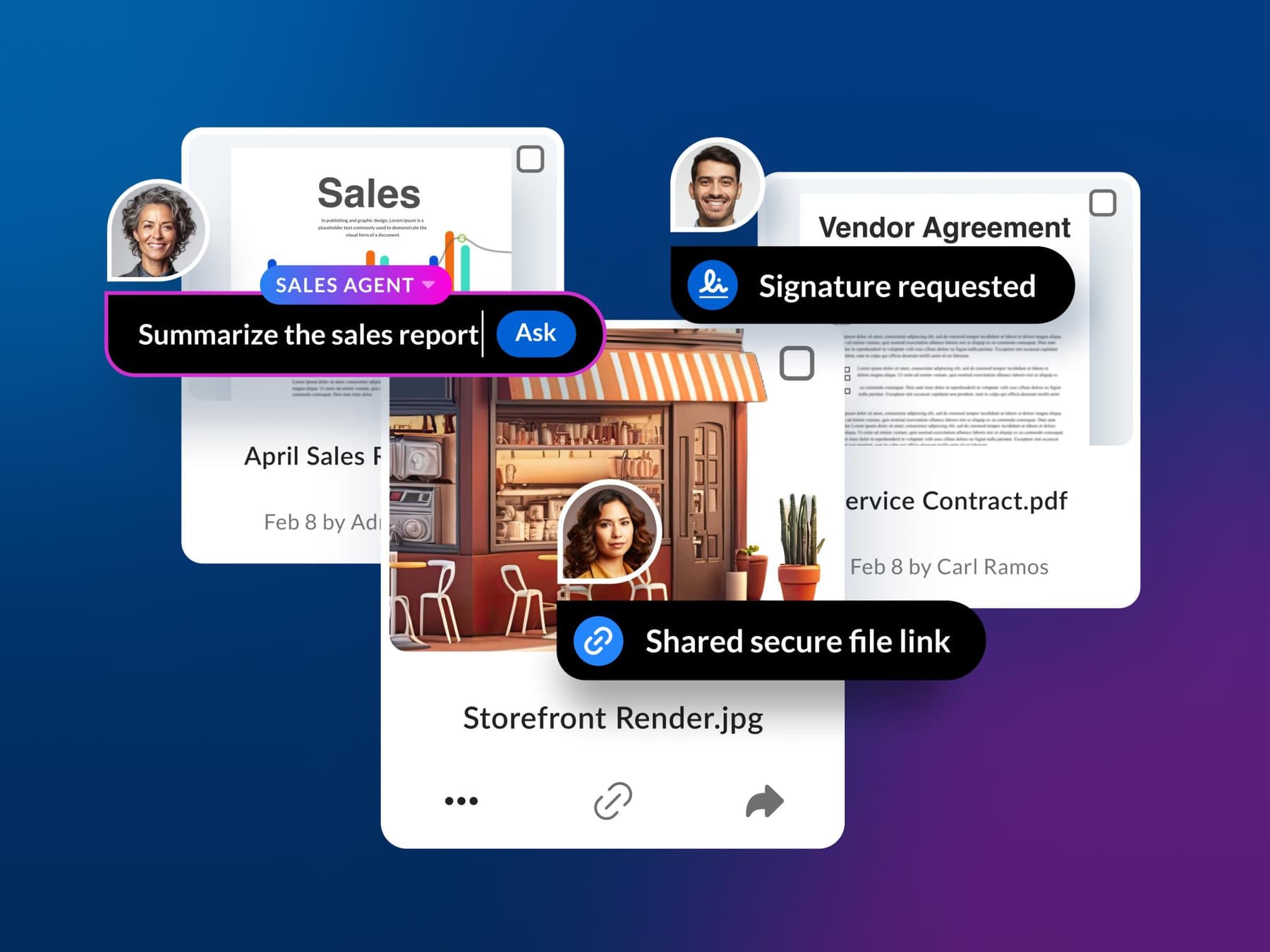
With a single secure content collaboration platform, Box enables you to manage the entire content lifecycle: file creation, co-editing, sharing, e-signature, classification, retention, and so much more. We make it easy for you to collaborate on content with anyone, both inside and outside your organization.
Frictionless, enterprise-grade security and compliance are built into our DNA, so you get total peace of mind that your content is protected. And with 1,500+ seamless integrations and a range of native capabilities, Box provides a single content layer that ensures your teams can work the way they want.
The Intelligent Content Cloud is a game changer for the entire organization, streamlining workflows and boosting productivity across every team.
Contact us today and explore the best solutions for effective team collaboration with Box.
While we maintain our steadfast commitment to offering products and services with best-in-class privacy, security, and compliance, the information provided in this blogpost is not intended to constitute legal advice. We strongly encourage prospective and current customers to perform their own due diligence when assessing compliance with applicable laws.