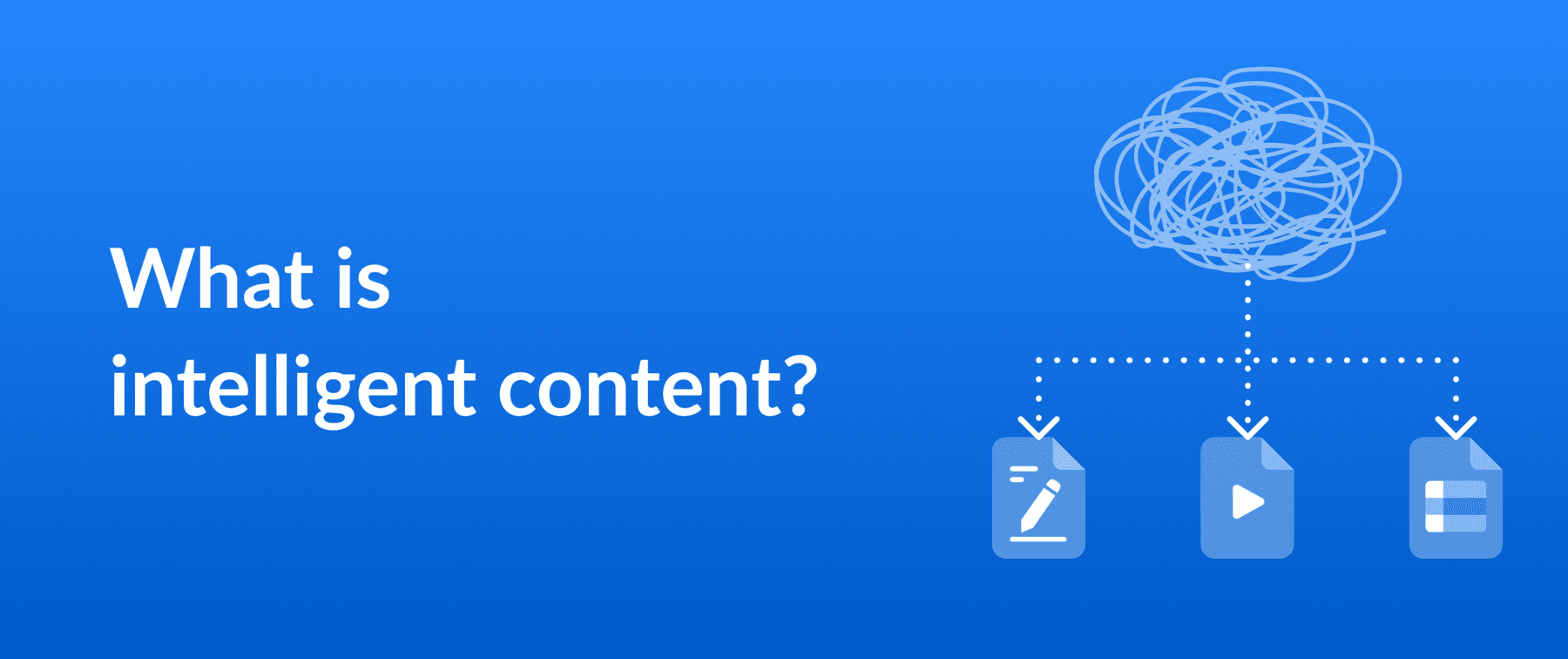


Intelligent content is digital information structured to be easily discoverable, adaptable, and reusable across different platforms and contexts. It’s often enhanced by metadata and automation through AI-powered tools to streamline processes and deliver personalized experiences that drive business value.
In an enterprise AI context, intelligent content is more than well-organized information. It is content that carries the metadata, permissions, context, and workflow signals AI systems need to search it, summarize it, extract insights from it, and route it to the right people or applications.
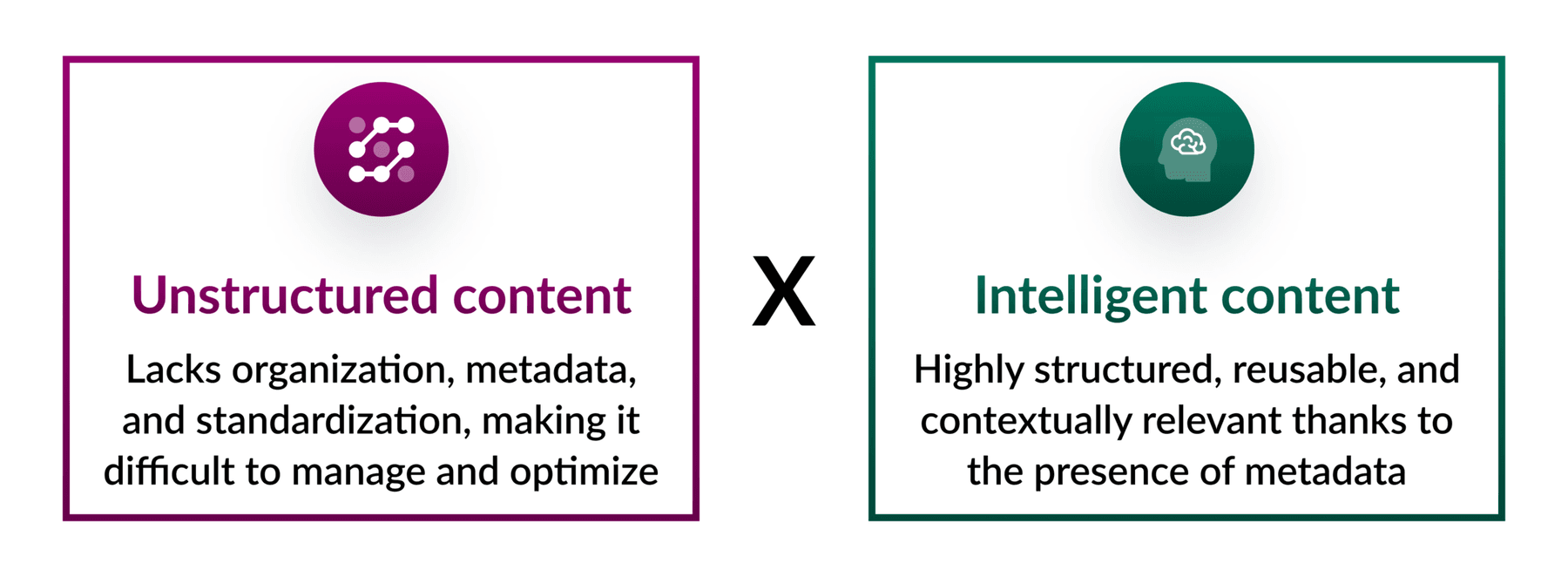
According to a Box-sponsored IDC white paper, 90% of business information is unstructured, hindering effective data management, search, and analysis. Content intelligence requires organizing and analyzing large amounts of data, so you need a strategic approach to turn raw information into actionable insights that help you manage and use your information more effectively.
Key takeaways
- Intelligent content management helps companies turn documents, images, videos, and other unstructured content into secure, searchable, reusable business assets.
- AI and metadata make content easier to classify, govern, retrieve, summarize, personalize, and automate across enterprise workflows.
- Enterprise teams use intelligent content strategies to improve content discovery, reduce manual review, speed up approvals, and unlock insights that were previously buried in files.
- The best intelligent content solutions combine AI, automation, collaboration, integrations, and security controls in one governed content environment.
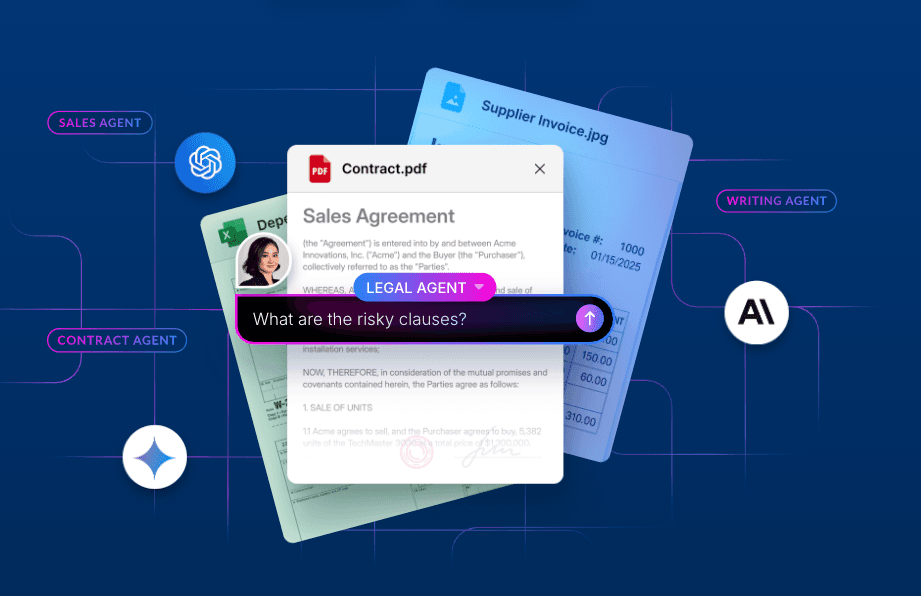
Imagine, for example, a contracts manager quickly gaining insights from multiple long documents, identifying which ones are incomplete or determining those that don’t contain specific clauses. This scenario leverages content intelligence to boost efficiency and ensure thorough, consistent analysis across all documents.
But what makes intelligent content “intelligent”? Let’s explore the innovation behind this concept, along with benefits, use cases, and practical steps to get started.
Understanding content intelligence
Content intelligence is the use of advanced technologies like artificial intelligence (AI) to analyze content performance and impact. It involves collecting, processing, and interpreting raw data to extract actionable insights that drive your content strategy and optimization.
Simply put:
- Content intelligence is about employing technology to understand data
- Intelligent content is the use of these insights to enhance messaging creation, distribution, and performance
What is intelligent content management?
Intelligent content management is the practice of using AI, automation, metadata, governance, and secure collaboration tools to manage content throughout its lifecycle. Instead of treating files as static documents, intelligent content management turns enterprise content into active business information that can be searched, understood, reused, and automated.
Companies use intelligent content management to centralize unstructured data, apply metadata automatically, extract key information, summarize long files, trigger workflows, enforce permissions, and connect content to the business applications teams already use. This helps organizations unlock the value of content without sacrificing security, compliance, or control.
In simple terms, intelligent content management gives AI the governed foundation it needs to make business content useful at scale: the right context, the right access controls, the right metadata, and the right workflow connections.


Why you need content intelligence: Benefits and use cases
The content intelligence market was valued at $1.5B in 2023 and is projected to achieve a CAGR of over 26% between 2024 and 2032, according to Global Market Insights. As businesses recognize the potential of AI-driven insights to optimize content lifecycles and enhance customer experiences, the demand for intelligent content solutions in management, creation, and automation is rapidly increasing.
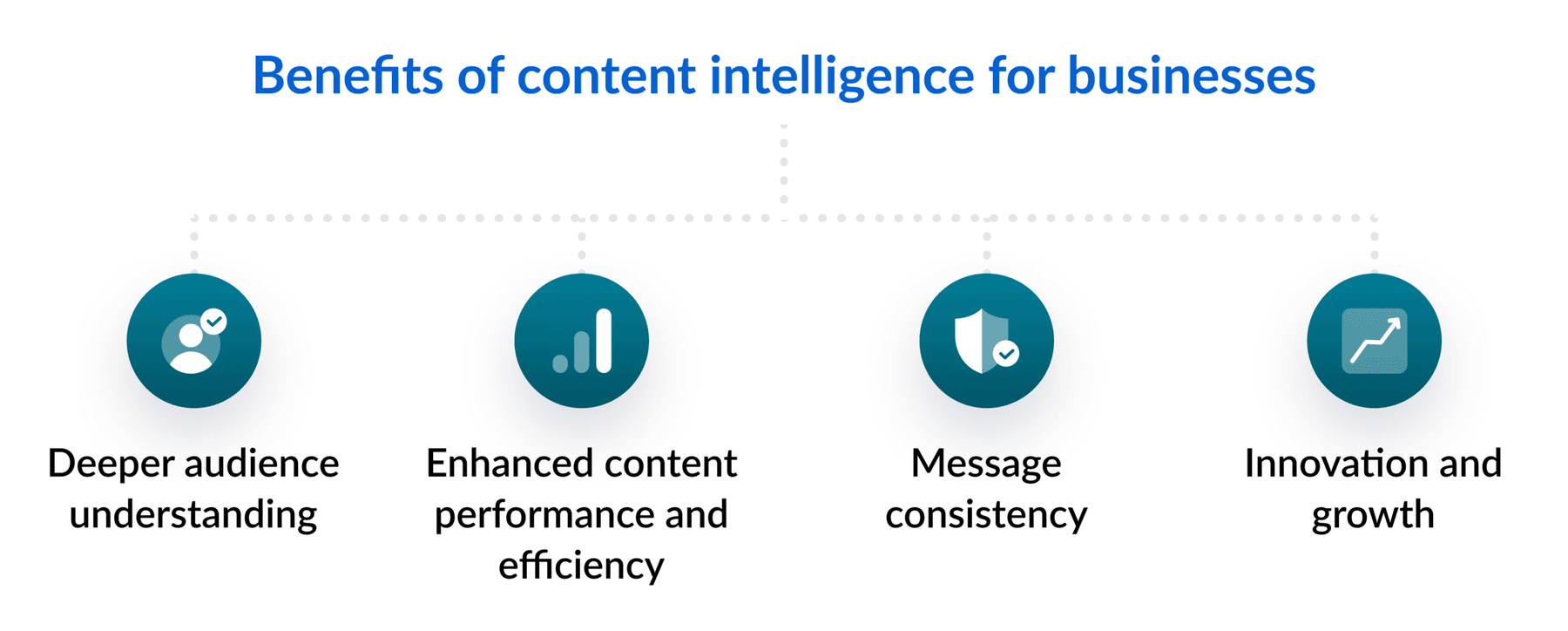
Here’s a breakdown of the benefits for your business:
- Deeper audience understanding. Unstructured data is difficult to find, analyze, and reuse, hiding opportunities to identify audience segments, understand customer journeys, and personalize experiences. With content intelligence, you extract user preferences and behavior patterns from customer support, social media, and website interactions, gaining a clearer understanding of your audience.
- Enhanced content performance and efficiency. By analyzing vast amounts of content, AI-powered tools identify what aligns with your audience, enabling you to refine your production. This streamlined process allows for faster content creation while improving engagement and conversion rates.
- Message consistency. Ensuring your brand messaging aligns across all channels and touchpoints involves adapting content in format, tone, and language. With artificial intelligence in content creation, you generate, customize, and translate texts in seconds while keeping your brand voice consistent across channels.
- Innovation and growth. A McKinsey survey shows that 65% of organizations regularly used AI in 2024, nearly double the 2023 percentage. AI helps to generate, optimize, and personalize content for both internal and external purposes. It empowers you to automate enterprise workflows, scale content creation, and enhance collaboration, driving innovation and business growth.
Let’s review the best use cases for content intelligenc
Explore the top use cases of AI for business.
Where to start with intelligent content
You may be drafting the strategy for your next retail campaign or summarizing a meeting transcription. In either case, you can leverage intelligent content strategically. Follow these steps to get started.
1. Understand how content intelligence works
Content is everywhere in your business, and intelligence means making it more effective, actionable, and aligned with your goals.
The content intelligence process involves:
- Data collection: Some intelligent content platforms gather data from your documents and spreadsheets, while others from CRM systems and website analytics
- Data processing: The system cleans and structures the collected data to make it suitable for analysis
- Content analysis: Using algorithms and machine learning, the platform analyzes the content, identifying keywords, sentiment, topics, and patterns
- Findings: Based on the content, you can extract AI insights on audience preferences, content performance metrics, competitor analysis, and more
- Content optimization: Use these insights to refine your strategy and generate new ideas for your content creation and optimization
- Performance measurement: Keep track of content performance and make adjustments as needed
2. Audit existing content
Run an audit of your current content to understand what you have, what’s working, and what needs improvement. For larger organizations with content scattered across departments, an intelligent content management platform helps you centralize this process.
Choose a system that offers portal creation so you can organize all the files, documents, and assets per department — ensuring better visibility, control, and collaboration across teams.
3. Develop an intelligent content strategy
- Goals: If your strategy aims to increase website conversions or improve the satisfaction rates in your onboarding process, add these metrics to your plan and track progress to make sure your AI content delivers the outcomes you expect.
- Audience: Understand your target audience’s preferences and pain points to create content that resonates with them. You can use AI to analyze customer feedback, summarize team member reviews, or extract insights from market research reports.
- Pillars: Define core content areas and topics where AI can provide the most value, such as product information, customer support, marketing campaigns, and internal communications.
- Lifecycle: Consider the entire lifecycle of your content, from creation and distribution to data storage. Can you use existing information to create new pieces? If so, adopt a best practice of content repurposing, such as generating ideas for social media based on comprehensive blog posts and ebooks, for example.
- Governance: Implement clear processes and practices for content creation, review, and management to ensure consistency, compliance, and quality. For example, you can use AI tools to adjust the tone of a copy, create a workflow for efficient co-editing, or detect inaccuracies in contracts based on pre-built guidelines.
4. Choose the right intelligent content solutions
- Automation capabilities: Consider solutions that facilitate the content creation process, as well as the translation, editing, and review practices at scale
- Collaboration tools: Platforms with document-sharing capabilities and version control empower teamwork and make the content process more efficient
- Security and compliance features: To ensure you make the most of AI without compromising sensitive data, choose platforms that offer robust encryption, granular access controls, and compliance with industry regulations
- Scalable data storage: As your content library expands, it allows you to manage large volumes of content effortlessly, ensuring smooth access and retrieval
- Technology integration: Add platforms to your tech stack with robust integration features to support intelligent content creation, document management, and collaboration on apps you already use
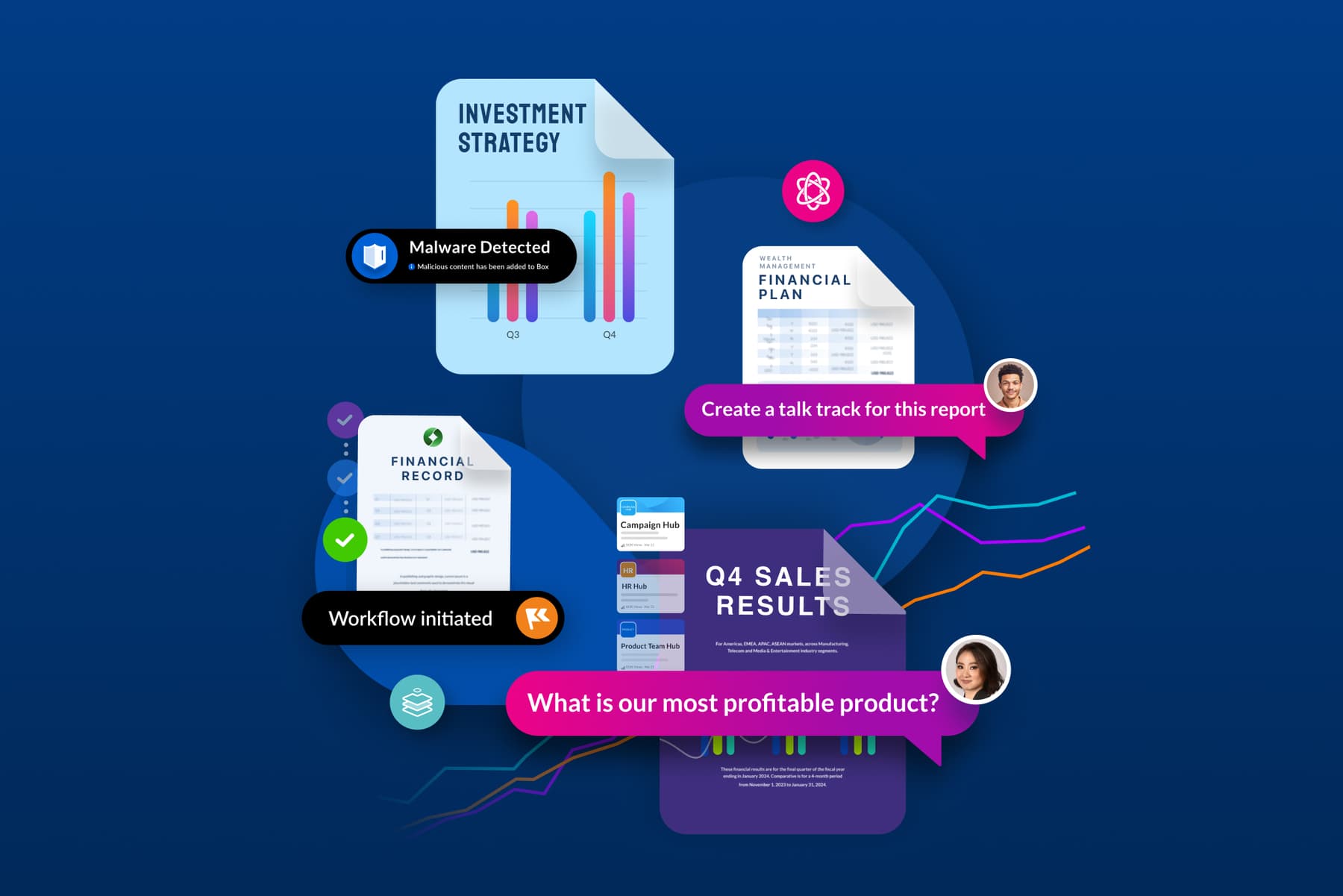
- AI agent readiness: Select solutions that let AI agents search across governed content, summarize files, extract metadata, trigger approvals, and complete routine content tasks with human oversight when needed.
Frequently asked questions
What is intelligent content?
Intelligent content is digital information that is structured, enriched with metadata, and designed to be discoverable, reusable, adaptable, and useful across different channels, teams, and workflows.
What is intelligent content management?
Intelligent content management is the combination of AI, automation, metadata, governance, collaboration, and secure storage used to manage content across its full lifecycle. It helps organizations turn unstructured files into searchable, actionable, and governed business information.
How is intelligent content different from content intelligence?
Content intelligence is the analysis layer: it uses AI and data to understand content, performance, topics, sentiment, and opportunities. Intelligent content is the improved output — content that has the structure, metadata, and context needed to be found, reused, personalized, and automated.
Why does intelligent content matter for enterprise AI?
Enterprise AI depends on trusted, well-governed content. If content is scattered, poorly labeled, or missing context, AI tools may struggle to find the right information or apply it safely. Intelligent content gives AI systems a stronger foundation for search, summarization, extraction, and workflow automation.
How do companies use AI to make content intelligent?
Companies use AI to classify files, generate metadata, summarize long documents, identify topics and entities, extract key fields, translate content, detect risk, and recommend next steps. These AI outputs make content easier to search, route, govern, and reuse.
What are examples of intelligent content management use cases?
Common use cases include contract analysis, marketing content optimization, HR onboarding, customer support knowledge management, finance policy review, sales enablement, legal clause detection, and automated content approval workflows.
How does metadata support intelligent content?
Metadata adds context to a file — document type, owner, creation date, department, customer name, contract value, approval status, retention policy, or sensitivity level. AI can use metadata to improve search, trigger workflows, apply governance rules, and personalize content experiences.
How do AI agents fit into intelligent content management?
AI agents can act on intelligent content by searching governed repositories, summarizing documents, extracting fields, comparing versions, routing files for review, or triggering next steps in a workflow. The most effective agents operate within clear permissions, audit trails, and human-review rules.
What should companies look for in an intelligent content management platform?
Companies should look for secure cloud storage, AI-powered search and summarization, automated metadata extraction, workflow automation, collaboration tools, e-signature support, app integrations, granular permissions, compliance controls, and scalability for large content repositories.
How can companies get started with intelligent content management?
Start by auditing high-value content, identifying manual or error-prone workflows, defining metadata standards, choosing a governed platform, piloting AI on a focused use case, and measuring outcomes — such as faster search, shorter review cycles, reduced manual work, and improved compliance.
While we maintain our steadfast commitment to offering products and services with best-in-class privacy, security, and compliance, the information provided in this blog post is not intended to constitute legal advice. We strongly encourage prospective and current customers to perform their own due diligence when assessing compliance with applicable laws.