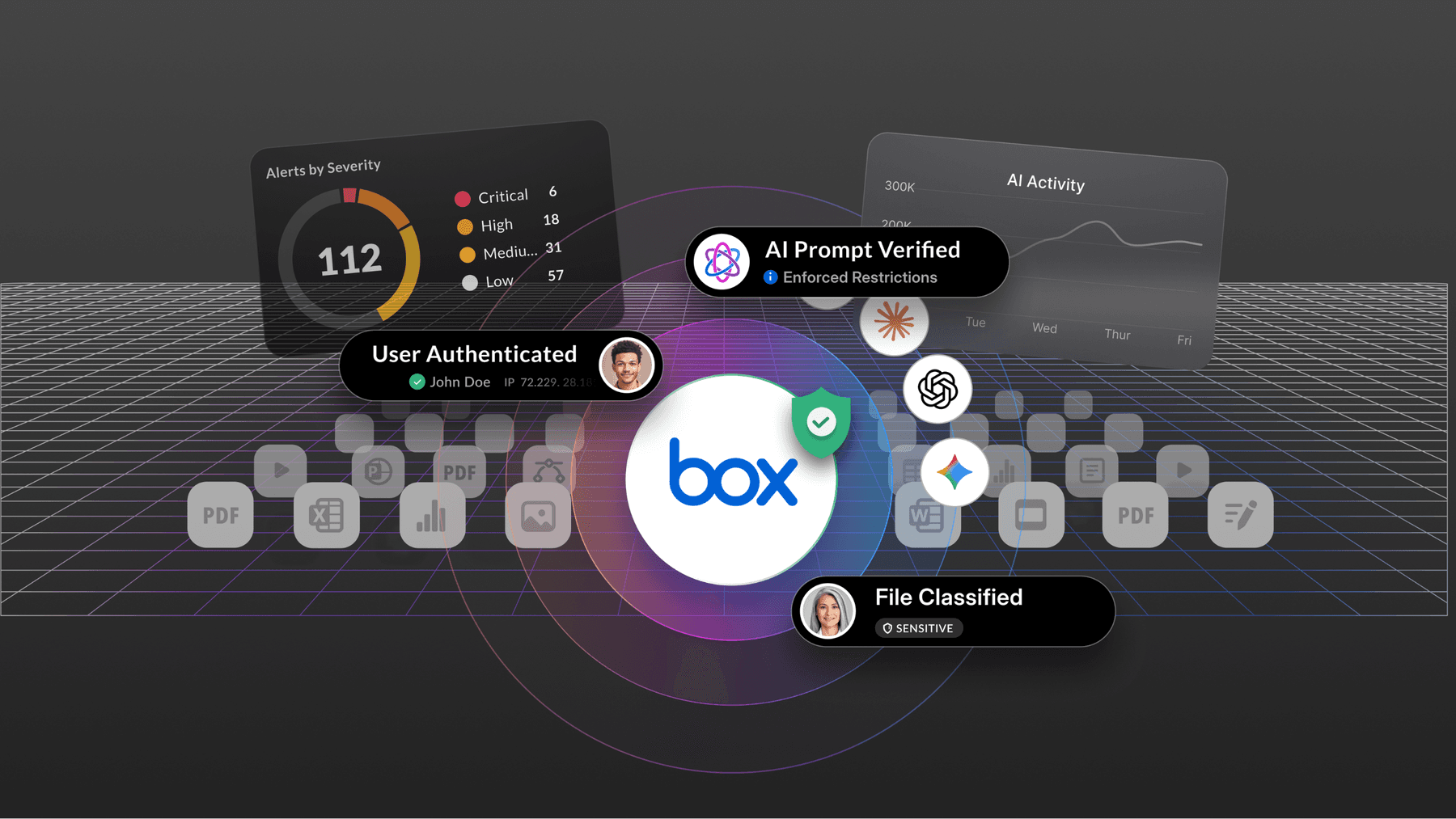
Data governance for artificial intelligence (AI) is now a board-level priority as automation and agentic systems move into core business workflows. Security, legal, and IT leaders must work to help ensure model decisions are traceable, compliant, and based on verified enterprise data.
This guide covers the frameworks and best practices that help your organization reduce risk, maintain trust, and deploy AI responsibly across departments. It also explains how AI data governance best practices help enterprises control data access, improve AI output quality, and deploy governed AI agents more safely.
Key highlights:
- AI data governance controls how AI systems access, manage, and use data to keep their outputs accurate, secure, and aligned with internal policies
- Enterprises need clear governance rules, permissions, and auditability so AI only interacts with approved data and supports more responsible results
- Strong governance frameworks help reduce risk, support alignment with regulatory requirements, and scale AI adoption safely across business workflows
- Box provides secure, enterprise-grade governance for AI and content, giving you confidence to deploy this technology with unified controls across data, users, and agents
- Best practices for AI data governance include least-privilege access, sensitive data classification, metadata standardization, audit trails, and continuous policy refinement
What is AI data governance?
AI data governance is the practice of managing, securing, and monitoring the data that powers AI systems. The goal is to help ensure that AI agents and chatbots access only accurate, compliant business information, enabling them to deliver informed responses and safe automated actions while protecting sensitive data.

Establishing data governance for AI tools helps your team:
- Protect regulated and sensitive information
- Keep clear audit trails and track usage
- Reduce bias and errors in AI outputs
- Stay aligned with privacy and security regulations
With strong data governance practices, your business can use AI, knowing the information behind it is protected, trusted, and aligned with internal requirements.
Why is data governance for generative AI important for organizations?
Data governance for generative AI is important because enterprise models and AI agents often rely on sensitive, fast-changing information to deliver responses and complete tasks. Without the right guardrails, AI systems may surface confidential business data, generate incorrect outputs, or base decisions on outdated or low-quality information.
As artificial intelligence becomes part of everyday work, enterprise teams need governance programs that control how data is accessed, processed, and monitored. In fact, 25% are already adapting their governance frameworks to support AI and automation, according to Secoda.

Clear permission rules, enforced privacy policies, and consistent audit trails help you use AI to improve productivity while supporting security, trust, and regulatory alignment.
Simplify your data governance strategy with Box.
AI governance vs data governance: What’s the difference?
The difference between AI governance and data governance lies in the level of oversight each framework provides.
- AI governance covers every aspect of how AI behaves, what it’s allowed to do, and how to keep it safe, ethical, and reliable
- Data governance sets rules for how data in general is managed, secured, and accessed
- AI data governance combines both, ensuring data and AI systems remain accurate, compliant, and trustworthy at scale
How to build an AI data governance framework in 5 steps
With increasing pressure from data protection laws and evolving regulatory requirements, corporate teams need AI tools grounded in governed, auditable data so outputs remain secure and in line with organizational policies. You can support these initiatives by building an AI data governance framework.

Set clear AI goals and guardrails for trusted outcomes
Define where AI will be used, which workflows it will support, and what decisions or content it will influence. A strong AI data governance framework begins with clear use-case boundaries and expectations for how AI interacts with enterprise content, including sensitive scenarios involving regulated training data.
Assign ownership across IT, security, and business teams
Establish cross-functional accountability across legal, privacy, security, and business leaders. Effective data governance for AI requires shared leadership so policies align with ethical expectations, operational needs, and risk tolerance, not just technical requirements.
Learn more about cross-departmental collaboration with our guide.
Classify sensitive content and enforce data controls
Establish information governance policies that label regulated, confidential, and business-critical content and define how each category will be used with AI systems. For example, personal identifiers or customer contracts may only be processed in approved environments with defined review steps and retention requirements.
Apply granular access and compliance policies
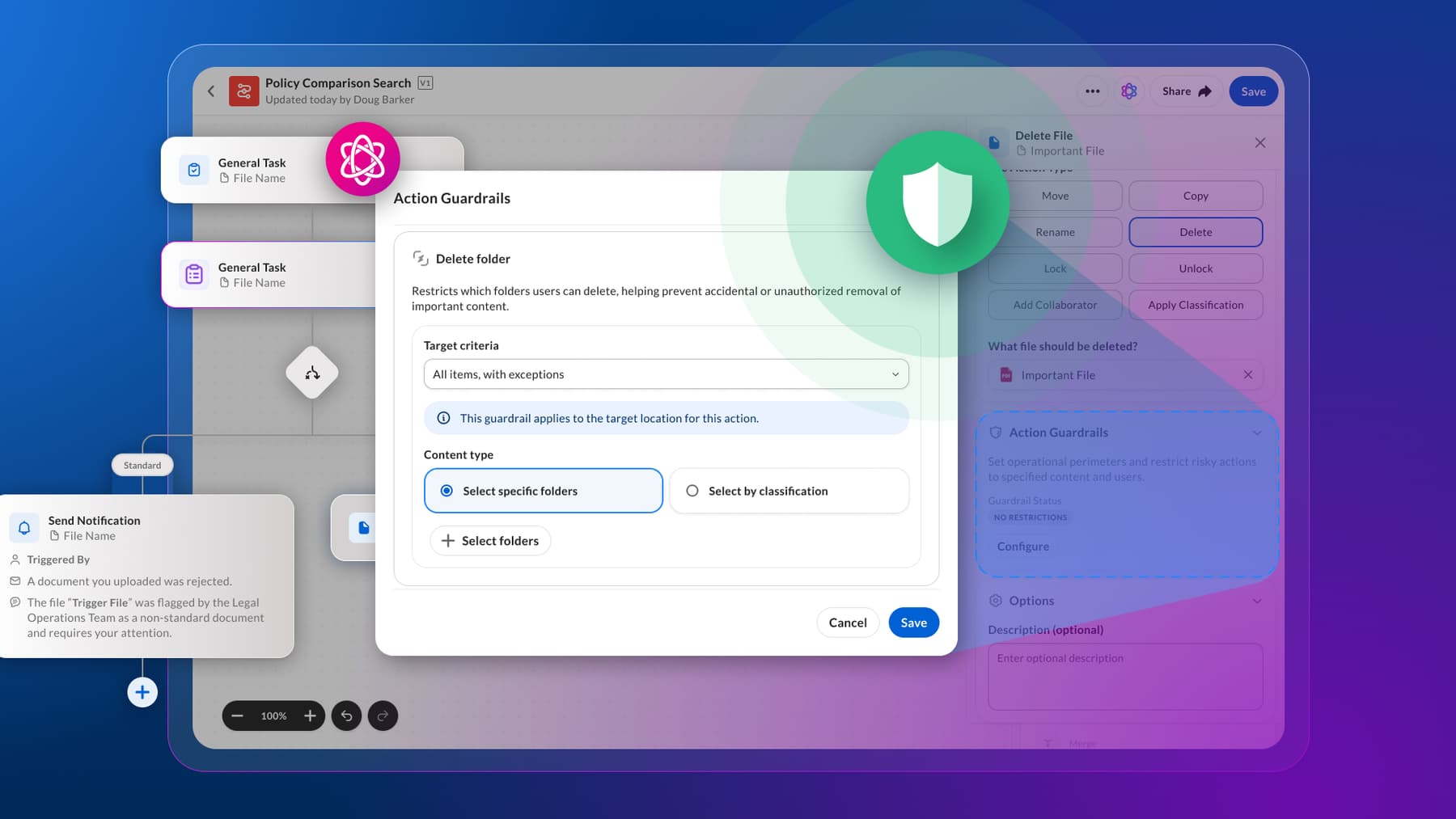
Apply fine-grained access controls that limit which users, services, and AI models view, retrieve, or act on different content types. This step includes setting role-based folder and file permissions, restricting external sharing, and controlling how AI systems interact with specific data sources.
Monitor activity and continuously refine AI data governance rules
Track AI usage, evaluate risks, and audit model behavior regularly. As policies, regulations, and business needs evolve, refresh rules to help keep access controls aligned to security, privacy, and compliance requirements at every stage of AI implementation and use.
Data governance and AI: Best practices for secure, compliant agentic performance
Data governance and AI require clear safeguards to ensure enterprise information stays protected as this technology’s adoption grows. Use these three best practices to maintain compliance as intelligent automation scales across the organization.
1. Enable only the data your AI agents actually need
Limit AI access to only the data required for a task to reduce information security risks. This AI data governance best practice prevents agents from pulling unnecessary files into prompts or workflows, helping reduce the risk of accidental exposure of confidential information.
2. Standardize metadata and content structures for cleaner inputs
AI performance depends on consistent metadata so systems understand content and retrieve the correct information at the right time. Yet, according to TDWI’s State of Data Governance Report, only 22% of organizations have high-quality, comprehensive metadata for all their assets, including both structured and unstructured data.
Establish consistent taxonomy standards and conduct regular audits to improve metadata quality so AI receives accurate, well-organized inputs to complete the required work.
Explore our ultimate guide to enterprise metadata management.
3. Use real-time policy checks to prevent unauthorized tasks
Apply information security policy controls that validate actions before execution. If an agent attempts to access restricted content or perform unapproved operations, policies should automatically block the action and alert administrators.
What are best practices for AI data governance?
Best practices for AI data governance include defining approved AI use cases, classifying sensitive data, enforcing least-privilege access, standardizing metadata, monitoring AI activity, and updating policies as regulations and workflows change. For enterprise teams, the goal is to give AI systems enough trusted context to be useful — while preventing unauthorized access, low-quality inputs, and unapproved automated actions.

How to select the right tools for unified governance of AI and enterprise data
When choosing tools for unified governance of AI and enterprise data, the goal is to protect information, manage permissions, and support compliance needs without slowing down teams or innovation.
Key capabilities to look for include:
- Centralized policy controls across content systems and AI services
- Role-based and context-based access enforcement across files, models, and user groups
- Real-time monitoring and automated alerts for risk events
- Ability to restrict how content is used in prompts, retrieval, and automated tasks
- Guardrails that block high-risk model output and reduce the risk of sensitive data exposure
- Clear vendor commitments and transparencyaround cloud data storage, privacy, and training practices
- Transparent logging and document audit trails across AI activities
- Direct support for enterprise AI data governance requirements, including privacy and retention rules
- Integration with existing identity and security infrastructure
Establish strong data and AI governance with Box
With Box, you protect your content and scale trusted AI across the enterprise. Our Intelligent Content Management platform centralizes security, compliance, and lifecycle controls, giving you one place to govern files, workflows, users, and automated actions.
Supercharge your governance strategy with Box AI, using secure enterprise-grade models that:
- Classify and tag content automatically
- Extract key details from contracts and records
- Help enforce policies and permissions at upload
- Detect potential anomalies and risky behaviors in real time
Ready to build governed AI agents? Box AI Studio helps you design custom agents with content-aware intelligence and strict access controls that respect file permissions and your compliance posture.
And you can keep sensitive content protected with advanced threat detection and data loss prevention from Box Shield, helping ensure only the right users and AI tools act on critical files and confidential information.
Contact us to strengthen data and AI governance and deploy trusted AI across your organization.
AI data governance FAQs
What is AI data governance?
AI data governance is the set of policies, permissions, metadata standards, monitoring practices, and compliance controls that determine how AI systems access and use enterprise data.
Why does generative AI need data governance?
Generative AI needs data governance because enterprise AI tools often rely on sensitive, changing, and business-critical information. Governance ensures AI outputs are based on approved data, follow access controls, and can be audited when needed.
What is the first step in building an AI data governance framework?
The first step is to define approved AI use cases and guardrails. Teams should document what the AI system is allowed to do, which data sources it can access, and when human review is required.
How can companies keep sensitive data out of AI prompts and workflows?
Companies can reduce sensitive data exposure by using least-privilege access, data classification, permission-aware retrieval, prompt and workflow controls, real-time policy checks, and audit logs that track how AI systems interact with content.
What should AI governance tools provide?
AI governance tools should provide centralized policy management, role-based and context-based access controls, metadata and classification support, monitoring, audit trails, retention controls, and integration with existing identity and security systems.
How does Box support AI data governance?
Box supports AI data governance by combining secure content management, file permissions, metadata, lifecycle controls, auditability, Box AI, Box AI Studio, and Box Shield — so organizations can govern users, content, workflows, and AI agents in one platform.
The content provided in this blog post is for informational purposes only and does not constitute legal advice. It is not intended to be a substitute for professional legal counsel. Readers should not rely on the information presented here as a basis for making any legal decisions. If you require legal advice or assistance, please consult a qualified attorney who can provide guidance tailored to your specific situation.