This is chapter 5 of Box's State of AI in the Enterprise report 2026. Read more:
1: Executive Summary | 2: The Maturity Gap | 3: Context | 4: Control | 5: Change | 6: Capability | 7: Conclusion
-----
TL;DR: The tools will keep changing, so the leading edge refuses to bet on which one wins. It builds headless, runs multiple models, and keeps every part swappable.
Infrastructure flexibility is the third foundation of the agentic enterprise. In 2025, we found that leading AI-first organizations weren′t limiting themselves to single solutions: respondents reported using an average of 2.3 model providers. In 2026, that trend has accelerated, with respondents now using about 3.3 AI tools on average (summed selection shares).
What AI agents enable is that they have the ability to plan and reason. What used to take a week to plan is now done in a matter of hours at AWS. In terms of ROI, we've saved thousands of developer hours as well. It's a game changer in productivity for us.
Multi-model is becoming deployed reality
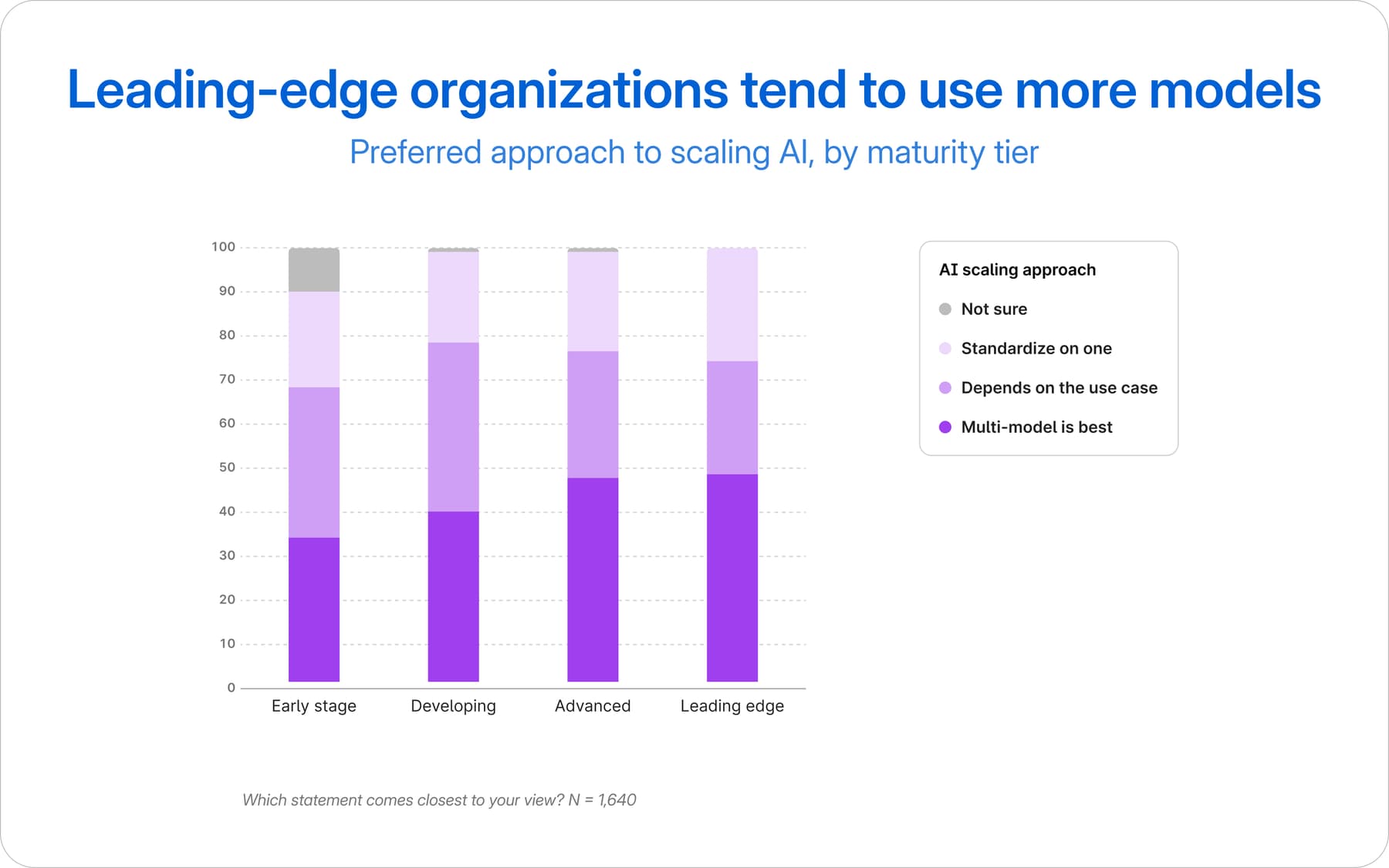
A year ago, the multi-model pattern was visible in the data: organizations with the highest AI ROI used roughly three model providers; those with the lowest used two.
In 2026, it′s a stated strategy. 44% now say multi-model is the best way to scale AI; 23% say they standardize on one; 32% say it depends on the use case; 2% aren′t sure.
Concern about lock-in cuts across the population
There′s broad agreement that model lock-in is a risk: 68% are somewhat or very concerned about being locked into a single AI model or provider. The share barely varies by company size, industry, or region.
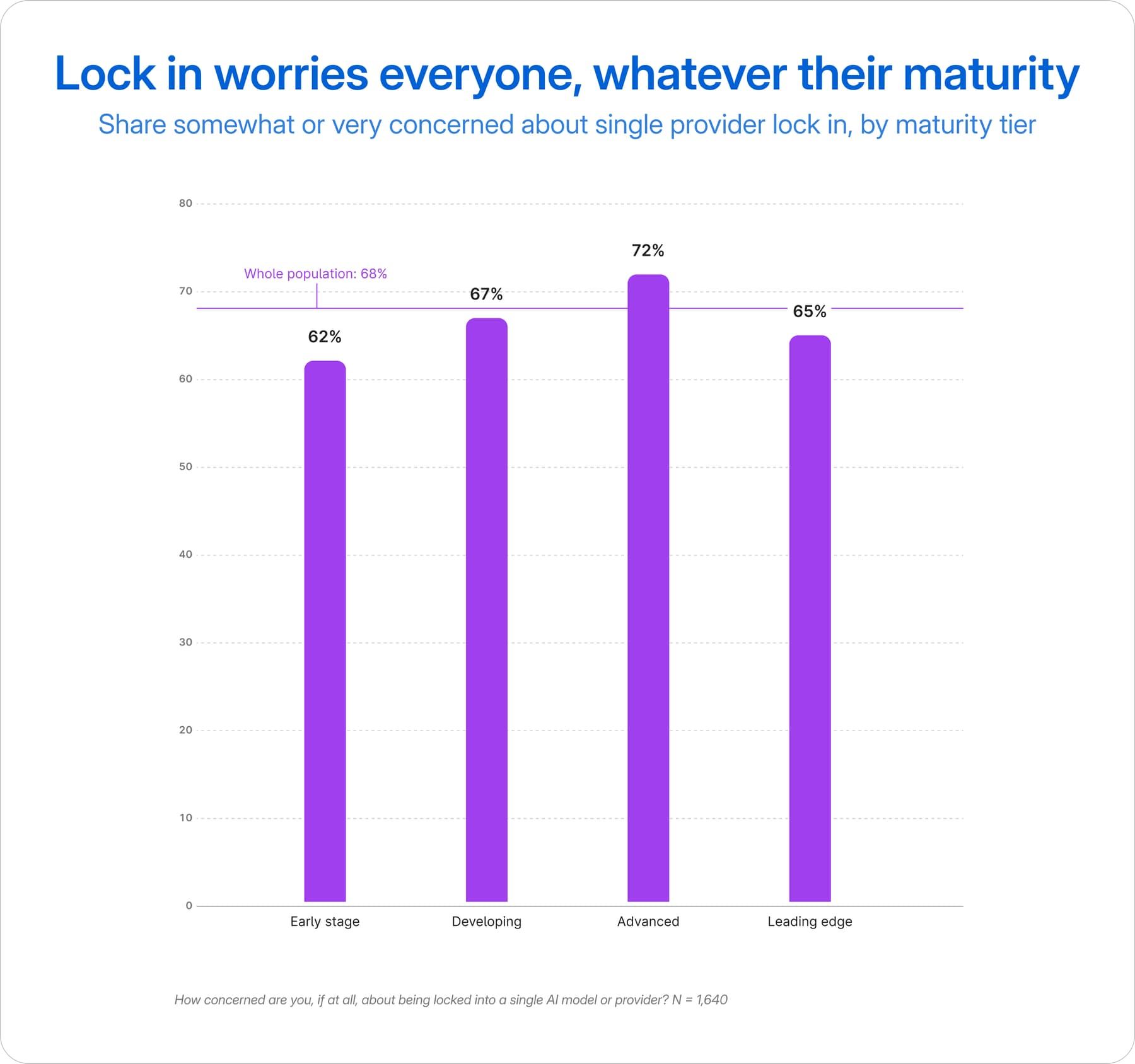
By maturity, it runs from 62% at early stage to 65% at leading edge, peaking at 72% in the advanced tier.
Lock-in isn′t a worry organizations grow into or out of; it′s a near-constant.
Headless operation lets agents do real work
Agents can't just sit inside chat windows. To do real work, they need to operate directly across systems, APIs, workflows, and trusted content, with the right permissions and controls.
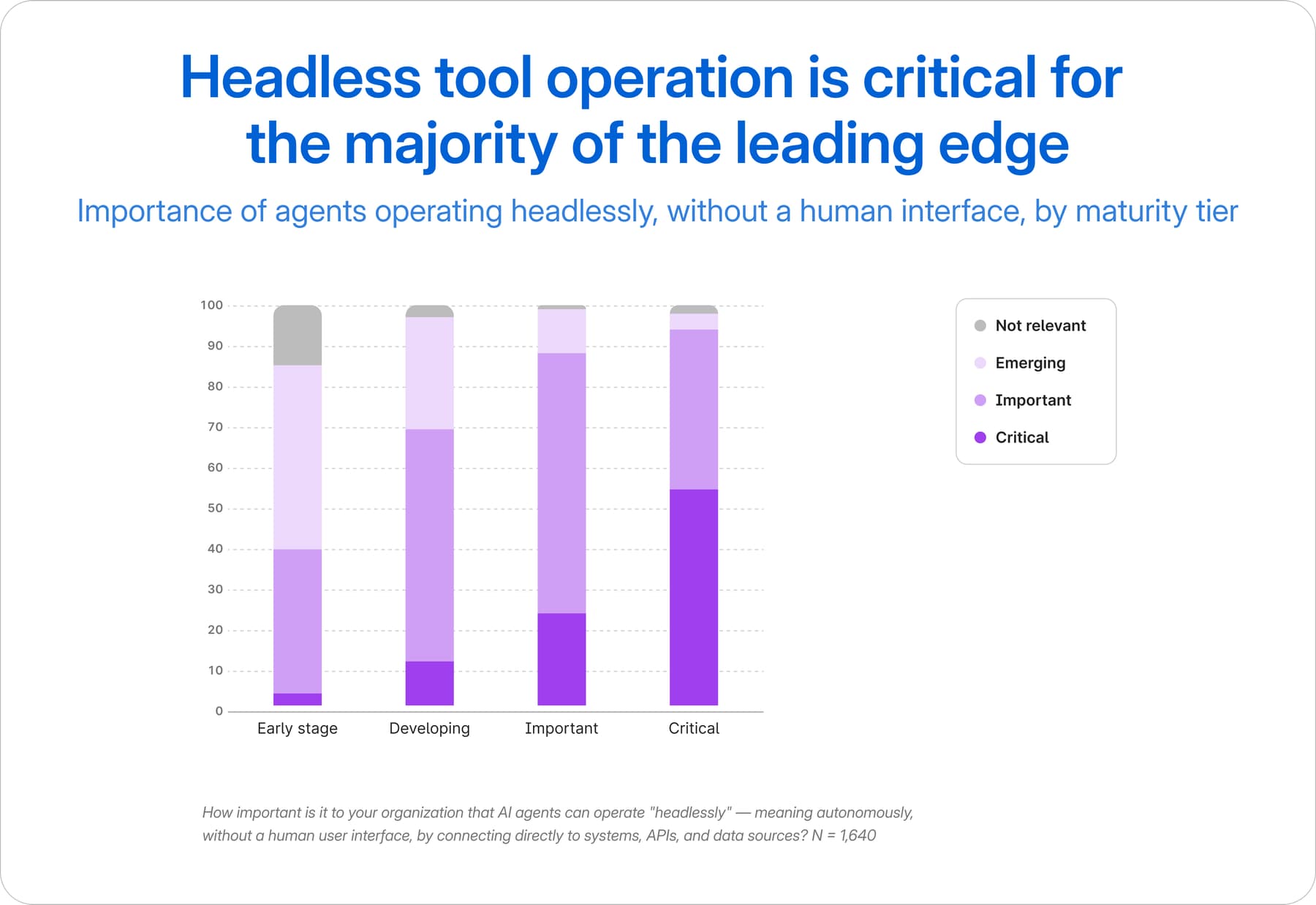
The survey found widespread acceptance and approval of this idea. 80% call it "important" or "critical" that agents be able to access and operate software "headlessly" -- without a human interface -- instead connecting directly to systems, APIs, and data sources.
As elsewhere, this question reveals a wide gap based on the maturity curve. 54% of leading-edge organizations call headless operation critical, against just 3% at the early stage. A near-universal 94% of leading edge organizations call headless operation important or critical, against 39% at the early stage.
Frequently Asked Questions
What is AI vendor lock-in?
AI vendor lock-in happens when your organization becomes so dependent on a single model provider that switching becomes costly or technically disruptive. It limits your ability to adopt better tools as the AI landscape evolves.
How widespread is concern about AI vendor lock-in?
According to Box's State of AI in the Enterprise report 2026, 68% of organizations are somewhat or very concerned about being locked into a single AI model or provider. This concern holds steady across company sizes, industries, and regions.
What is the most effective strategy to avoid AI vendor lock-in?
Using a multi-model approach is the leading strategy: 44% of organizations now say multi-model is the best way to scale AI. In 2026, respondents reported using an average of 3.3 AI tools, up from 2.3 model providers in 2025.
Does using more AI model providers improve ROI?
Yes. Box's research found that organizations with the highest AI ROI used roughly three model providers, while those with the lowest used two. A flexible, multi-model architecture correlates directly with stronger returns.
What does headless operation mean for AI agents?
Headless operation means AI agents connect directly to systems, APIs, workflows, and data sources without requiring a human interface. This lets agents do real, automated work across your content and tools rather than sitting inside a chat window.
How important is headless operation to enterprise AI leaders?
Very important: 80% of organizations call it important or critical that agents operate headlessly. Among leading-edge organizations, 94% rate it important or critical, compared to just 39% at the early stage.
Does concern about AI lock-in decrease as organizations mature?
No. Lock-in concern remains a near-constant across maturity levels, ranging from 62% at the early stage to 72% in the advanced tier. It is not a worry organizations grow into or out of.
Where does this data come from?
These findings come from Chapter 5 of Box's State of AI in the Enterprise report 2026, which examines how flexible, headless, and multi-model architectures help organizations scale AI without sacrificing control or optionality.
This is chapter 5 of Box's State of AI in the Enterprise report 2026. Read more:
1: Executive Summary | 2: The Maturity Gap | 3: Context | 4: Control | 5: Change | 6: Capability | 7: Conclusion
-----