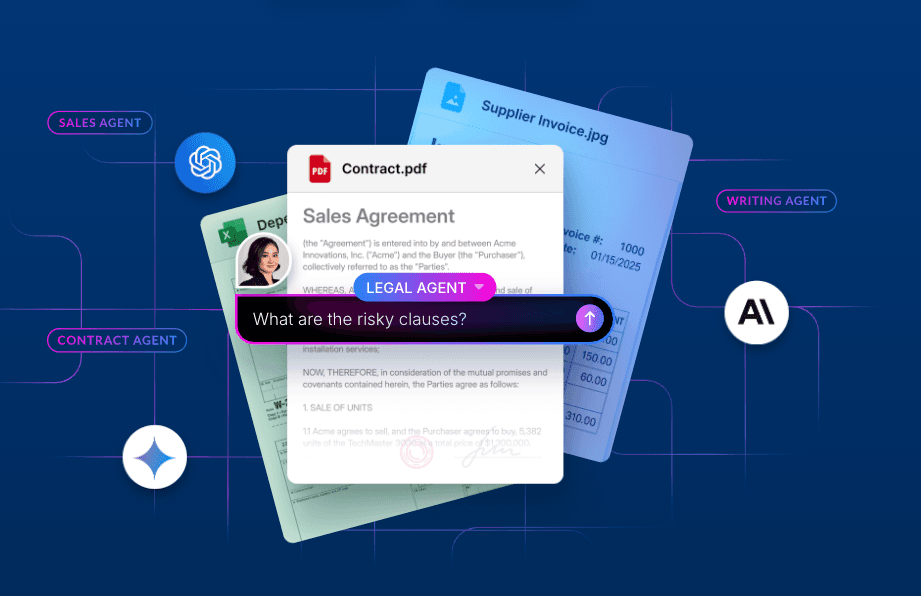
AI is ready. But is your data ready?
As biopharma organizations accelerate their use of AI, they face a massive, often invisible hurdle: digital debt. Across decades of clinical trials, research, and regulatory submissions, an immense volume of unstructured data has been generated, filed away, and left unclassified.
While the world is eager to deploy sophisticated large language models (LLMs) and agentic workflows, the harsh reality is that AI is only as good as the content foundation it sits on.
This was the theme of two recent industry events Box participated in: Bio-IT World Conference & Expo and the DIA 2026 Global Annual Meeting.Here’s how Box took center stage at both events to help life sciences organizations pay down their digital debt and build a compliant, AI-ready content infrastructure.
Key takeaways from both events:
- AI models and autonomous agents can’t operate safely or effectively on unstructured, unclassified “dark data”(which makes up 90% of biopharma R&D data)
- Box Shield Pro automatically classifies and protects regulated content at intake, reducing classification times by up to 75% and ensuring compliance
- Organizations must audit and organize their content infrastructure first rather than waiting for a perfect, company-wide AI strategy to materialize
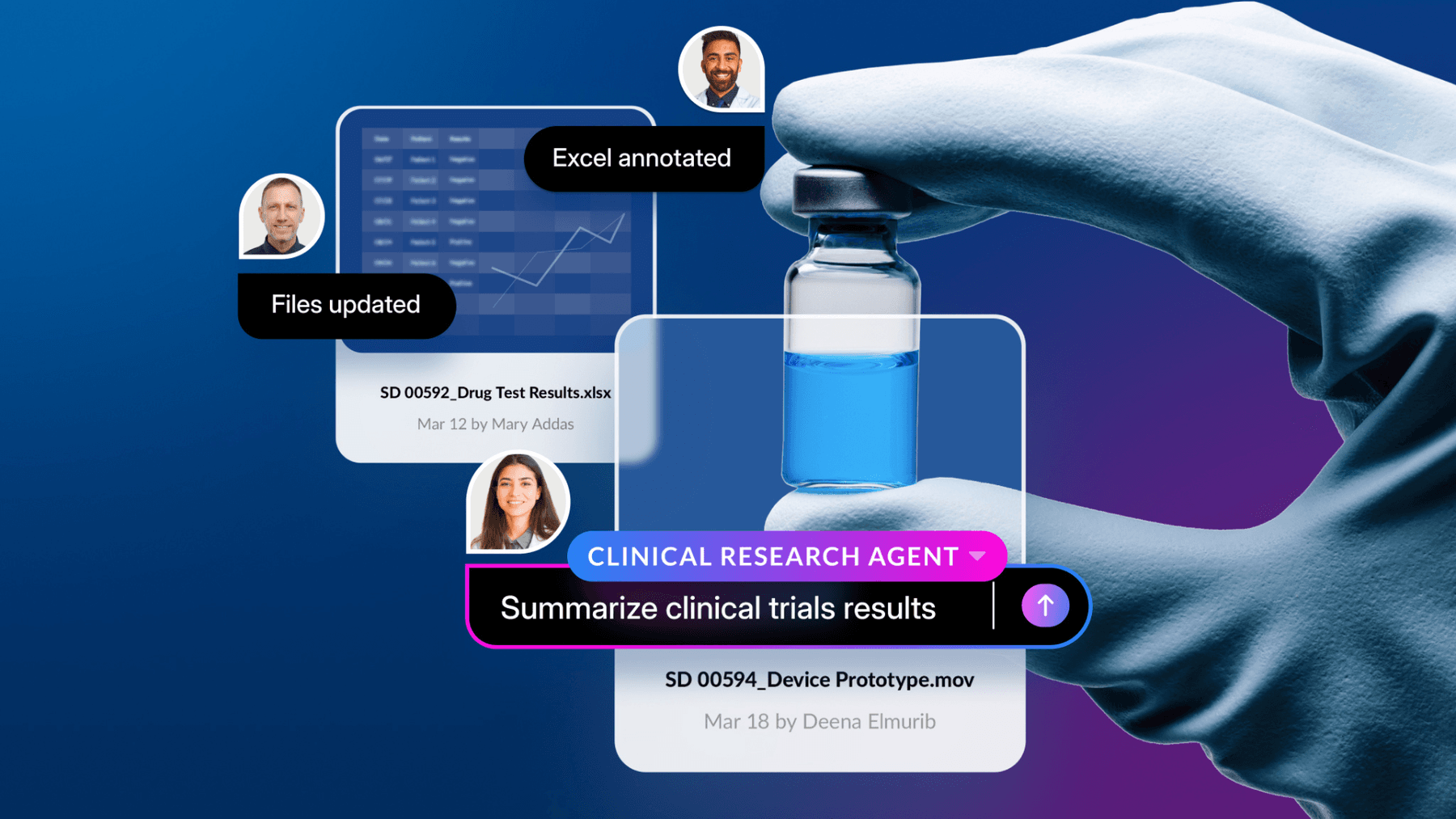
The problem with dark data
The underlying problem is that 90% of biopharma R&D data is unstructured, consisting of patient records, study protocols, monitoring reports, site invoices, and other files that contain rich, and often sensitive, information.
Storing this unstructured data in flat, unorganized folders creates “dark data” that AI tools can’t safely or effectively touch. AI agents in particular need metadata associated with unstructured content to effectively structure it. Without metadata maturity, an AI agent can’t distinguish a regulated GxP protocol from a site invoice, leading to version chaos, compliance breaches, or accidental exposure of sensitive patient data.
AI is ready to analyze your files, but your files are not yet ready for AI.
AI is ready to analyze your files, but your files are not yet ready for AI.
This is particularly true in terms of security. Autonomous agents require highly structured, contextual, and governed data to execute workflows. When agentic AI is introduced to ungoverned, unclassified content, it risks surfacing restricted IP, using stale or superseded document versions, or failing to distinguish regulated clinical files from low-risk operational invoices.
Shifting from dark data to trusted intelligence
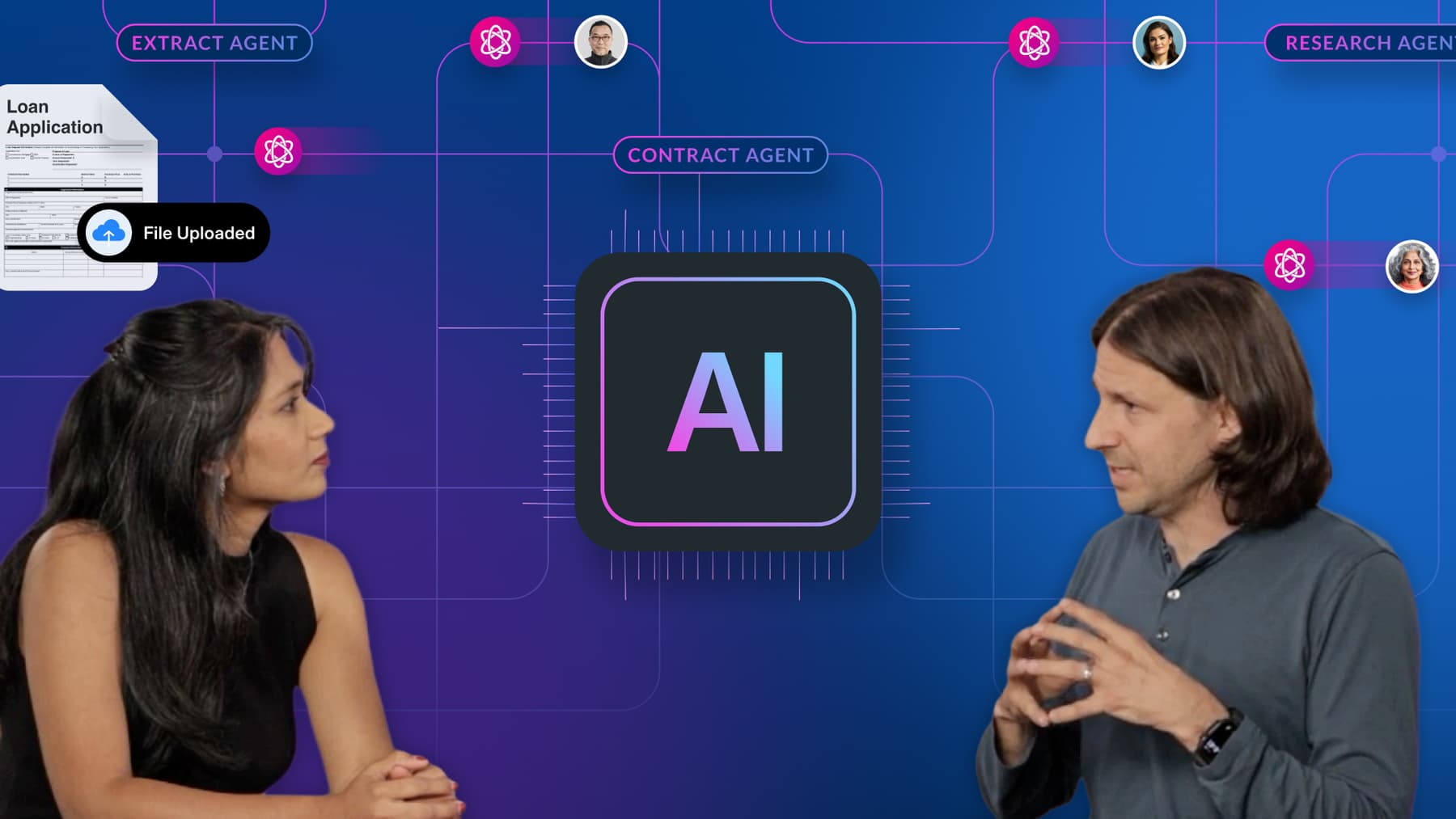
At Bio-IT World, Box life sciences experts hosted a dedicated speaker session. The core theme of our presentation, led by Manu Vohra (VP of Global Life Sciences at Box) and Magnus Borgenstrand (Staff Solutions Engineer at Box), directly addressed the data readiness gap in life sciences.
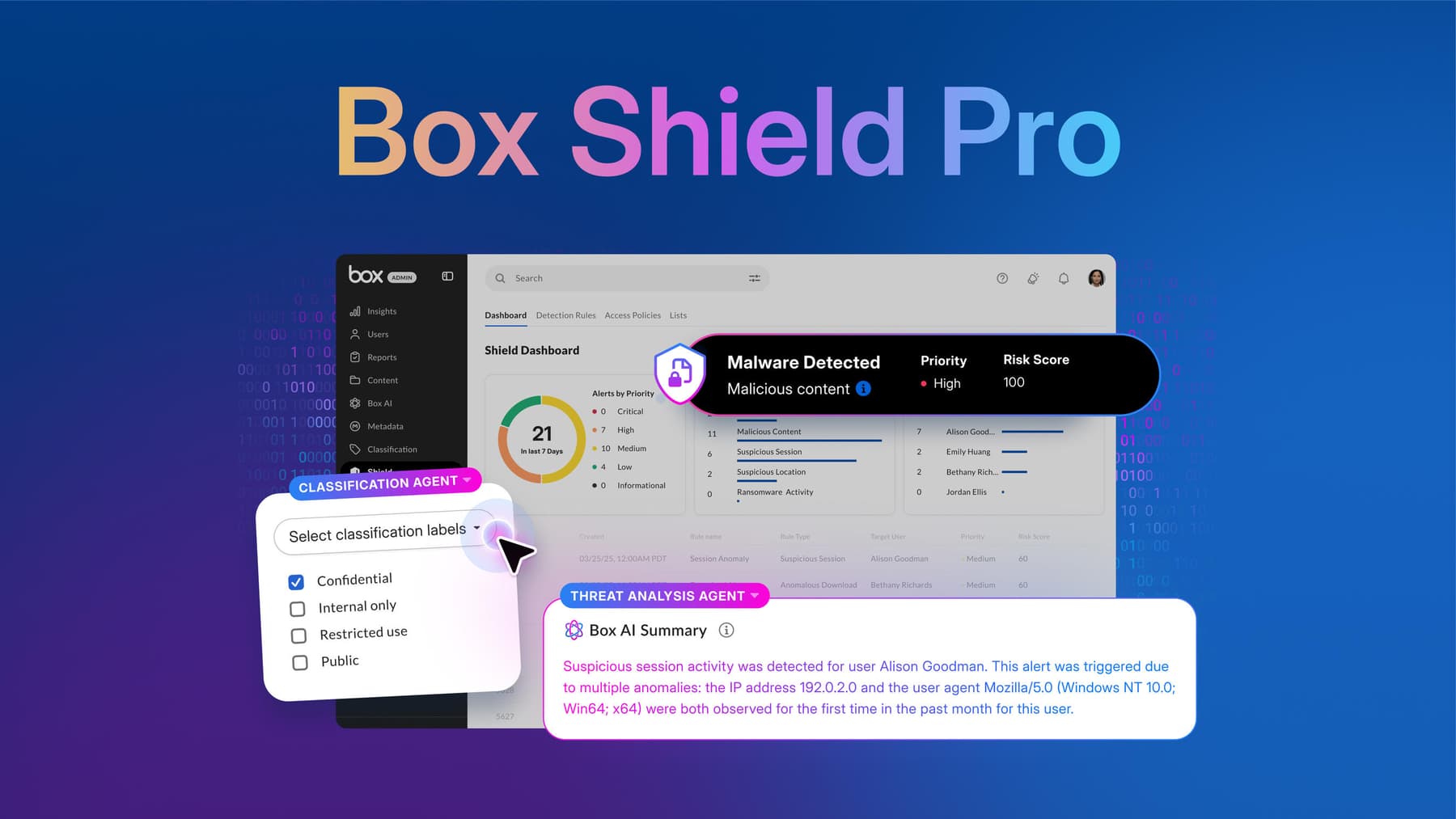
During a live demonstration, they showcased how Box Shield Pro uses agentic AI to automatically classify, protect, and prepare regulated clinical content for AI activation at scale:
- Smart classification: Documents are auto-labeled at the moment of intake (e.g., GxP Regulated, PII Level 2, Patient Regulated) so AI models know exactly what they’re allowed to access
- Instant policy enforcement: Highly sensitive files like serious adverse event (SAE) reports are instantly blocked from external sharing, while lower-risk operational files like site invoices are routed through lower-risk operational paths
- AI-driven workflows: Once classified, Box Extract extracts critical metadata (study ID, site number, version) to trigger automated routing and retention schedules, reducing trial master file (TMF) classification times by up to 75% and structuring the data so AI can safely query it

Making regulated clinical content AI-ready
At the DIA Global Annual Meeting in Philadelphia, Box hosted an exclusive, highly anticipated fireside chat: “From digital debt to strategic asset: Making regulated clinical content AI-ready.” Manu Vohra was joined by Ali Shamoun, Head of Global Development Solutions Architecture, Compliance, and Global Services at Regeneron, for a candid practitioner’s perspective on solving the content fragmentation problem from the inside.
Shamoun insisted that before deploying sophisticated LLMs, organizations must fix their content infrastructure. Content spread across internal systems, legacy platforms, and external CRO handoffs makes it impossible to introduce AI safely. Content fragmentation is the real blocker for AI. If your data isn’t ready, your AI initiatives will stall.
If your data isn’t ready, your AI initiatives will stall.
As a secure solution, Regeneron implemented POST (Portal for Organized Submission Transparency) on Box. This GxP-validated architecture establishes dedicated, isolated root folders for each CRO while maintaining harmonized submission folders across all trials. This solution eliminates email file-size restrictions, prevents cross-interference, and ensures seamless, secure external collaboration.
During the conversation, Shamoun emphasized that strict governance is the foundation of speed. By enforcing access controls and classification at the content layer, Regeneron has made cross-functional collaboration with CRO partners faster and less error prone, ensuring teams always work from the current, validated version of a document.
Shamoun’s advice for the room: Don’t wait for a perfect, organization-wide AI strategy. Start with a content audit to understand where your data lives, who owns it, and if it’s classified. Then, pick your most document-heavy, manual, painful workflow, build a governed content layer for it, prove it works, and scale from there.
Is your content ready for AI?
Both Bio-IT World and DIA 2026 made one thing abundantly clear: Scaling AI requires content, governance, and execution to move together. In an AI-first world, unclassified content is an organizational liability. Governed, structured content is your greatest opportunity.
Box is the leading Intelligent Content Management platform that securely connects your life sciences organization’s unique content to AI models and agents. By centralizing your regulated and non-regulated content on a single platform, Box eliminates operational silos and transforms unclassified dark data into AI-ready assets.
Missed us at the events? Visit our Life Sciences page to learn how Box can help secure and accelerate your clinical workflows.