As organizations race to adopt agents, models, and autonomous workflows, the enterprises actually making AI work at scale tend to focus on something less glamorous than the latest LLM release: the file system.
Here's why a secure, governed content platform — built for interoperability and scale — is the file system enterprises need for the AI era.
The coming influx of digital workers
For most of computing history, file systems were designed for human users. The interfaces, organizational metaphors, and access patterns were built for people navigating folders, opening documents, and deciding where to save their work.
That assumption is becoming obsolete.
Today's most capable AI programs are autonomous systems capable of reasoning, planning, and executing complex workflows. They have their own compute environments, can write and execute code on the fly, interact directly with APIs, coordinate with other agents, and maintain persistent memory across sessions — all with minimal human intervention.
They are, in effect, digital workers. Like their human counterparts, they need an intelligently constructed governing platform to succeed in their roles. And that platform is still built on files. When an agent does research, it stores information in files. When it generates a report, the output is a file. When it collaborates with humans or other agents, it shares files. The file system is the workspace where agents think, the repository where they store their work, and the medium through which they communicate.
Context is everything — and it lives in your files
LLMs and AI agents are only as useful as the context they can access. Training data gives models general knowledge, but to drive value for your business, they need access to your information: product roadmaps, customer contracts, financial models, HR policies, strategic plans, research docs.
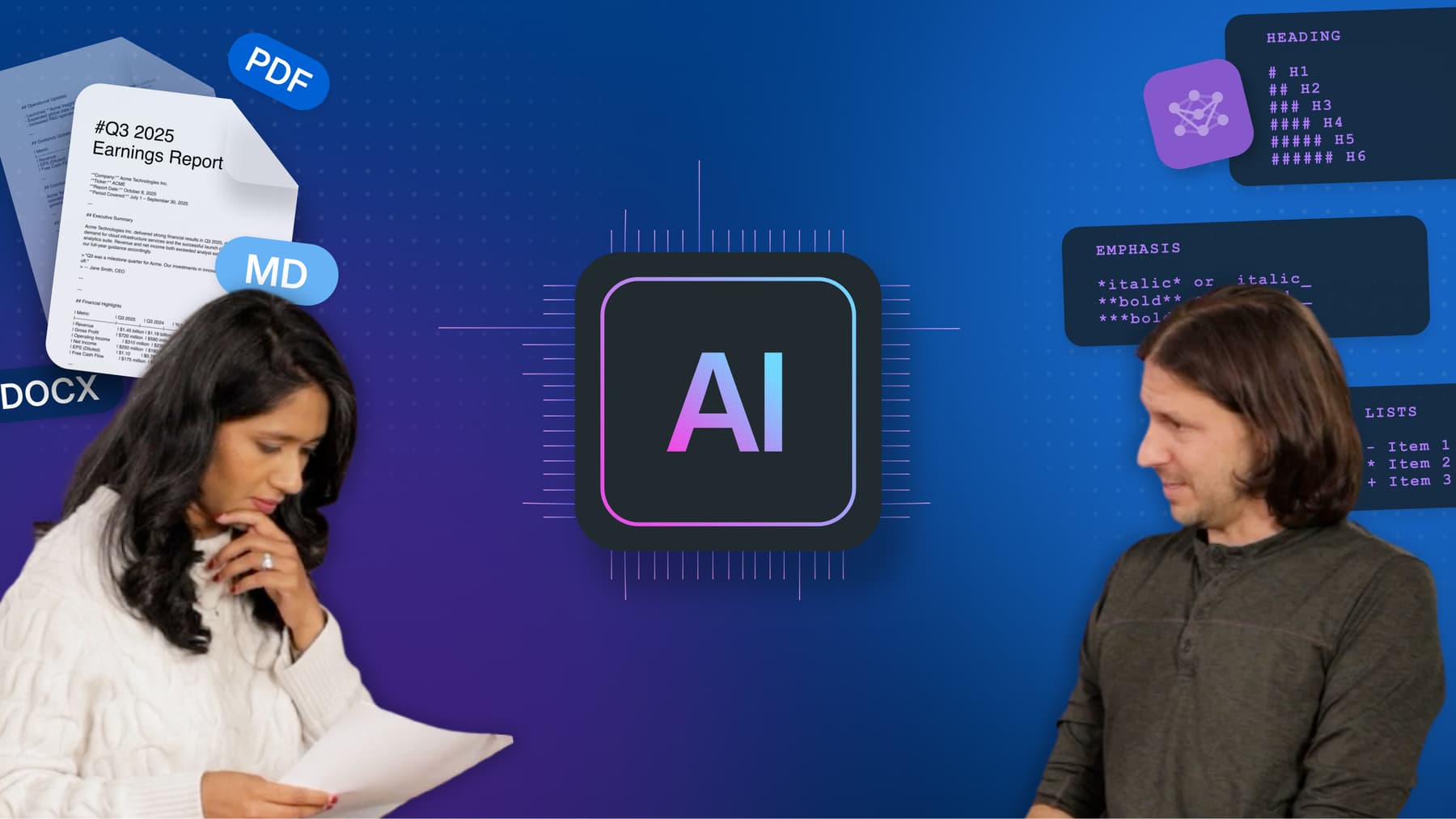
The problem is that all of this intellectual capital lives as unstructured data — PDFs, Word docs, spreadsheets, presentations, images, videos. Box makes this context accessible not just to humans clicking through folders, but to agents querying through APIs, synthesizing information across thousands of documents, and sharing results with human and AI colleagues alike. Files' real value comes from the context we're able to derive from them. Box is the infrastructure that makes that derivation possible — at scale, securely, and with full governance.

Box: The secure file system for agents
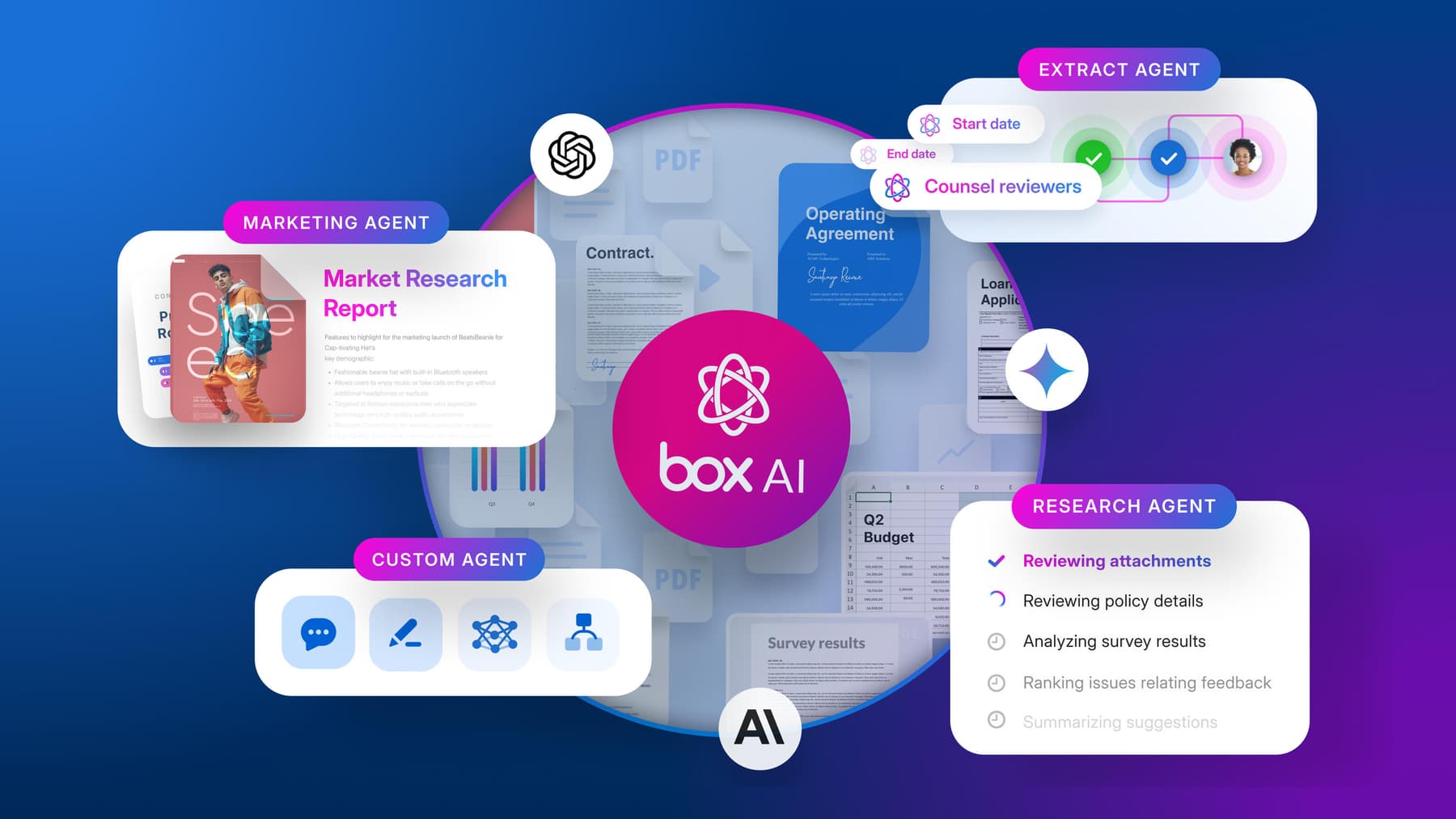
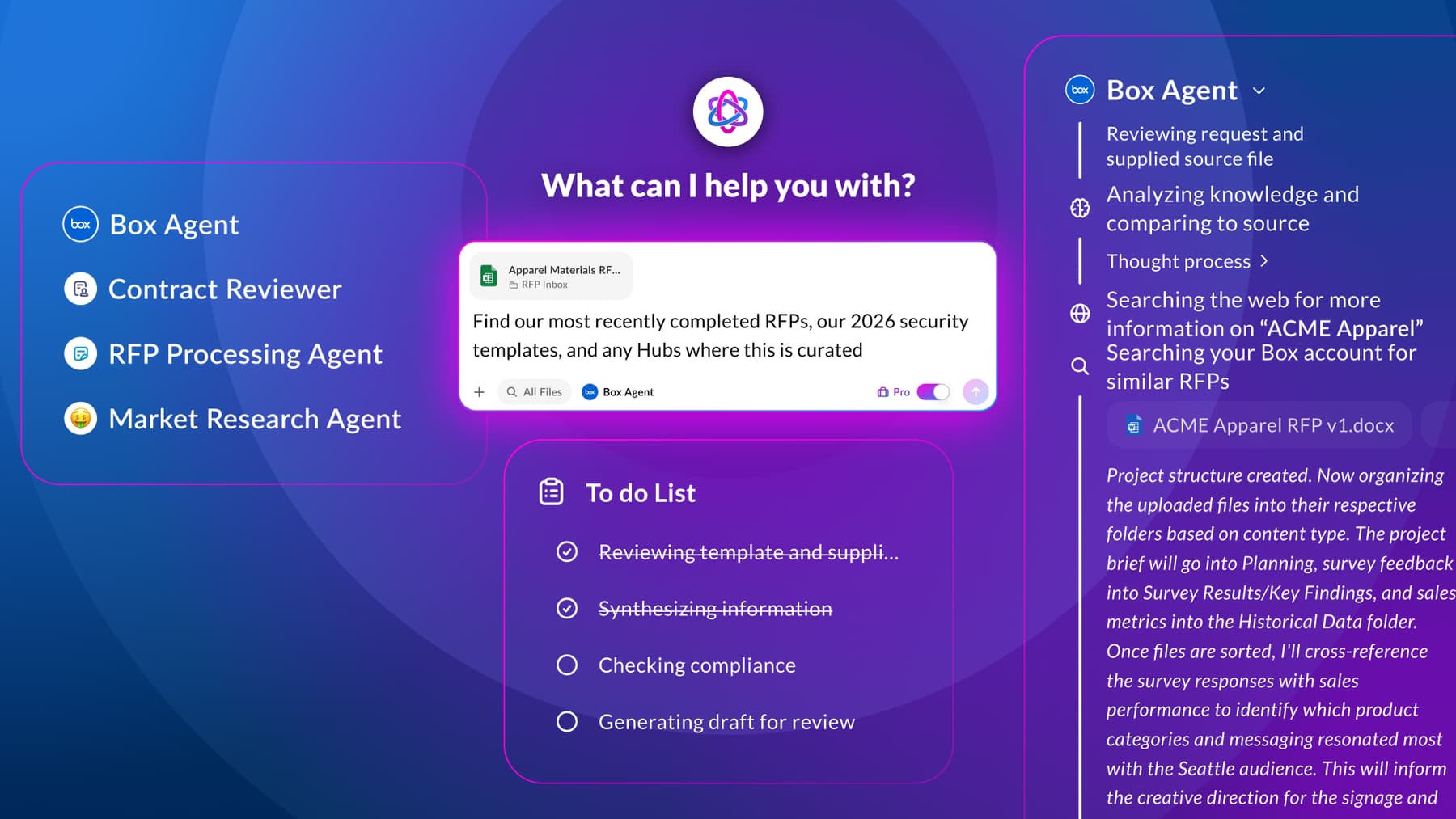
Box sits at the center of how modern AI agents operate. When a user submits a prompt, Box orchestrates the entire agentic workflow: the agent understands scope and intent and creates a structured plan; performs secure retrieval-augmented generation (RAG) across files stored in Box; reads and reasons across content, synthesizing insights from thousands of documents; invokes custom tools or agents as needed; and finally re-plans and refines before delivering a grounded answer.
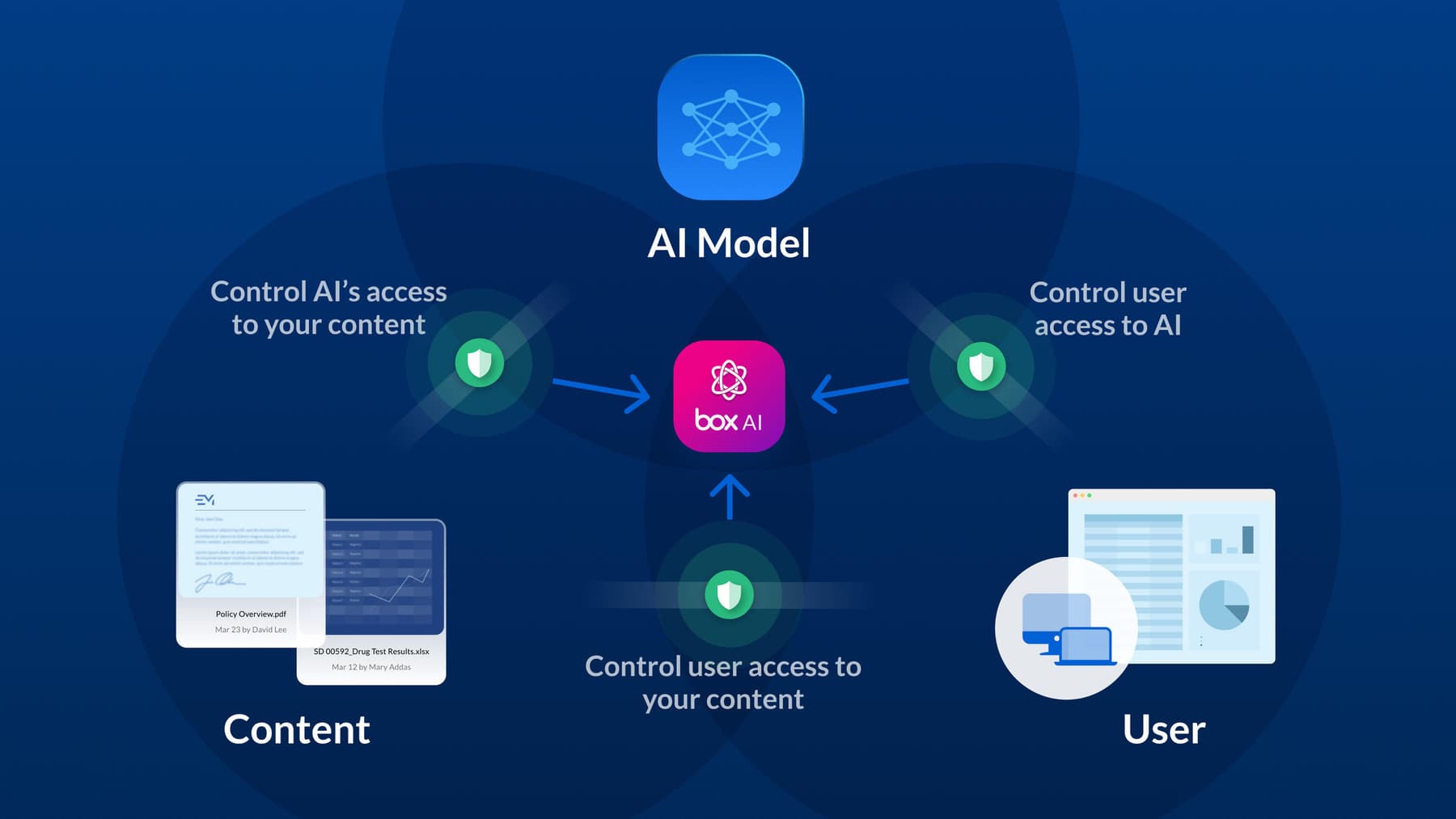
Critically, every output from this loop is automatically saved, versioned, and cited back to its source. Permissions, retention policies, and audit controls are inherited automatically — no manual governance overhead required. Agents operate inside the same security perimeter as your human employees, with the same access controls that govern a person's view of sensitive content applying equally to any agent acting on their behalf.
A multi-agent world makes interoperability essential
IDC projects that by 2028, 70% of top AI-driven enterprises will use advanced multi-tool architectures. They won't be choosing between Claude, ChatGPT, Copilot, Cursor, and custom agents — they'll be working with several models simultaneously, each needing access to the same organizational content while maintaining its own integration patterns and APIs.
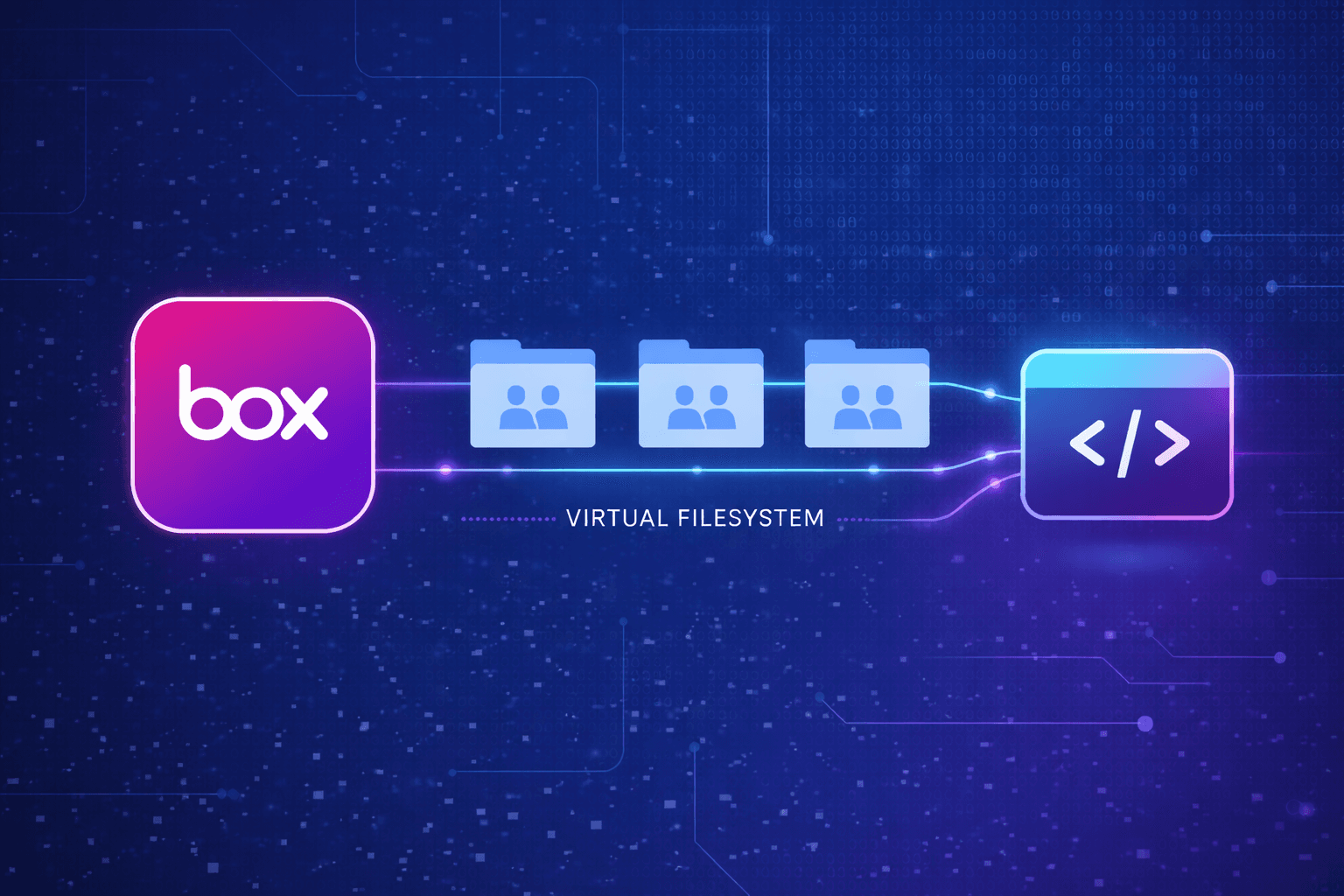
Box serves as the universal content layer for this multi-agent world: one platform connecting to the entire AI stack, providing consistent access regardless of which agent is requesting it. It is the single source of content truth, accessible through standardized interfaces that work equally well for people, applications, and AI agents.
Staggering scale makes governance non-negotiable
Today's enterprises might have thousands of employees accessing their content. Soon they'll have hundreds of thousands — or millions — of AI agents doing the same thing, and those agents need the same security, governance, auditability, and access controls as their human colleagues.
When humans access sensitive information, organizations rely on training, policy, and trust. When an AI agent accesses the same information, those safeguards don't automatically apply. The strict data-handling rules faced by regulated industries don't disappear when it's AI doing the work. In fact, the speed and scale at which autonomous agents operate makes governance more important, not less.
Box is built for exactly this moment. Its platform provides granular access controls applied to agents just as they are to humans, comprehensive audit logs tracking every agent action, data classification and retention policies that apply automatically to agent-generated content, and content lineage tracking to understand which agent created or modified any file. Governance isn't a feature bolted onto Box — it's foundational to how the platform works.
Questions your enterprise should ask
The transition to AI-driven work is happening now, and the companies that succeed will treat content infrastructure as a primary concern:
- Does your content infrastructure support API-first access — can AI agents authenticate and interact with your files programmatically?
- Do you have governance controls to manage agent access at scale, with the same rigor you apply to human users?
- Can you audit what your agents are doing with your content and trace every output back to its source?
- Is your file system architected to handle the volume that widespread agent deployment will generate?
For many organizations, the honest answer to most of these questions is "not yet." File systems were designed for human users, graphical interfaces, and manual workflows will increasingly become bottlenecks as AI adoption accelerates.
Box, though, answers all four questions directly: API-first architecture, granular agent permissions, full audit logs, automatic governance inheritance, and enterprise-grade scale, so your agents can move fast without creating compliance risk.
Organizations that move early to establish AI-ready file systems will deploy agents more quickly, govern them more effectively, and scale their AI initiatives more confidently — while avoiding the architectural debt of ad-hoc integrations between AI tools and legacy content systems.