If AI isn’t solving your unstructured data problem, it might be making it worse.
Every AI-generated summary, report, or document adds to the pile — compounding the sprawl faster than any team can manage it.
The question facing enterprise leaders in 2026 is no longer whether to adopt AI, but whether your organization can harness it before it compounds the very challenges you're trying to address.
We spoke with Yashodha Bhavnani, Head of AI at Box, about what's really blocking enterprises from solving this — and what the Box Agent does differently.
Key Takeaways
- For enterprises adopting AI, the key challenges are governing it securely, grounding it in your unstructured content, and tailoring it to your specific workflows and use cases
- AI can compound existing content sprawl by producing even more summaries, reports, and documents. Organizations need a content AI that can manage and use this content effectively
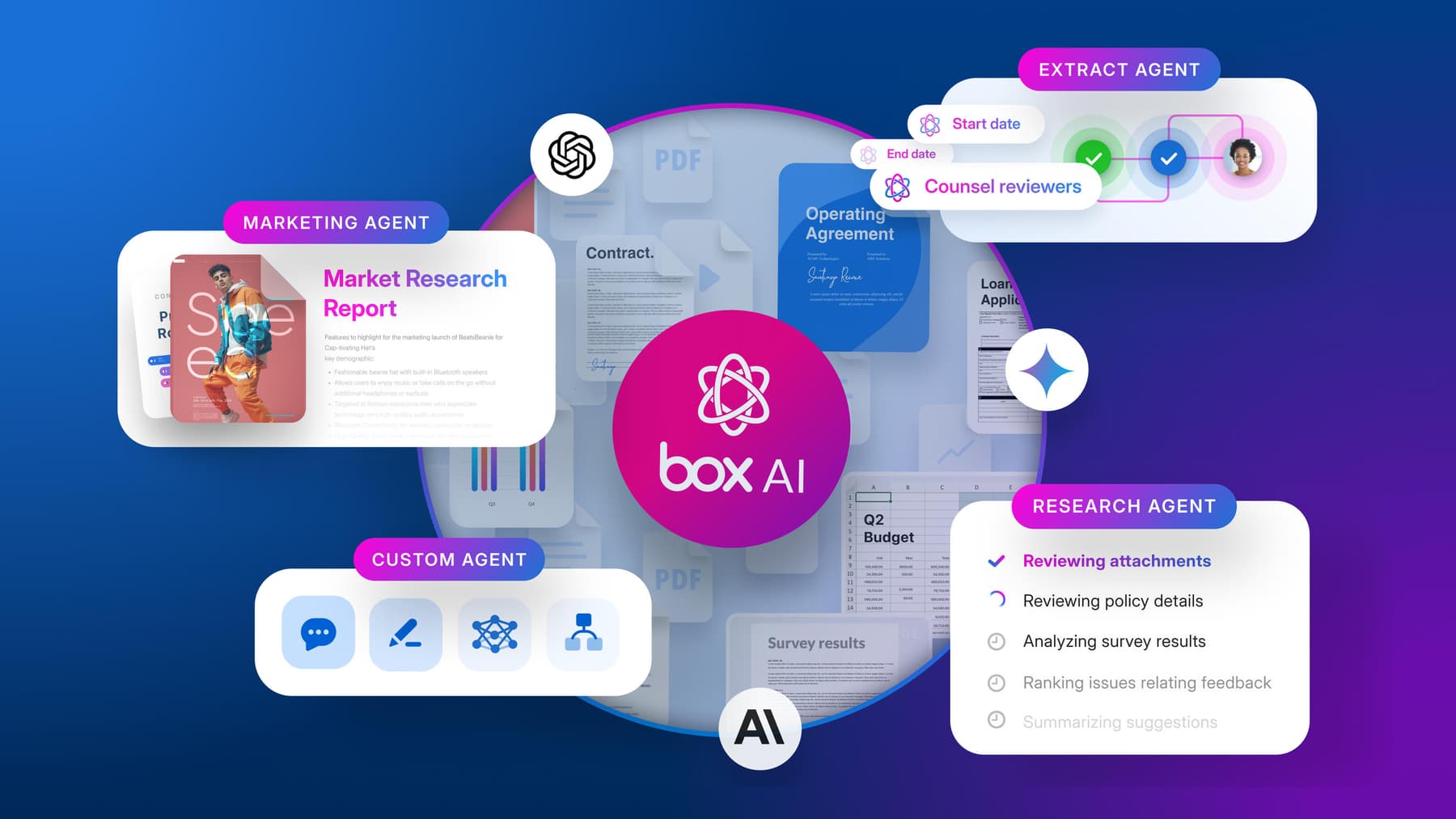
- Box Agent is a secure, content-centric enterprise AI agent that combines powerful AI models with an understanding of enterprise file systems and context to make knowledge work easier
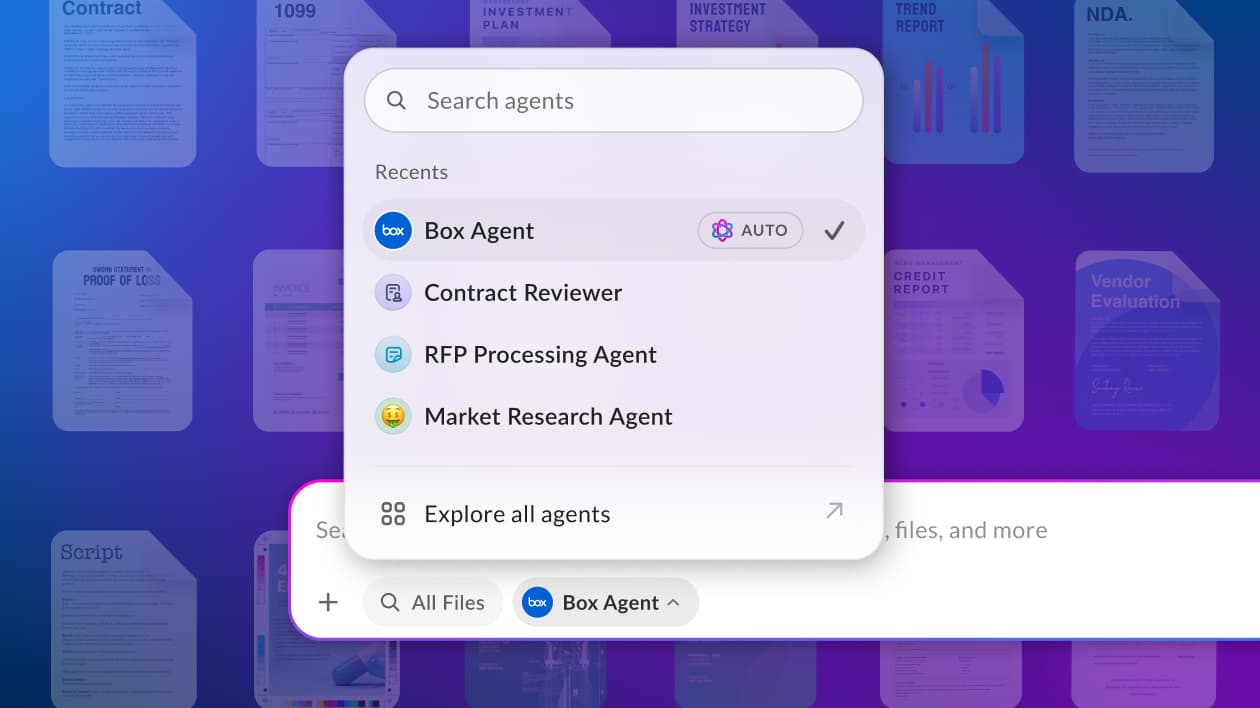
- The Box Agent can be customized through Box AI Studio to build custom workflows and agents, expanding the ability for Agents to power work
- The Box Agent will continue to become more capable with more tools, more advanced agent management and customization, and more integrations to support large organizational workflows.

You've described AI as potentially making the unstructured data problem worse, not better. How does that happen?
From my conversations with Fortune 500 CIOs, it’s clear that AI has shifted from experimental to something that is expected to deliver improving revenue, ROI, and real business outcomes.
But most companies have 90% of their content locked up in unstructured formats — documents, presentations, contracts, meeting notes, emails. That limits the impact of any AI deployment, because this is all information that can’t be easily queried, analyzed, or leveraged.
And now AI tools are creating ever more content, compounding the problem.
So it becomes essential to have a content AI that can truly make all of that untapped content accessible and effective to the enterprise.
Say you just hired a PhD right out of college. They’re really smart and well-educated. But if they don’t know anything about your company or the way you operate, the amount of value they can offer is limited.
What’s keeping companies from solving this problem?
Three things: context, structure, and security.
Context: Say you just hired a PhD right out of college. They’re really smart and well-educated. But if they don’t know anything about your company or the way you operate, the amount of value they can offer is limited.
Companies face the same limitations with general-purpose AI. Frontier models lack the enterprise-specific knowledge — of processes, terminology, institutional awareness — that is essential to making AI useful. Without it, someone has to supply that context manually, every time, for every prompt.
We built the Box Agent to be the content AI for enterprises, founded on Box’s history and understanding of enterprise knowledge, file systems and security.
For instance: if you’re analyzing 200+ financial documents to create a presentation for a financial reporting day, you need to know your company’s strategy, templates, brand language, and so on.

An AI agent without that inherent context becomes that smart PhD who doesn't know where to start; its output will be good, but ultimately too generic to be useful.
Security: Nobody can afford data leakage, permission violations, or compliance failures. The fear of what AI might expose or mishandle is keeping many organizations from deploying it at scale. Asking for a higher standard from AI systems and providers to ensure enterprise grade security is right.
Structure: Any AI can summarize content. But for an AI agent to actually be useful, it really has to know the structure of that content. This means understanding the file system, knowing that different versions of the same file exist, and that recognizing it should use the folder that is titled “2026” for most recent files for instance. All these details about the content, all locked in its structure, are key to using content with AI effectively.
Without that structure, you end up with AI answers that aren’t useful. Equally, having an understanding of the file structure - and having a file structure built for both Agents and users - ensures that the AI is able to automate workflows with a higher degree of accuracy and less processing power.
How does the Box Agent address those three barriers specifically?
We built the Box Agent to be the content AI for enterprises, founded on Box’s history and understanding of enterprise knowledge, file systems and security.
This is far more than a wrapper around the latest models. The Box Agent is purpose-built to understand an enterprise’s file system and structure. It uses essential signals from that file system, including relevance and usage, to precisely return more relevant, grounded answers to user questions, and automate workflows with a higher degree of confidence.
It also comes with two security promises that I know are really important to enterprises:
- It will follow the same permission structure as the user, so there’s no unauthorized access; and
- the Box platform will give you access to the latest AI technologies, while ensuring your data never leaks into the model.
We’re proud that the Box Agent can be adopted by the most regulated enterprises, including healthcare, finance, and even the public sector.
Finally, we know every business is unique, with a bespoke voice, brand, policies, and content types — and agents need to be able to operate in that environment.
This is why the Box Agent can be customized using Box AI Studio to align to the bespoke nature of every enterprise.
If you think about it, building an agent is actually really difficult. You have to host models, secure your new agent, then attach it to your content. And then you need to add specific examples and instructions so it is purpose-specific.
Box AI Studio provides all of this in a no code environment, enabling you to tailor agents for your enterprise - respecting content permissions and based on the context of your knowledge.
This all happens within Box so you don’t have to move or upload your data or worry about its security. It also means that the agent is always working with the latest versions of your company knowledge. That keeps the agent fresh and current to your evolving enterprise.
If you think about it, building an agent is actually really difficult. You have to host models, secure your new agent, then attach it to your content. And then you need to add specific examples and instructions so it is purpose-specific.
How do you see the Box Agent developing from here?
There are three layers I’m incredibly excited about.
Layer one is all the additional tools that the Box Agent will get. Right now, the Box Agent uses the latest Skills to generate documents and Powerpoints; over time, it will expand with additional tools and skills to enable web searching or taking multiple actions across your Box file system.
Layer two is about making the Box Agent even more customizable for enterprise-specific use cases. That means enabling end users to create agents for their own workflows easily. Imagine a bespoke agent for onboarding new hires that cuts out multiple days of training and 1:1s, or an agent built to organize your content such that others around your business can more easily find and understand it.
The final layer I’m most excited about is agents helping with large operational processes, and even managing them, whether deterministic or non-deterministic in nature. Imagine a large insurance agency, with 10,000 employees, which has to work out whether photos are being re-used across different insurance claims. In this future, an agent can review and process claims - with the right level of human supervision - and more efficiently detect duplicate photos and flag related claims.
This could vastly increase throughput and reduce fraud, saving millions from the bottom line, while creating more space for human insurance adjustors to do higher impact work increasing their client base.

The unstructured data challenge isn't new. But the rapid adoption of AI in the enterprise is making it more urgent. As Bhavnani sees it, solving it requires three things working together: an AI that understands the context of your business, a file system it can navigate intelligently, and security commitments that meet enterprise standards.
The Box Agent is built around all three, with Box AI Studio extending that further into custom workflows and agents tailored to specific business needs. To learn more about what the Box Agent can do, read the full announcement.