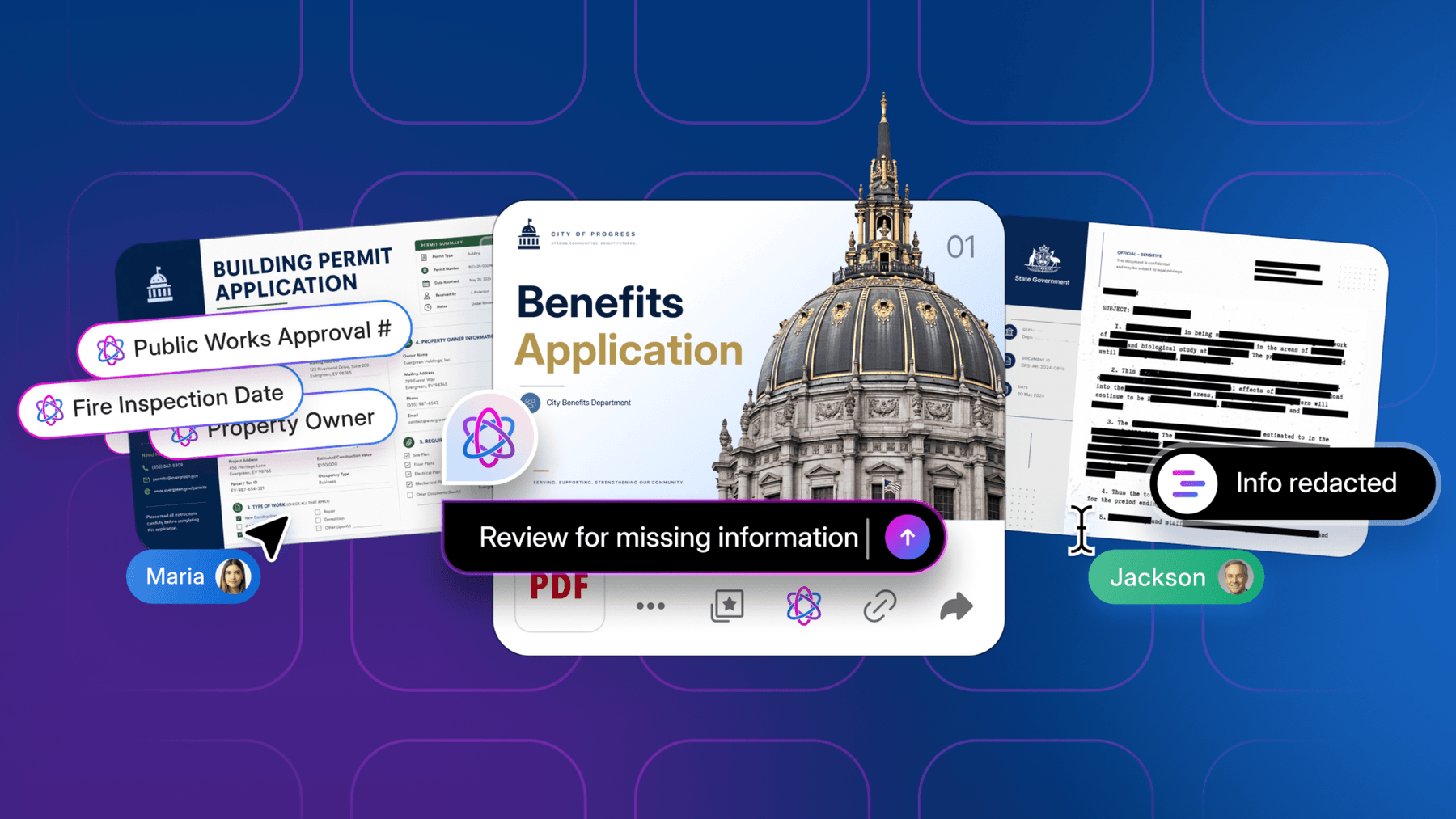
Intelligent Content Management is transforming how teams operate by adding speed, scale, and smart automation to everyday tasks. Two real estate industry leaders — Blake Holman of BBG and Matt Stofka of Kennedy Wilson — are leveraging Intelligent Content Management to unlock new efficiencies and enhance employee experiences within their organizations. By automating routine processes, uncovering key insights, and minimizing manual work, this approach enables organizations to work smarter in the AI-first era of business — with fewer IT resources.
Automating complex workflows at BBG
Blake Holman serves as CIO and CAO at BBG Real Estate Services, a commercial real estate appraisal and assessment firm. Fully integrated with their ERP system, Box is already the backbone for managing “everything data,” and will also be the platform that launches BBG into the future of automation. Holman explains that automation is very important to BBG — but taking advantage of it can be limited by development resources.
“Any time you can automate something, it’s a huge win,” he says. “We have a vision that the AI toolset is a way to leap forward and gain some tremendous efficiency and leverage in real estate proposals.” Box offers that opportunity to leap forward without the need for heavy IT investment.
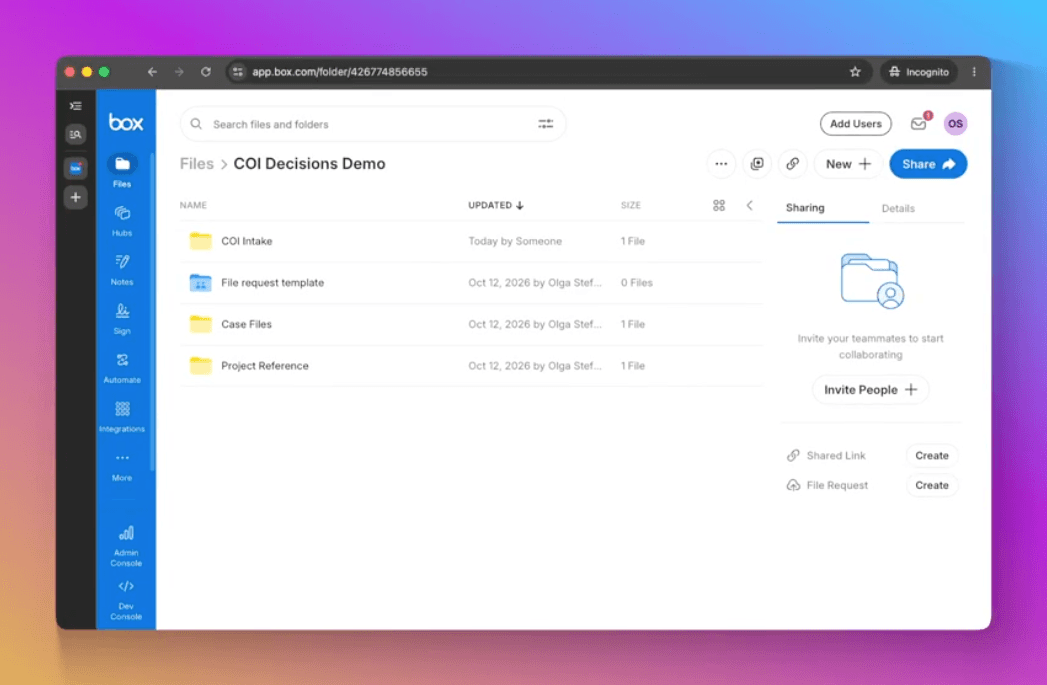
One of the immediate ways BBG has been able to implement Box AI to speed up work is by applying it to the employee handbook — an intimating 350-page document that had become difficult for employees to parse. Now, the HR team houses the handbook in a Box Hub, broken into specific subject-matter sections.
With Box AI applied to the Box Hub, employees don’t even have to know where to look to find what they need. They can extract key information quickly without having to sift through huge volumes of information. Holman says, “Setting up a Hub with Box AI has made it easy for folks to find information much, much faster than when trying to navigate a typical file system, open up a file, and page through 300-and-something pages.
Driving adoption through leadership at Kennedy Wilson
Matt Stofka administers Box at Kennedy Wilson, a global real estate company headquartered in Beverly Hills that’s been using Box for over ten years. Their first major use case was a dedicated space on Box for the HR department, designed to demonstrate how powerful AI tools, applied thoughtfully, can streamline work.
Prior to using Box Hubs, the HR department was constantly fielding the same questions from employees over and over again. When Stofka’s team put together a dedicated space on Box for HR, it enabled employees to “self serve” to the information they need at any given moment. Much more than mere search, Box AI applied to the Hub gives employees quick answers about policies and details of employment even if they don’t know exactly what keywords to search for.
Building on this first success with Box Hubs, Stofka envisions using Box AI capabilities to quickly extract critical details from loan documents and diligence files — tasks that currently require time-consuming manual review.
Security remains top of mind for both leaders. Stofka emphasizes the importance of sticking with trusted platforms rather than chasing every new shiny tool: “We need products governed by proper security measures so we can confidently manage our content.”
Quick access to accurate information
Holman and Stofka agree that one of the biggest benefits they’ve seen from Box AI is its ability to help employees get rapid answers to complex questions by tapping into information buried within long-form documents — a game changer when dealing with dense legal or policy texts. Because AI can understand user intent and apply reason to dense information, this capability has been a massive time saver and leads to better decision-making.
But introducing new technology isn’t just about features; it’s about changing habits. Both leaders actively encourage their teams to embrace these tools. Holman explains, “People want to know what’s in it for them. The more we personalize the experience — understanding what motivates them — the easier it becomes for people to adopt.” Building on Box, a tool employees are already entirely comfortable with, creates a “safe space” for both Holman and Stofka to reduce fear around engaging with new tech.
The future is AI agents and integration
One immediate need Stofka has at Kennedy Wilson is the ability to pull data out of loan documents into other systems without tedious manual rekeying, which is how it’s always been done. He imagines that intelligent agents within Box AI will soon simplify this workflow, and says, “Things will move really fast once we start dipping our toe into agents.”
Holman shares this excitement about building on existing platforms rather than investing in entirely new software solutions, saying, “There’s tremendous promise in stitching together different agents as part of a team.” Ultimately, he imagines an “agent of agents” orchestrating various tasks toward bigger goals — a vision of smarter collaboration powered by AI.
Leading real estate into the AI-first era
Box AI is already helping these real estate firms save time, reduce complexity, and empower employees through better access to information — all while maintaining strong security standards. As adoption grows and capabilities expand into intelligent agents working seamlessly together, organizations using Intelligent Content Management will be ready to embrace smarter ways of working.
If your team struggles with navigating complex documents or repetitive workflows today, explore how Box AI can fit into your environment. To hear more about this topic directly in the words of Holman and Stofka, watch the Fuel business success: Administering AI tools that unlock productivity video: