For Gen Z, a slow onboarding process can be enough to abandon a new financial relationship. Their expectations point to a broader challenge for banks: how to make document-heavy experiences feel as immediate, transparent, and connected as the digital services customers use every day.
Gen Z, the most populous generation in history, represents an estimated 25% of the global population. Over the next few decades, they also stand to inherit trillions in assets through the great wealth transfer. That makes them an increasingly important customer segment for banks, insurers, and wealth management firms — and a useful signal for where financial services experiences are headed.
Born between 1997 and 2012, Gen Z has grown up with smartphones and social media apps that provide instant feedback and gratification. They’re used to products arriving almost as soon as they’re ordered, and they engage in personalized, real-time interactions with brands. They bring those expectations to financial services, including the first interaction that often determines whether a relationship begins: onboarding.
“Gen Z is the first generation to grow up entirely in a digital environment,” says Professor Arman Eshraghi, Chair of Finance and Investment at Cardiff Business School. “As a result, they are used to frictionless experiences and expect seamless digital interfaces similar to those of big tech firms such as Apple or Amazon… Behavioral research suggests that users strongly avoid services with cognitive or procedural frictions.”
Expectations that expose friction
Along with paperwork and cumbersome identity verification processes, experiences that frustrate Gen Z include having to call customer service for answers, re-entering information across systems, and difficulty accessing documents on mobile devices.
For banks, these pain points often begin with the document layer behind the digital experience. A lack of transparency around decision-making — such as why a loan has been declined — can also erode their trust and loyalty towards a firm.
“Gen Z are frustrated by traditional financial processes, which feel slow, opaque and overly complex,” says Perry Rotella, Managing Director for Financial Services at Box. “For them, trust and loyalty are earned through transparency, shared values, and consistent digital experiences, not brand legacy. And, unlike previous generations, they’re quick to switch providers if expectations aren’t met.”
Gen Z are frustrated by traditional financial processes, which feel slow, opaque and overly complex.
Indeed, the behavioral concept of status quo bias, which explains customer stickiness, “appears weaker among Gen Z, who are platform-agnostic and readily experiment with new apps,” says Prof. Eshraghi. That puts pressure on financial firms to make every interaction — from document collection to account opening and ongoing service — clear, responsive, and easy to complete.

Faster workflows, seamless service
Almost a third (31%) of Gen Z respondents to a survey by the open banking platform Tink said their bank was at risk of losing them should digital tools and services not be upgraded. Updating a mobile app or improving isolated processes won’t address the deeper issue if the work behind the experience still depends on email and disconnected systems.
“Gen Z…prefers real-time customer support across multiple channels [chat, phone, app, social media] as well as a high level of personalization and instant gratification,” Prof. Eshraghi explains. Customized financial recommendations are now expected rather than desired, for example.
Gen Z also expects things like “instant transfers, real-time spending notifications and instant approvals for BNPL (buy now, pay later) options,” says Prof Eshraghi.
Gen Z prefers real-time customer support across multiple channels as well as a high level of personalisation and instant gratification.
Meeting those expectations requires a connected way to collect, check, route, and retain the documents that support the relationship. Although they often hold vast amounts of valuable customer data, legacy systems and organizational silos can create a fragmented content landscape, leading to the kind of slow, generic and disjointed experiences that Gen Z won’t tolerate.
A governed content layer can help bring that work together. Large language models can break down data silos by drawing insights from unstructured data.
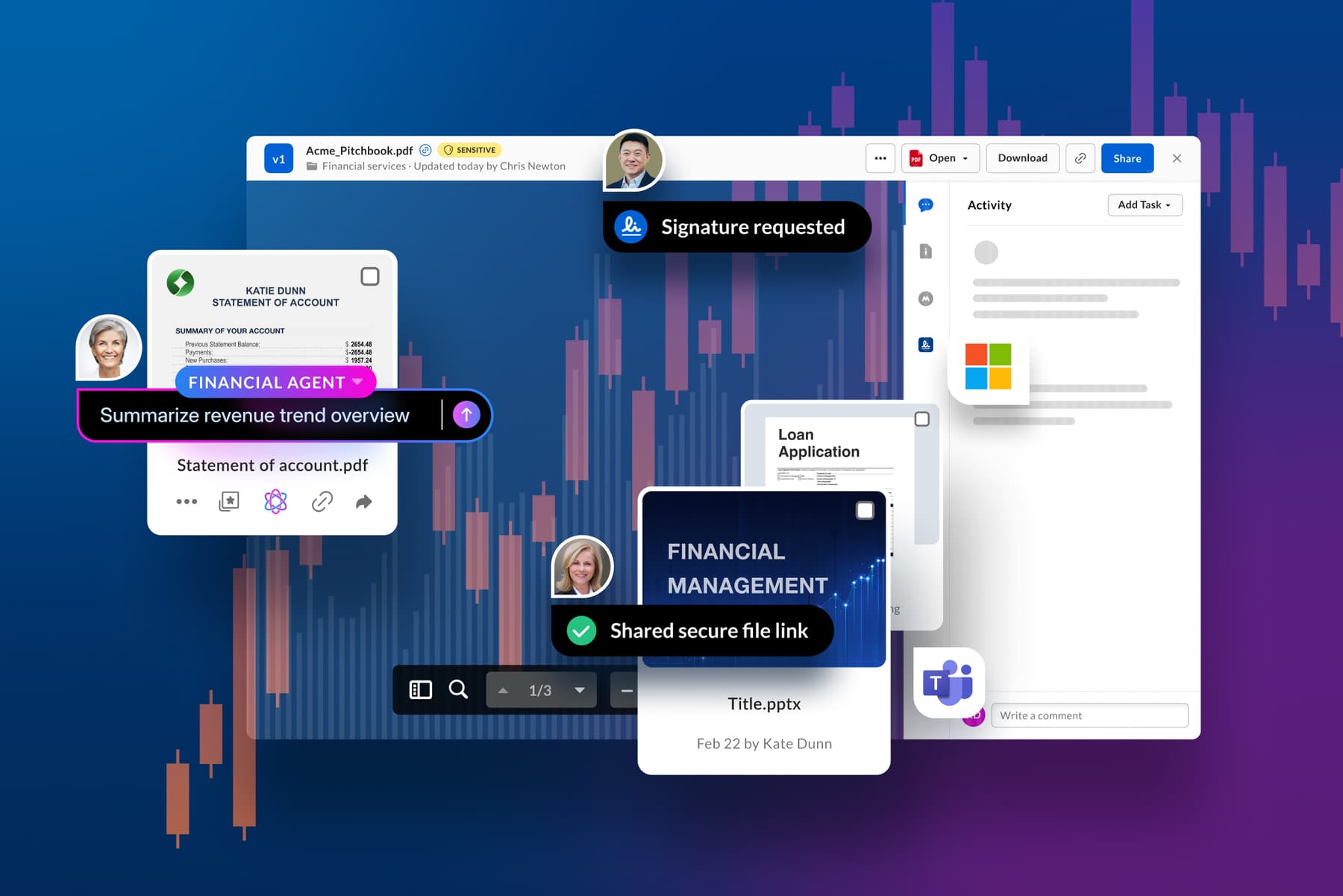
When a client uploads an identification document, tax form, proof of address, or ownership record, AI can check the submission against the firm’s requirements and identify missing, expired, or inconsistent information while the client is still in the upload flow.
Automating intake and entity verification
Most institutions have digitized the front end of account opening, but the backend still relies on secure email and manual review. Applicants send government IDs, tax forms, proof of address, or trust agreements through whatever channel is available.
Onboarding becomes vastly quicker when firms automate the document work behind the portal with AI and an integrated content architecture. Clients upload required documentation once through a branded portal. AI reads each document on arrival and extracts the exact fields reviewers need.
Uploads get checked against the required checklist right away, catching incomplete or mismatched files during submission rather than weeks later. When a document is missing or expired, the applicant receives a targeted request through the portal, allowing the case to resume immediately.
Approved data writes back into Salesforce or other onboarding systems, while account agreements and disclosures are executed digitally. For commercial entities or institutional investors bringing layered ownership structures, an AI-powered platform can read formation documents and ownership charts — extracting entity names, ownership percentages, and relationships between them. That way, analysts confirm one structured view instead of assembling files by hand.
“A large language model can look at a document and understand it very quickly,” says Adam Goff, Vice President, Commercial Business at Box. “You can pinpoint the fields you want to extract from a certain document type, load in 20,000 [or more] of them at a time, and it then extracts that information, locates the document in Box, and at the same time exports that structured data set into whatever system you might be using… through our integrations [and APIs]. Everything gets put in the right spot, fully automated at scale and with insanely high accuracy.”

Building a digital vault for ongoing relationships
Nearly one in four young people (23%) consult financial advisers or professionals for investment advice or information. A content platform that allows independent financial advisers and clients to securely collaborate on documents, portfolio reviews and financial goals has the potential to attract these Gen Z customers, who tend to have stronger opinions about how they want to manage their money. “Information is so much more readily available,” says Goff. “So you can become a quote-unquote expert on things.”
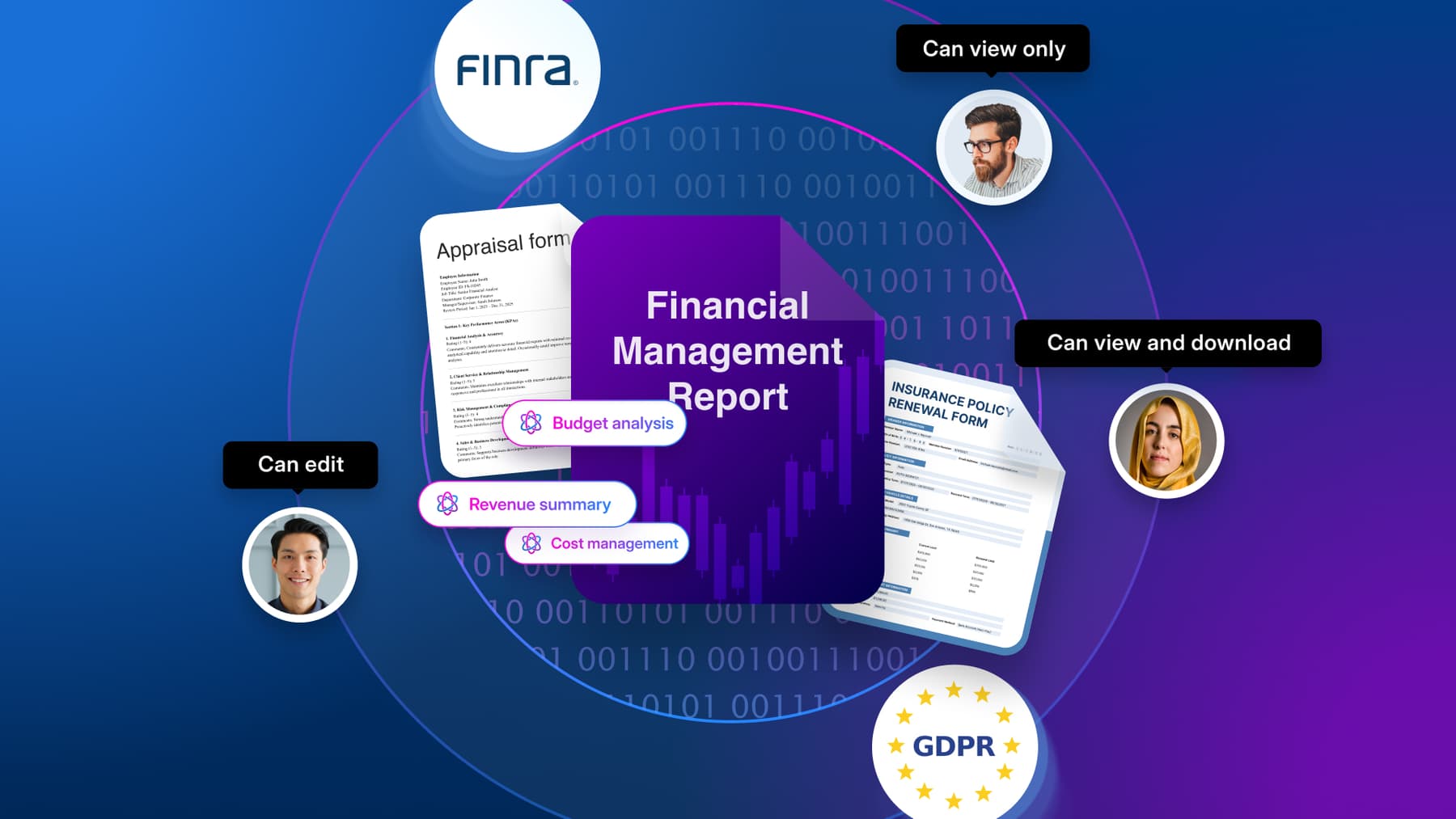
With a digital vault, advisors, relationship managers, operations, compliance, and outside attorneys work from a single, secure governed record. The same vault holds ongoing statements, estate plans, tax documents, and client exchanges. Built-in retention, legal hold, WORM storage, and timestamped audit trails ensure records remain exam-ready for FINRA and SEC Rule 17a-4.
Firms adopting this kind of architecture see clear operational gains. Mercer Advisors reduced client intake from two weeks to five minutes with Box AI extracting tax-return data, delivering 30% to 50% productivity gains for financial planners. Similarly, Morgan Stanley built its Digital Vault on Box APIs across advisors and support staff and rolled the capability out to its clients.
Self-service features, including the use of AI to get answers instantly across content in a portal, can also help to win over information-hungry customers while reducing the operational burden on advisers.
“An expert adviser often spends time answering incredibly obvious customer questions because they want to give them a great experience,” says Goff. “Giving that customer self-service allows advisers to do the more important work of actually researching investments they might not be in already.”
Embed personalization, self-service, and seamless collaboration into every experience
Secure, digitally-led experiences will become even more important as the great wealth transfer gathers pace. Indeed, by 2030, Gen Z’s spending power may reach an estimated $12tn and overtake boomer spending by 2029.
“To meet their expectations, financial firms must embed personalization, self-service, and seamless collaboration into every experience," says Rotella. “That demands an AI-first content strategy — one that transforms unstructured data into insight, automates workflows at scale, and enables the real-time transparency and speed that Gen Z expects from financial services.”
Learn how Box can help your company deliver the digital experiences that Gen Z expects.