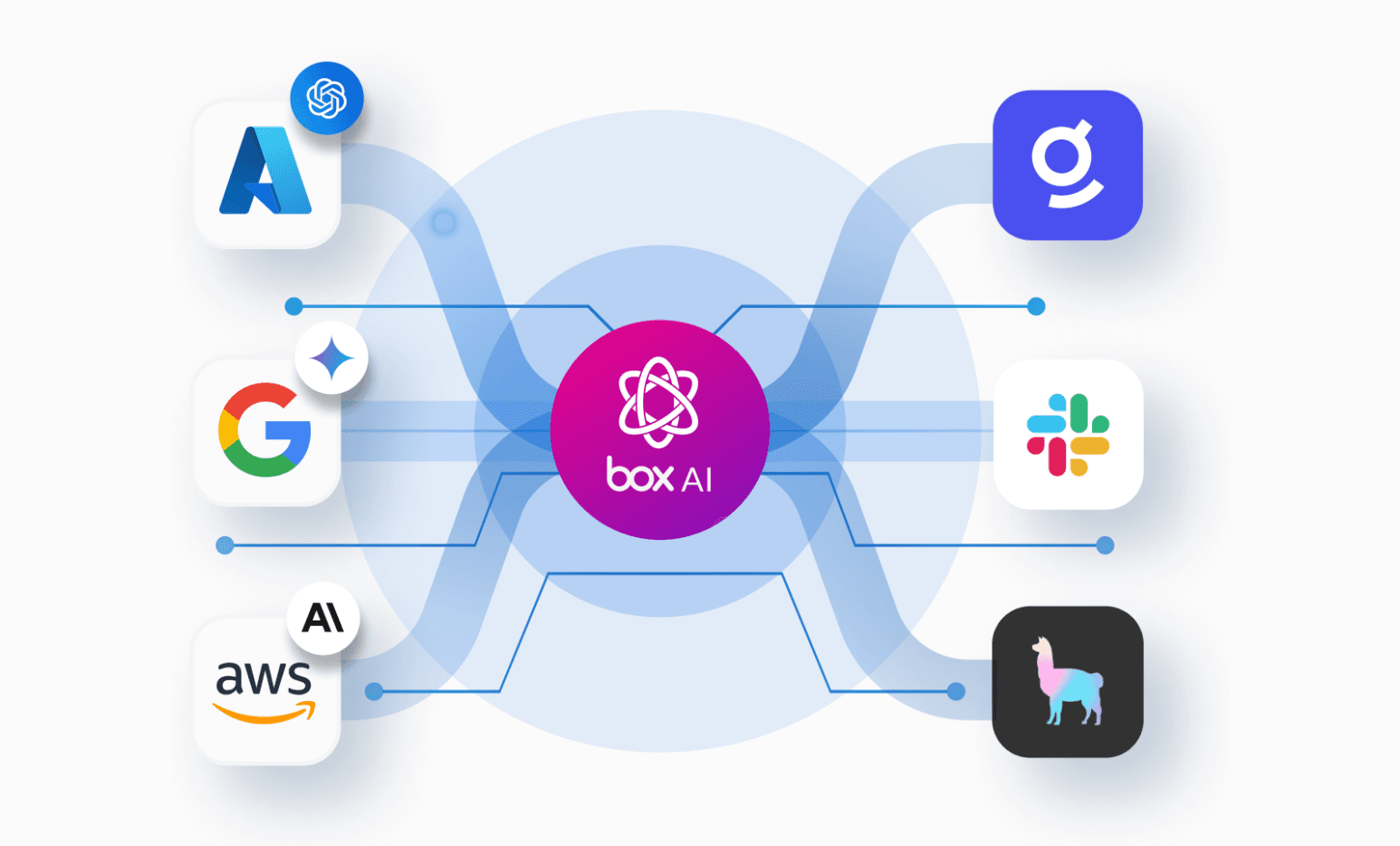
Managing large volumes of complex enterprise documents has long been one of the most challenging workflows to automate reliably. The combination of diverse file formats, unpredictable edge cases, and high-stakes outcomes has made it difficult to deploy AI with confidence across multi-step document processes.
Until recently, doing so required significant custom infrastructure — stitching together APIs, managing state, and building bespoke parsers before any real work could begin. Organizations were left navigating a difficult tradeoff: Move quickly with fragile prompt chains, or invest heavily in custom infrastructure to achieve the reliability enterprise operations demand.
With the OpenAI Agents SDK 2.0, Box developers can now leverage native sandbox support to build reliable, production-ready document workflows — without the custom infrastructure that once made this prohibitively complex.
By building on the Agents SDK, Box developers can create agents that work seamlessly with enterprise content across extended, multi-step workflows without losing context. Because these agents operate directly within Box’s Intelligent Content Management platform, every action is naturally grounded in the security, permissions, and governance controls that enterprises already depend on — no additional configuration required. The result is an AI system that doesn’t merely assist. It executes, at the scale and complexity your organization actually operates with.
A first-class primitive for agentic work
The Agents SDK 2.0 makes multi-agent orchestration a native capability, with built-in support for sandboxes, handoffs, guardrails, and tracing. This framework maintains task context across every step of a document’s journey — no custom state management required.
Box plugs directly into this ecosystem as a set of purpose-built tools. Developers can build production-ready workflows where agents search for files, navigate folder structures, and query Box about document contents — all while respecting enterprise-grade permissions, metadata, and zero-trust governance controls that regulated industries require.
To see this in action, take a look at an open-source reference implementation: a complete invoice reconciliation agent that connects Box content, structured outputs, and agentic orchestration in a single, runnable Python project.
Putting it to work across your organization
The invoice reconciliation demo is a starting point: the same architectural pattern — Box content + Agents SDK orchestration + structured outputs + Box routing — applies broadly across enterprise workflows:
Legal: Contract due diligence
Legal teams often face a needle-in-a-haystack problem when reviewing thousands of contracts. An agent identifies every contract containing a “change of control” clause, parses unstructured text to flag dates and triggers that deviate from the company's standard playbook, and moves high-risk contracts to a "legal review" folder — automatically populating a Box metadata template with a risk score and deviation summary. What used to take a team of associates days now happens autonomously, with a traceable, auditable record at every step.
Human resources: Role-specific onboarding
Agents pull the right handbooks and policy documents for each new hire’s role, summarize key takeaways into a structured onboarding schedule in a Box Note, and track completion automatically. At scale, this means consistent onboarding experiences across hundreds of hires — without adding headcount to HR.
Sales: RFP generation
Agents autonomously surface the latest product white papers and security certificates, cross-check them against current brand guidelines, and organize a submission-ready package in Box — notifying the account executive when it’s ready for final review. Faster, more accurate RFP responses mean more deals in the pipeline and fewer bottlenecks between technical and sales teams.
R&D: Scientific data synthesis
Agents locate trial notes and lab data across disparate Box folders, normalize key data points, and write a structured summary back to Box with source citations — creating a verifiable audit trail for regulatory submissions. For regulated industries, this is more than an efficiency gain. It’s the difference between months of manual synthesis and a submission-ready report.
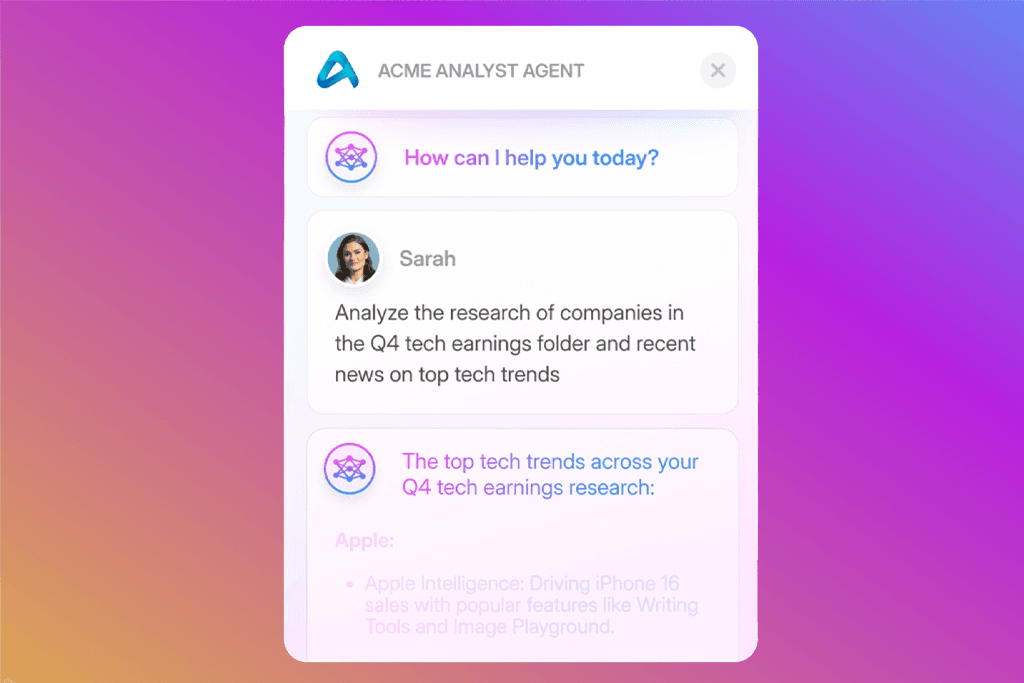
In each case, Box AI evolves from an assistant that answers questions into an agent that executes workflows end-to-end — handling the volume and complexity that previously required manual oversight at every step.
Why this matters for developers
With Box as the content layer, developers get:
- Governance out of the box: Every agent action is grounded in Box’s permissions model. Agents can only see and move files they're authorized to touch.
- Format-agnostic extraction: PDFs, CSVs, and other document types are handled in the sandbox with standard tools, not custom parsers.
- Auditable decisions: Structured Pydantic outputs and Box's own activity logs give you a complete, traceable record of every reconciliation decision.
- A path to production: The demo is deliberately simple (developer token auth, local path dependency), with clear guidance on swapping in OAuth/JWT for production and pinning to a published SDK version.
Start building today
Organizations that move quickly to deploy autonomous document agents will gain a significant operational advantage, executing at a speed and scale that manual processes simply cannot match. We look forward to seeing what the developer community builds with these capabilities.